

Maddy summaryHR 4864 would amend U.S. immigration law to redefine automatic birthright citizenship under the 14th Amendment. It specifies that children born in the U.S. automatically gain citizenship only if born to a parent who is a U.S. citizen, a refugee, a lawful permanent resident, or an active-duty military member. This would deny automatic citizenship to children born to parents who are undocumented immigrants, temporary visitors, or otherwise not meeting these specific categories. The change would apply only to births occurring on or after the bill's enactment date.
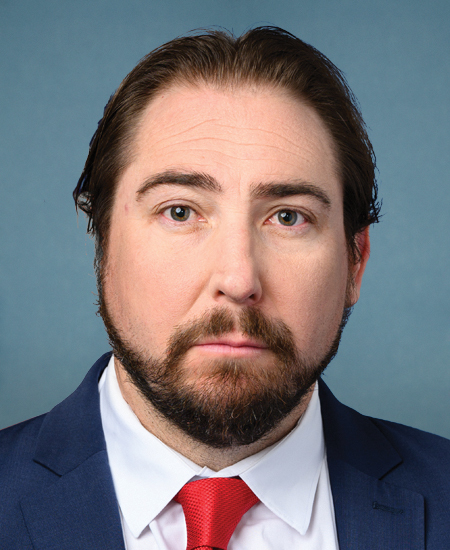
Rep. Elijah Crane
Sponsored bills
Maddy summaryHR 4374, the Energy Opportunities for All Act, nullifies Public Land Order No. 7923, which had withdrawn public lands surrounding Chaco Culture National Historical Park in San Juan County, New Mexico. This bill directly affects land management decisions in that specific area by reversing a prior administrative withdrawal. The key provision is the explicit repeal of the order, restoring the lands to their previous management status under federal law. The bill does not create new energy policies or programs, despite its title. (Note: The title appears misleading as the bill addresses land withdrawal, not energy opportunities.)
Maddy summaryHR 3269, the Law Enforcement Innovate to De-Escalate Act, exempts specific less-than-lethal projectile devices from federal firearm taxes and National Firearms Act restrictions. The bill defines these devices as those firing projectiles at under 500 feet per second and designed not to cause death or serious injury. This directly affects law enforcement agencies using such devices and manufacturers producing them, by removing tax burdens and registration requirements. The key change is creating a clear legal exemption for these devices under federal law, streamlining their use for de-escalation purposes.
Maddy summaryThe FOCA Act of 2023 requires federal agencies to stop mandating or banning contractor agreements with labor organizations (like union contracts) in construction project bids and contracts. It directly affects federal contractors, subcontractors, and agencies managing construction projects funded by the government. The bill prohibits favoring or penalizing contractors based on their labor affiliation status, aiming to promote fair competition and reduce costs. It also mandates updates to federal contracting rules within 60 days of enactment to implement these changes.
Maddy summaryThis bill would make it a federal crime for licensed physicians to perform or attempt to perform an abortion at any point after fertilization, with limited exceptions to save a pregnant woman's life when facing a physical condition, or to remove a dead unborn child from miscarriage or stillbirth, or for ectopic pregnancy. It would prohibit federal funding for abortions through programs like Medicaid, the Children's Health Insurance Program, Indian Health Service, Veterans Health Administration, TRICARE, and Title X family planning services, except in those limited circumstances. The bill also prohibits group health plans and insurance from covering abortions, with the same exceptions. It defines "unborn child" as a human being from fertilization until live birth and "abortion" as any action intended to terminate a pregnancy.
Maddy summaryThis bill modifies Social Security Number (SSN) requirements for claiming the Child Tax Credit and Earned Income Tax Credit. It specifies that qualifying SSNs must be issued to U.S. citizens (or under specific Social Security Act provisions) and issued before the tax return due date. The changes apply to tax years beginning after December 31, 2024, and update related tax code references to use "social security number" instead of "taxpayer identification number." These are technical adjustments to eligibility criteria, not new benefits or funding.
Maddy summaryHR 6177 prohibits federal funding from the Department of Health and Human Services (HHS) for researchers involved in studies or experiments involving minors that: (1) affirm a minor's gender identity differing from their sex assigned at birth, (2) provide medical/surgical services to help minors disassociate from their biological sex, or (3) use social interventions for the same purpose. The bill directly affects researchers seeking HHS grants for such studies, requiring them to certify they have never led such projects. It defines "sex" biologically at birth (based on reproductive biology and genetics) and "minor" as anyone under 18. The law bans funding for any federally-supported research meeting these criteria, regardless of the study's focus.
Maddy summaryThis bill expands Health Savings Account (HSA) eligibility to cover more health plans and health care sharing ministries, allowing individuals with these plans to contribute to HSAs. It significantly increases annual HSA contribution limits to $10,800 for individuals and $29,500 for families (up from $3,850/$7,750), effective 2024. The bill also permits HSA funds to pay for periodic provider fees and health care sharing ministry costs (including administrative fees), and reduces penalties for non-qualified distributions to 10%. These changes directly affect HSA account holders who use non-traditional health coverage or share medical expenses through ministries.
Maddy summaryThis bill amends the Affordable Care Act and Medicaid/CHIP programs to deny health insurance subsidies, coverage, and related benefits to individuals with Deferred Action for Childhood Arrivals (DACA) status. Specifically, it excludes people lawfully present only due to the 2012 DHS memo granting deferred action from eligibility for ACA subsidies, Medicaid, and the State Children's Health Insurance Program (CHIP). The bill requires states to remove DACA recipients from enrollment in health plans and rescind any existing waivers that allowed such coverage. It directly affects approximately 800,000 DACA recipients who currently qualify for ACA subsidies and Medicaid/CHIP under existing rules.
Maddy summaryThis bill simplifies regulations for rural health clinics (RHCs) by reducing administrative burdens. It allows RHCs to contract with physician assistants and nurse practitioners (instead of requiring direct employment), updates the definition of "rural" to exclude areas with 50,000+ residents, and removes outdated lab service requirements by requiring only "prompt access" to clinical labs. These changes directly affect RHCs, enabling them to more flexibly staff and operate while complying with state practice laws. The amendments take effect January 1, 2024, applying to services provided on or after that date.