

Maddy summaryThe Afghan Adjustment Act creates a pathway for certain Afghans who directly supported U.S. missions in Afghanistan during the 20-year U.S. military presence to adjust to lawful permanent resident status (green card holders). It specifically targets Afghans who worked with U.S. forces or agencies, including military personnel, security personnel, and their families, who received "Chief of Mission approval" for special immigrant status. Key provisions include new vetting requirements (in-person interviews and biometric screening), exemption from immigration numerical limits, $20 million annually for implementation, and a task force to develop resettlement strategies. The bill also establishes a new category of special immigrant visas for at-risk Afghan allies and sets a two-year application deadline after guidance is published.
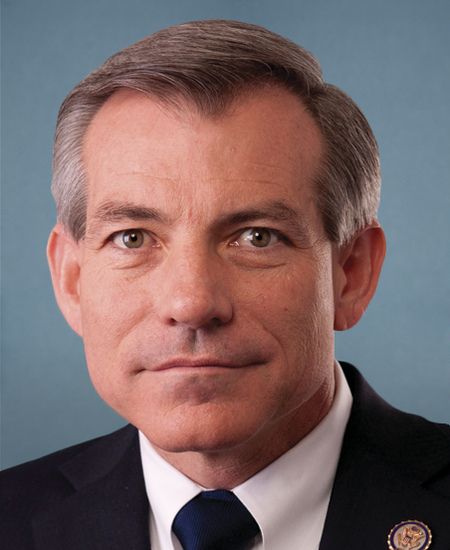
Rep. David Schweikert
Sponsored bills
Canadian Snowbird Visa Act This bill authorizes the Department of Homeland Security to admit into the United States qualifying Canadian citizens as long-term nonimmigrant visitors. A qualifying Canadian citizen is an individual who (1) is at least 50 years old, (2) maintains a Canadian residence, (3) owns a U.S. residence or has rented a U.S. accommodation for the duration of the individual's stay, (4) is not inadmissible or deportable, (5) will not engage in employment or labor for hire in the United States other than for a non-U.S.-based person or entity by whom the Canadian citizen was employed in Canada or for whom the Canadian citizen performed services in Canada, and (6) will not seek certain forms of assistance or benefits. A qualified individual may be admitted for up to 240 days during any single 365-day period. The spouse of such an individual may be admitted under the same terms, except that the spouse is not required to separately satisfy the requirement for owning or renting a residence in the United States. An individual admitted into the United States under this bill shall have nonresident alien tax status.
Maddy summaryThis bill designates the U.S. Postal Service facility at 100 North Taylor Lane in Patagonia, Arizona, as the "Jim Kolbe Memorial Post Office." It directly affects the postal facility by changing its official name to honor Jim Kolbe, a former Arizona congressman. The bill requires all future U.S. government references to this location to use the new name, but it does not alter postal services, funding, or operational policies.
Saving Organs One Flight at a Time Act This bill requires the Transportation Security Administration (TSA) and the Federal Aviation Administration (FAA) to jointly issue regulations, as necessary, to enable air carriers to transport human organs for transplant above wing (i.e., in the cabin of an aircraft). Among other things, the regulations must include consideration of protocols for air control outages; a requirement that air carriers implement a protocol for a person to accompany organs to and from the aircraft and between connecting flights; and a standardized process for commercial air carriers to accept, handle, and manage organs in transit. The TSA and the FAA must also consult with the Organ Procurement and Transplantation Network to identify metrics for the handling of organs and organ-related tissue by air carriers.
Maddy summaryThe SAFE Act of 2023 extends a 2018 law that prohibits slaughtering animals for human consumption to include horses, donkeys, and other equine animals, such as ponies. It amends Section 12515 of the Agriculture Improvement Act of 2018 by updating the language to replace "dog or cat" with "dog, cat, or equine" in both the section title and the main prohibition. This change directly affects the livestock industry and slaughter facilities by banning the processing of equines for food. The bill modifies existing law without adding new enforcement mechanisms, closing a gap in animal protection.
Supply Chain Security Act This bill allows a taxpayer to make an election, without regard to specified Treasury regulations, for purposes of determining whether any Western Hemisphere tax is an income, war profits, or excess profits tax. A Western Hemisphere tax is any tax paid to any U.S. possession or any foreign country (other than Cuba or Venezuela) that is located in North, Central, or South America (including the West Indies).
Maddy summaryHR 3982, the Methane Reduction and Economic Growth Act, creates a new tax credit for businesses capturing methane from mining operations. It directly affects mining facilities that capture at least 2,500 metric tons of methane annually from underground, abandoned, surface mines, or related activities, requiring the methane to be used for energy (with minimal leaks) or injected into compliant pipelines. The credit replaces carbon capture provisions in the tax code, defining "qualified methane" as methane captured at the source and verified for use or storage. The credit applies to methane captured after December 31, 2022, for facilities beginning construction before January 1, 2033.
Maddy summaryThis bill raises the threshold for businesses to report payments to independent contractors and vendors from $600 to $5,000 annually. It directly affects small businesses and self-employed individuals who receive payments below the new $5,000 level, reducing their reporting burden. The bill also adds an inflation adjustment mechanism to keep the threshold updated annually, rounding increases to the nearest $100. These changes apply to payments made after December 31, 2023, under tax code sections governing Form 1099 reporting and backup withholding.
This bill expands the definition of critical mineral under the Energy Act of 2020 to include copper. Thus, this bill requires the Department of Energy and other agencies to conduct a variety of efforts to ensure a secure and reliable supply chain of copper.
Wild Horse and Burro Protection Act of 2023 This bill prohibits the Bureau of Land Management (BLM) from using or contracting for the use of helicopters or fixed-wing aircraft for gathering horses and burros under the Wild Free-roaming Horses and Burros Act. Further, BLM may not make contracts to use helicopters for transporting captured animals under such act.