Into the Light for Maternal Mental Health and Substance Use Disorders Act of 2022 or the Into the Light for MMH and SUD Act of 2022 This bill reauthorizes through FY2028 a program that addresses maternal depression and, among other changes, expands its scope to include mental health and substance use disorders. It also requires the Department of Health and Human Services to maintain a national hotline to provide mental health and substance use disorder resources to pregnant and postpartum women and their families.
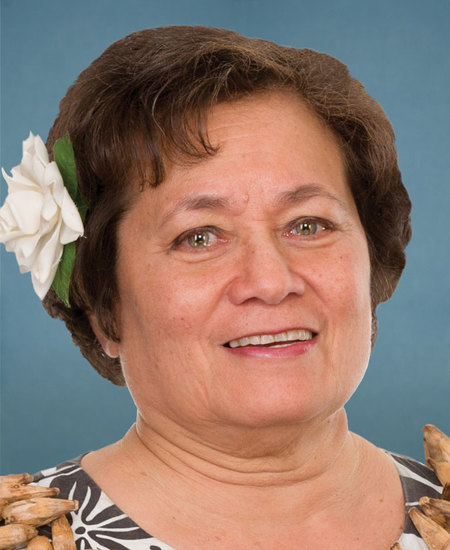
Rep. Aumua Amata Coleman Radewagen
Sponsored bills
American Energy Independence from Russia Act This bill addresses U.S. energy security, the production of oil and gas, and the importation and exportation of oil and gas. Specifically, the President must submit an energy security plan that (1) evaluates U.S. crude oil, petroleum products, and natural gas imports and exports; (2) assesses the energy security risks of such imports; and (3) includes strategies to encourage increased domestic production of crude oil, petroleum products, and natural gas to offset Russian imports. The bill also approves the TransCanada Keystone Pipeline in Phillips County, Montana for the import of oil from Canada to the United States. In addition, the bill grants the Federal Energy Regulatory Commission the authority to approve or deny applications for facilities to export natural gas from the United States to foreign countries or import natural gas from foreign countries. The President and federal agencies must obtain congressional approval before (1) prohibiting or substantially delaying certain new energy mineral leases or permits on federal lands, or (2) withdrawing certain federal lands from mineral and geothermal leasing activities. The Department of the Interior must resume issuing oil and gas leases on federal lands and offshore submerged lands in the Outer Continental Shelf as specified under the bill. Finally, the bill limits the drawdown of petroleum in the Strategic Petroleum Reserve until the Department of Energy develops a plan to increase the percentage of federal lands leased for oil and gas production.
This joint resolution expresses that Congress recognizes that the United States' nuclear testing program and radioactive waste disposal in the Marshall Islands caused irreparable material and intangible harm to the people of those islands, apologizes on behalf of the United States to the individuals and families of the Marshall Islands for the hardships they have endured as a result of the U.S. nuclear testing program and radioactive waste disposal, and recognizes that it is incumbent on the United States to open dialogue regarding the nuclear legacy of the United States in the Marshall Islands during any negotiation of the Compact of Free Association or its subsidiary agreements.
Health Care for Burn Pit Veterans Act This bill updates policies and procedures related to Department of Veterans Affairs (VA) health care and benefits for veterans who have been exposed to toxic substances. Specifically, the bill extends the eligibility period for VA hospital care, medical services, and nursing home care for combat veterans who served after September 11, 2001, and were exposed to toxic substances, radiation, or other conditions, including those who did not enroll to receive VA care during the eligibility period. The VA must incorporate into its existing health care screening a screening to help determine potential exposures to toxic substances during military service. Among other requirements, the VA must also provide annual training to health care and benefits personnel with respect to veterans who were exposed to toxic substances; analyze total and respiratory disease mortality in veterans who served in specified locations on specified dates; conduct an epidemiological study on the health trends of veterans who served in the Armed Forces after September 11, 2001; conduct a study to determine trends in the rates of the incidence of cancer in veterans; publish a list of VA resources for veterans who were exposed to toxic substances, families and caregivers of such veterans, and survivors of such veterans who are receiving death benefits; and report on the data quality of the Individual Longitudinal Exposure Record and its usefulness in supporting veterans in receiving VA health care and benefits.
Native American Child Protection Act This bill reauthorizes through FY2027 and otherwise revises certain programs related to the prevention, investigation, treatment, and prosecution of family violence, child abuse, and child neglect involving Indian children and families. Specifically, the bill revises the Indian Child Abuse Treatment Grant Program to encourage the use of grants for culturally appropriate treatment services and programs. The bill renames the Indian Child Resource and Family Services Centers as the National Indian Child Resource and Family Services Center. It also requires the center to (1) provide advice, technical assistance, and training to urban Indian organizations; (2) develop certain technical assistance materials for Indian tribes, tribal organizations, and urban Indian organizations; and (3) develop model intergovernmental agreements between tribes and states to prevent, investigate, treat, and prosecute incidents of family violence, child abuse, and child neglect involving Indian children and families. Additionally, the bill revises the Indian Child Protection and Family Violence Prevention Program to allow Indian tribes, tribal organizations, and intertribal consortia to use program funds for additional activities, such as operational costs for child protective services.

Wildlife Conservation and Anti-Trafficking Act of 2021 This bill sets forth provisions relating to wildlife conservation, anti-trafficking and poaching, and illegal fishing. Specifically, the bill directs the Departments of Justice, the Interior, Commerce, State, and the Treasury to develop a plan of action for awards to whistleblowers of violations of laws applicable to wildlife trafficking; directs Interior to carry out the International Wildlife Conservation Program to, among other things, address global conservation threats and combat wildlife trafficking and poaching; provides funding for the conservation of certain endangered species; authorizes Interior, in consultation with the State Department, to station not less than one U.S. Fish and Wildlife Service officer in the primary diplomatic or consular post of the United States in a focus country or country of concern (i.e., countries engaging in wildlife trafficking); and directs Commerce to make amounts available for illegal, unreported, and unregulated fishing enforcement. The bill also modifies the federal criminal code to make wildlife trafficking and illegal fishing predicates with respect to the enforcement of certain criminal offenses, including racketeering and money laundering.
This bill posthumously provides for the award of a Congressional Gold Medal in commemoration of the 13 service members who died on August 26, 2021, while stationed at Hamid Karzai International Airport in Afghanistan.
This bill requires the Department of Veterans Affairs (VA) to establish the Advisory Committee on United States Outlying Areas and Freely Associated States to provide advice and guidance to the VA on matters relating to veterans residing in American Samoa, Guam, Puerto Rico, the Commonwealth of the Northern Mariana Islands, the U.S. Virgin Islands, the Federated States of Micronesia, the Republic of the Marshall Islands, and the Republic of Palau. Among other duties, the committee must advise the VA on how to improve its programs and services to better serve veterans living in the listed areas.
This concurrent resolution declares that Congress should not impose any new performance fee, tax, royalty, or other charge relating to the public performance of sound recordings on a local radio station for broadcasting sound recordings over the air, or on any business for such public performance of sound recordings.
Honoring Our Commitment to Elevate America's Neighbor Islands and Allies Act of 2021 or the Honoring OCEANIA Act This bill requires various actions and programs related to the Oceania region, which includes Fiji, French Polynesia, Papua New Guinea, and Vanuatu. The bill requires the Department of State to take actions in the region to develop a program to strengthen resilience to disasters; develop a program to help countries protect against threats to critical infrastructure; provide grants and assistance to build public health capacity; support efforts to address dangers from unexploded ordnance, submerged maritime vessels, and related hazards; provide financial and technical assistance to governments and organizations to combat corruption; and take steps to ensure U.S. capacity to support residents of Oceania countries who may become permanently displaced by severe weather. Furthermore, the Department of Defense and the Department of Homeland Security must carry out a program to support regional maritime security partnerships. In addition, the President must impose sanctions on foreign individuals and entities that engage in corruption in Oceania. The Department of Veterans Affairs must commence a demonstration program to provide medical and extended care services to U.S. veterans residing in the freely associated states (i.e., Palau, the Marshall Islands, and Micronesia). The U.S. International Development Finance Corporation must establish a strategy for using market-based private investment to support the development goals of Oceania countries. The bill also requires reports on topics related to Oceania, including (1) a strategy to expand the presence of the Peace Corps, (2) the use of technology to address illegal fishing, and (3) the Department of the Treasury's financial intelligence resources.