

Maddy summaryThis bill allows the remains of a Medal of Honor recipient to lie in honor in the U.S. Capitol rotunda, but only at the request of their primary surviving next of kin. The Architect of the Capitol, working under the Speaker and President pro tempore, would arrange the timing and logistics, including verifying the next of kin's status. It applies to Medal of Honor recipients who die on or after the bill's enactment date. The policy change creates a formal process for this ceremonial honor, without altering military award criteria or requiring new funding.
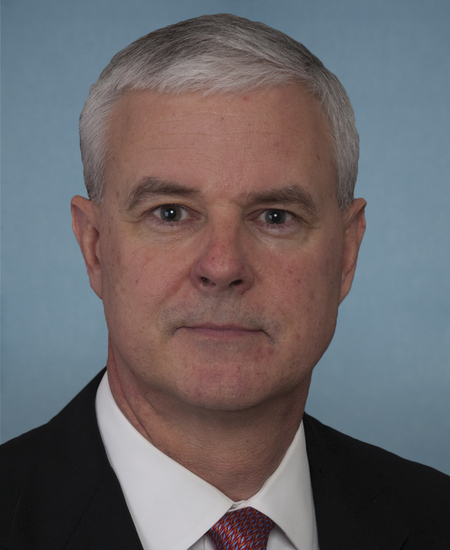
Rep. Steve Womack
Sponsored bills
Maddy summary# Summary of Financial Services and General Government Appropriations Act, 2024 This document is the full text of the Financial Services and General Government Appropriations Act for Fiscal Year 2024, which provides funding for various government agencies and departments. Key aspects of the legislation include: 1. **Funding Structure**: Allocates funds for numerous agencies including the Department of the Treasury, Federal Reserve, Securities and Exchange Commission, and other financial regulatory bodies. 2. **Major Restrictions**: - Prohibits use of funds for abortion services except when the life of the mother would be endangered or in cases of rape or incest - Bans funds for gender-affirming care in the Federal Employees Health Benefits program - Restricts funding for certain medical research and public health activities - Limits use of funds for contraception coverage in health plans (with specific religious exemptions) - Prohibits funds for political activities, propaganda, or support for legislation 3. **Employee Compensation Rules**: - Limits pay increases for certain executive and senior employees during FY2024 - Establishes specific pay rate restrictions for various government positions - Requires certain administrative fees for retirement processing 4. **Reporting Requirements**: - Mandates detailed reporting on conference costs exceeding $100,000 - Requires accessibility evaluations for electronic and information technology - Sets specific requirements for telework policies (reinstating pre-2020 policies) 5. **Specific Agency Provisions**: - Contains detailed provisions for the Federal Reserve, SEC, and other financial regulatory agencies - Includes requirements for the District of Columbia government - Sets restrictions on use of funds for certain types of research and medical procedures 6. **General Provisions**: - Establishes rules for reprogramming and transferring funds - Contains requirements for accessibility standards under Section 508 of the Rehabilitation Act - Includes numerous restrictions on government contracting and spending The document contains over 700 specific provisions that govern how funds can be used across government agencies, with particular emphasis on restricting certain types of spending and requiring detailed reporting on government expenditures.
Maddy summaryThis bill would authorize the U.S. government to confiscate Russian sovereign assets held in U.S. jurisdiction and use those funds to support Ukraine's reconstruction and humanitarian needs following Russia's invasion. It prohibits releasing these blocked assets until Russia fully compensates Ukraine or agrees to an international compensation mechanism. The bill establishes a "Ukraine Support Fund" to hold confiscated assets and requires regular congressional reporting on how these funds are allocated for Ukraine's recovery. It also includes provisions for international coordination with allies on sanctions and asset management related to Russia's invasion of Ukraine.
Maddy summaryThe SHIP Act imposes sanctions on foreign entities that knowingly handle Iranian petroleum, targeting those involved in port operations, transportation, refining, or ship-to-ship transfers of Iranian oil. Starting 90 days after enactment, the President must block assets, deny visas, and impose penalties on individuals or companies engaging in these activities, including family members or owners of sanctioned entities. It requires annual reports tracking Iran's oil exports, revenues, and key players like shipping companies and ports. The sanctions terminate if the President certifies Iran has stopped supporting terrorism and dismantled weapons programs.
Maddy summaryHRES 814 is a symbolic resolution expressing support for recognizing October 2023 as "National Dyslexia Awareness Month." It calls on Congress, schools, and educational agencies to acknowledge dyslexia's educational impact and promote early screening and evidence-based interventions. The resolution highlights dyslexia as a common learning disability affecting 1 in 5 people, emphasizing its neurobiological basis and the need for accommodations to support affected individuals. It does not create new laws or allocate funding, serving solely as a formal expression of awareness.
Maddy summaryHRES 771 is a non-binding resolution expressing the U.S. House of Representatives' support for Israel following Hamas' October 7, 2023, attack. It condemns Hamas' actions, affirms Israel's right to self-defense, and calls for the immediate release of hostages. The resolution also urges enforcement of existing laws restricting aid to terrorists and sanctions against Iran for supporting Hamas. It does not create new policies or allocate funds, as it is a symbolic statement of congressional support.
Maddy summaryHRES 768 is a symbolic House Resolution expressing congressional support for Israel following Hamas' October 7, 2023 attacks. It condemns Hamas' actions, reaffirms Israel's right to self-defense, and calls for the immediate release of hostages. The resolution references the U.S. commitment to Israel's security through existing military aid programs, including the 2016 U.S.-Israel Memorandum of Understanding, and emphasizes enforcement of laws like the Taylor Force Act to prevent U.S. aid from reaching terrorist groups. As a symbolic resolution, it does not create new policy but serves as a statement of congressional support for Israel.
Maddy summaryHR 5110, the Protecting Hunting Heritage and Education Act, amends the Elementary and Secondary Education Act of 1965 to clarify that federal education funds cannot be used for certain weapons - but this restriction does not apply to archery, hunting, or other shooting sports training programs. The bill directly affects schools and educational programs seeking to use federal funds for these specific activities, such as archery clubs or hunting safety education. It adds an explicit exception to the existing prohibition, allowing funds to support "educational instruction or enrichment activities" in these sports under authorized programs. This change removes ambiguity about funding eligibility for such educational initiatives in K-12 schools.
Healthy Poultry Assistance and Indemnification Act This bill expands the Animal and Plant Health Inspection Service (APHIS) producer indemnity and compensation program to include compensation for all poultry growers and layers located in an APHIS-determined control area. Currently, APHIS provides indemnity and compensation to producers to remove animals classified as affected, suspect, or exposed to diseases of concern, including highly pathogenic avian influenza (HPAI). An APHIS-determined control area consists of both an infected zone and a buffer zone. Under the bill, APHIS must compensate all owners of poultry growing or laying facilities for flocks of birds that the facility owner was prohibited from growing or laying due to the location of the facility within a control area. This may include facilities that are located in the buffer zones and have non-infected poultry. Further, the bill establishes a new compensation payment formula that requires payments to be based on the owner’s average income from the five most recent flocks. Under the bill, APHIS's compensation determination is final and not subject to judicial or administrative review (other than by the Secretary of Agriculture or a designee).
Maddy summaryHR 5561, the Protecting the Right to Keep and Bear Arms Act of 2023, prevents federal agencies from using emergency declarations to implement gun control measures. It specifically prohibits the President from declaring a national emergency under the National Emergencies Act or the Robert T. Stafford Act for gun control purposes, and stops the Health and Human Services Secretary from declaring a public health emergency under the Public Health Service Act for the same reason. The bill also amends the Stafford Act to explicitly prohibit any emergency-related restrictions on possessing, manufacturing, selling, or transferring firearms, ammunition, ammunition feeding devices, or firearm accessories. This directly affects how federal agencies can respond during emergencies without violating the Second Amendment. The law aims to limit executive actions during emergencies that could restrict gun rights.