

Maddy summaryThis bill authorizes a Congressional Gold Medal to honor the "Hello Girls" - female telephone operators who served in the Army Signal Corps during World War I. They provided critical battlefield communications in France (connecting 26 million calls), wore military uniforms, and faced combat risks, but were denied veteran benefits for 60 years due to being classified as civilian contractors. The medal recognizes their pioneering service, devotion, and the decades-long struggle to gain military recognition. The award follows similar recognition for other WWII women veterans and aims to correct the historical injustice they faced.
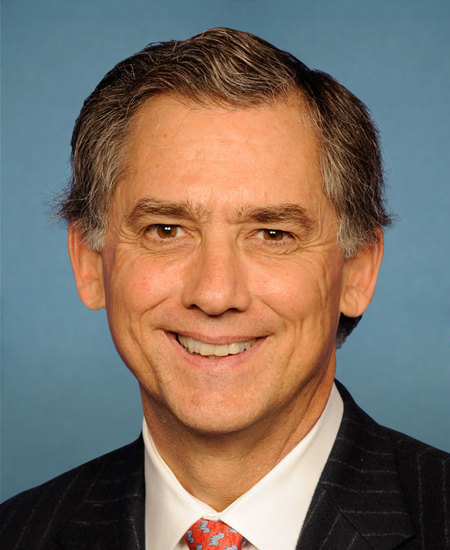
Rep. J. French Hill
Sponsored bills
Maddy summaryThis bill designates an annual "Hostage and Wrongful Detainee Day" and establishes a specific flag for recognition. It requests the President issue yearly proclamations designating the day and calls for public observance, while requiring the designated flag to be displayed at the Capitol, White House, and State/Defense Department buildings on Flag Day (June 14), Independence Day (July 4), and days when U.S. citizens return from or die while held hostage/wrongfully detained abroad.
Maddy summaryHR 1414, the Keep Innovation in America Act, clarifies the definition of "broker" under tax law to include entities facilitating digital asset sales at customer direction, directly affecting digital asset exchanges and platforms. It defines "digital asset" as value recorded on a secure ledger and requires brokers to report certain transactions involving digital assets starting in 2025. The bill also mandates a Treasury study on treating digital assets as "cash" under specific tax rules, analyzing privacy, innovation, and competitiveness impacts. These changes aim to align tax reporting with digital asset technology while avoiding burdens on non-broker developers like miners or validators.
Maddy summaryThe TABS Act of 2023 would rename the Consumer Financial Protection Bureau (CFPB) to the Consumer Financial Empowerment Agency (CFEA) throughout U.S. federal law. This bill would change the agency's name in the Consumer Financial Protection Act of 2010 and over 25 other federal statutes, including the Dodd-Frank Act and Truth in Lending Act. The bill does not alter the agency's responsibilities, authority, or budget structure - only its name. This is a procedural change affecting all federal documents, regulations, and references to the agency.
Maddy summaryHR 1388 authorizes the minting of commemorative coins to honor the 1865 Sultana steamboat disaster, the deadliest maritime tragedy in U.S. history. It specifies three coin types ($5 gold, $1 silver, and half-dollar) with defined weights and compositions, to be sold at face value plus surcharges ($35, $10, and $5 per coin, respectively). All surcharges collected will fund the Sultana Historical Preservation Society for museum development, including exhibits, artifact preservation, and facility construction. The coins are legal tender but intended for collectors, with sales limited to a one-year period starting January 2023.
Maddy summaryHR 1313, the Transparency in CFPB Cost-Benefit Analysis Act, requires the Consumer Financial Protection Bureau (CFPB) to include detailed cost-benefit analyses in all proposed financial regulations. The bill mandates that the CFPB explain the need for a regulation, assess costs and benefits for small businesses and the economy, evaluate alternatives, and justify decisions where benefits don't outweigh costs. It also requires consultation with the Small Business Administration if a rule increases costs for small businesses and a distribution analysis of burdens. This bill directly affects the CFPB's rulemaking process by increasing transparency in how financial regulations are developed.
Maddy summaryHRES 132 is a non-binding House resolution expressing condolences for the over 36,000 earthquake victims in Türkiye and Syria and commending humanitarian response efforts. It specifically condemns the Assad regime for obstructing aid delivery and exploiting the disaster, urging the Biden administration to open all UN border crossings for aid and prevent U.S.-funded assistance from being diverted to Syria’s government. The resolution also calls for continued enforcement of the Caesar Syria Civilian Protection Act to protect Syrian civilians. As a symbolic resolution, it does not create new law but formally directs the administration’s diplomatic approach to the crisis.
CBDC Anti-Surveillance State Act This bill limits the ability of the Federal Reserve to (1) provide direct services to individuals, and (2) use a central bank digital currency. A central bank digital currency is a digital currency (e.g., Bitcoin or Ether) issued by a government-backed central bank. Specifically, the bill prohibits the Federal Reserve and the Federal Open Market Committee from using any central bank digital currency to implement monetary policy. In addition, a Federal Reserve bank is prohibited from offering products or services directly to an individual, maintaining an account on behalf of an individual, or issuing a central bank digital currency directly to an individual. The Federal Reserve must (1) consult with each Federal Reserve bank with respect to any central bank digital currency study or pilot program, and (2) issue quarterly reports on the findings and determinations of any such study or program.
Maddy summaryHR 976, the TCJA Permanency Act, makes permanent many tax provisions from the 2017 Tax Cuts and Jobs Act (TCJA) that were scheduled to expire after 2025. The bill affects individual taxpayers by keeping lower tax rates, higher standard deductions, increased child tax credits, and other key changes permanently. Key provisions include permanent modifications to income tax brackets, repeal of personal exemptions, limits on state and local tax deductions, and increased estate and gift tax exemptions. These changes would prevent the tax code from reverting to pre-TCJA rates and rules for millions of taxpayers.
Maddy summaryHRES 111 is a non-binding resolution supporting the designation of February 8, 2023, as "Boy Scouts of America Day" to commemorate the organization's 113th anniversary. The resolution highlights the Boy Scouts of America's founding in 1910, its mission to develop youth character and leadership, and its community service contributions (including over 17.7 million service hours in 2022). It does not create new laws, impose obligations, or affect any specific group directly - it is purely a symbolic gesture by the House of Representatives.