

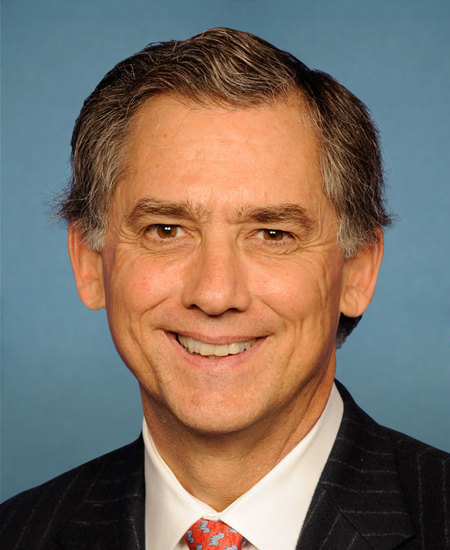
Maddy summaryHR 5396, the Price Stability Act of 2025, amends the Federal Reserve Act by removing "maximum employment" from the Fed's statutory mandate, leaving "stable prices" as the sole policy goal. This change directly affects the Federal Reserve's legal framework for conducting monetary policy. The bill modifies the language in Section 2A of the Federal Reserve Act (12 U.S.C. 225a) without creating new programs or impacting specific groups or industries. It is a procedural adjustment to the Fed's founding law.
Rep. J. French Hill
Sponsored bills
Maddy summaryThe Unleashing AI Innovation in Financial Services Act establishes "AI Innovation Labs" within major financial regulatory agencies to enable financial institutions to test AI-driven financial products and services with temporary regulatory flexibility. Financial institutions can apply for approval to operate AI test projects under alternative compliance strategies that must demonstrate public benefit, risk management, and consumer protection while avoiding systemic risks. Regulators must review applications within 120 days (extendable to 240 days), and approved projects operate under the alternative strategy for a defined period with annual reporting requirements. The bill creates a structured framework for innovation in financial services while maintaining oversight through defined application processes and regulatory reporting.
Maddy summaryHR 941, the Small LENDER Act, creates a 3-year compliance period and a subsequent 2-year penalty-free period for small lenders required to report small business lending data under a new rule. It directly affects financial institutions that originated at least 500 small business loans in each of the previous two years (defined as loans to businesses with under $1 million annual revenue). The bill delays full enforcement of new data reporting requirements, giving lenders time to adjust without penalties during the grace periods. This changes how the Consumer Financial Protection Bureau enforces reporting rules for smaller lenders focused on small business loans.
Maddy summaryThis bill, known as the Stopping Harmful and Outrageous Torts Act, expands legal protections for firearm manufacturers and sellers by strengthening their immunity from civil lawsuits. It requires courts to immediately dismiss any pending cases against these companies that are based on the criminal or unlawful misuse of a gun by a third party, while also clarifying that sellers are not liable for negligence in entrusting products to others. The legislation further restricts who can file such suits by prohibiting foreign governments from bringing these claims and adding a specific exception for victims under the age of 17, though it maintains immunity for cases involving design or manufacturing defects. Additionally, the bill allows companies to move these cases to federal court and grants them the right to appeal dismissal orders immediately, along with the ability to recover legal fees if they win. Finally, it preempts state and local laws that attempt to impose liability on these entities for the same types of misuse-related harms.
Maddy summaryHR 7086 creates a federal grant program to help states improve charter schools' access to facilities. It provides competitive grants to state education agencies that submit detailed plans showing how they will increase charter schools' access to funding, public buildings, and adequate facilities - particularly in low-income and rural communities. States receiving grants must use federal funds (capped at 60% of costs) to support facility acquisition, leasing, renovation, or financing mechanisms, while ensuring these funds supplement - rather than replace - existing state resources. The bill directly affects charter schools and state education agencies, focusing on closing facility access gaps between charter schools and traditional public schools.
Maddy summaryThis bill increases monthly disability compensation for veterans eligible for aid and attendance by adding a $833.33 supplemental payment, effective December 2026. It also creates an automatic adjustment for dependency and indemnity compensation (DIC) payments, tying them to Social Security benefit increases plus an additional 1%, for up to five years starting December 2026. Additionally, it temporarily allows the VA to collect fees for certain housing loans from veterans with a 70% or lower disability rating (2025-2035), effective August 2026. These changes directly affect veterans receiving disability compensation, surviving family members receiving DIC, and veterans applying for VA-guaranteed housing loans.
Maddy summaryThis bill creates a new exception for small community banks under the FDIC's deposit broker rules. It allows banks with less than $10 billion in assets to treat certain custodial deposits (like retirement plan funds held in trust) as non-brokered deposits, provided they don't exceed 20% of the bank's total liabilities. The bill also restricts interest rates on these deposits for banks that aren't "well capitalized," capping rates at normal market levels for similar deposits. This directly affects small community banks handling trust deposits, easing regulatory constraints while preventing excessive interest payments. The key change is clarifying how custodial deposits are counted for regulatory purposes.
Maddy summaryThis bill would add pharmacist services to Medicare Part B coverage for beneficiaries, specifically covering pharmacist-led testing and treatment for illnesses like flu, COVID-19, or strep throat during public health emergencies. It defines covered services as those performed under state law, often requiring collaboration with a physician, and sets payment at 80% of the lesser of the actual charge or 85% of physician payment rates. Pharmacists would be prohibited from balance billing for these services, ensuring Medicare beneficiaries pay only their standard copayment. The changes would take effect January 1, 2026.
Maddy summaryThe Smithsonian American Women’s History Museum Act authorizes the creation of a new Smithsonian museum dedicated to women’s history, to be located within the National Mall Reserve in Washington, D.C. If the site is managed by another federal agency, the bill requires that agency to transfer the land after notifying Congress and relevant committees. The museum must ensure exhibits and programs accurately represent diverse women’s experiences by consulting a broad range of experts and community voices. The Smithsonian will submit biennial reports to Congress detailing how the museum meets these representation standards.
Maddy summaryThis resolution directs the House to agree to a Senate amendment for a comprehensive housing bill that updates federal programs to increase housing supply, improve affordability, and modernize regulations. The legislation directly affects homeowners, renters, local governments, financial institutions, and federal agencies by establishing new grant programs, revising loan limits, and streamlining environmental reviews for construction projects. Key provisions include creating incentives for small-dollar mortgages, expanding funding for affordable housing and rural development, updating standards for manufactured and modular homes, and enhancing oversight of housing regulators and community banks. Additionally, the bill introduces specific measures to address homelessness, support veterans, and improve the efficiency of interagency coordination among HUD, USDA, and VA.