

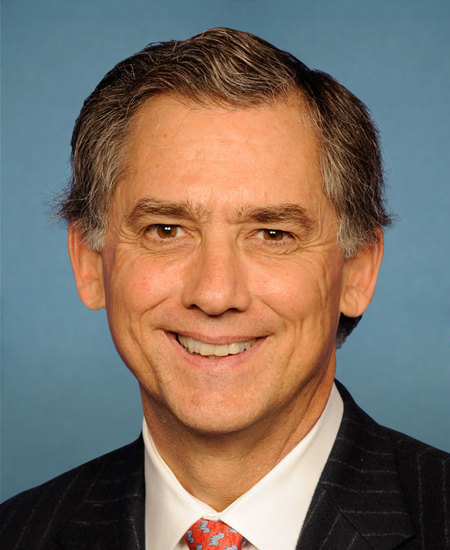
Photo of J. French Hill
R United States House · District 2 · Arkansas On the 2026 ballot

Rep. J. French Hill

Compare
Total votes
2,837
all sessions
Attendance
99%
31 missed
Near the chamber average
With party
95%
of cast votes
Near the chamber average
Bipartisan score
3%
crosses aisle rarely
Near the chamber average
Sponsored
666
bills & resolutions
Lower than 86% of chamber peers
Committees
4
assignments
666 bills and resolutions

Sponsored bills

Total
666
Primary
93
Co-sponsor
573
This page
666
matching current filters
Co-sponsor HR 9198
In committee · Indiana House · Co-sponsor
Maximize Risk-Informed, Performance-Based Licensing Act

Maddy summaryThis bill (HR 9198) updates nuclear licensing rules to require the Nuclear Regulatory Commission (NRC) to use risk-informed and performance-based approaches when making decisions about nuclear facility operations. It amends existing law to define "technology-inclusive regulatory framework" to align with a 1999 NRC document (SRM-SECY-98-144) and mandates annual NRC staff training on these concepts. The bill also includes a non-binding congressional statement emphasizing the importance of shared understanding between the NRC and nuclear industry regarding these regulatory methods. It directly affects NRC staff, nuclear facility operators, and the licensing process for nuclear energy projects.

In committee Jul 30, 2024 1 co-sponsor
Co-sponsor HR 9199
In committee · Indiana House · Co-sponsor
To amend the Atomic Energy Act of 1954 and the Nuclear Energy Innovation and Modernization Act to limit the type of applications reviewed by the Advisory Committee on Reactor Safeguards and to exclude reviews by the Advisory Committee on Reactor Safeguards from the Nuclear Regulatory Commission's annual assessment and collection of fees and charges.

Maddy summaryHR 9199 limits the scope of reviews conducted by the Advisory Committee on Reactor Safeguards (ACRS) under the Atomic Energy Act. It restricts ACRS to only reviewing nuclear license applications involving novel issues or significant safety concerns, based on risk assessments by the committee. The bill also removes ACRS reviews from the Nuclear Regulatory Commission's (NRC) annual fee calculations for license applications. This directly affects the NRC's process for handling license applications and the fee structure for nuclear facility operators seeking approvals.

In committee Jul 30, 2024 1 co-sponsor
Co-sponsor HR 9183
In committee · Indiana House · Co-sponsor
STAR Act of 2024

Maddy summaryThe STAR Act of 2024 creates a new 25% tax credit for semiconductor companies in the United States, specifically for qualified semiconductor design expenditures. This credit applies to both in-house design costs (like employee wages for design work and supplies used in design) and contracted design work paid to external firms, all conducted within the U.S. The bill directly affects U.S.-based semiconductor manufacturers and design firms by reducing their tax liability for eligible design expenses. The credit is added to the existing advanced manufacturing investment credit, with specific exclusions for non-qualifying activities like cosmetic design or duplicating existing products.

In committee Jul 30, 2024 1 co-sponsor
Co-sponsor HR 9201
In committee · Indiana House · Co-sponsor
Nuclear USA Act of 2024

Maddy summaryThe Nuclear USA Act of 2024 expands tax incentives for nuclear energy infrastructure by amending two key tax provisions. It adds uranium conversion, enrichment, fabrication, and spent fuel reprocessing to the list of qualifying projects under Section 48C of the tax code, directly benefiting companies building or upgrading facilities for these activities. The bill also specifically includes uranium in the advanced manufacturing credit (Section 45X), allowing companies to claim both credits for the same facility - a "double benefit" provision. These changes aim to encourage domestic investment in nuclear fuel supply chains without altering regulatory requirements or imposing new government mandates.

In committee Jul 30, 2024 1 co-sponsor
Co-sponsor HR 9164
In committee · Indiana House · Co-sponsor
Employer Participation in Repayment Act

Maddy summaryThis bill permanently removes a 2026 expiration date for a tax exclusion allowing employers to pay employees' student loans through educational assistance programs without those payments being counted as taxable income. It directly affects employees who receive employer-sponsored student loan repayment assistance and employers offering such programs. The key provision amends the Internal Revenue Code to make this tax exclusion permanent, applying to all future payments made after the bill's enactment. This change simplifies the tax treatment for both employers and employees participating in these student loan repayment programs.

In committee Jul 25, 2024 1 co-sponsor
Co-sponsor HR 9160
In committee · Indiana House · Co-sponsor
PLO and PA Terror Payments Accountability Act of 2024

Maddy summaryThis bill imposes sanctions on individuals and entities within the Palestinian Authority (PA) and Palestine Liberation Organization (PLO) that administer or support a system paying terrorists and their families. It targets PA/PLO officials, specific entities like the Commission of Prisoners, and financial institutions processing these payments, requiring property blocking, visa bans, and restrictions on U.S. financial transactions. The sanctions apply if the PA/PLO continues payments described in the Taylor Force Act (2018), which previously mandated ending such payments. The bill terminates if the Secretary of State certifies the PA/PLO has ceased these payments.

In committee Jul 25, 2024 1 co-sponsor
Co-sponsor HJRES 164
In committee · Indiana House · Co-sponsor
Providing for congressional disapproval under chapter 8 of title 5, United States Code, of the rule submitted by the Department of Commerce relating to "Revision of Firearms License Requirements".

Maddy summaryHJRES 164 is a congressional resolution seeking to block a rule issued by the Department of Commerce regarding firearms license requirements. It directly targets the rule published in the Federal Register (89 Fed. Reg. 34680), which would have revised licensing procedures for firearms dealers. If passed, the resolution would prevent this rule from taking effect by invoking the congressional disapproval process under federal law. The bill does not create new regulations but aims to halt an existing rule affecting gun license applicants and dealers.

In committee Jul 11, 2024 1 co-sponsor
Co-sponsor HJRES 109
Vetoed · Indiana House · Co-sponsor
Providing for congressional disapproval under chapter 8 of title 5, United States Code, of the rule submitted by the Securities and Exchange Commission relating to "Staff Accounting Bulletin No. 121".

Maddy summaryHJRES 109 is a procedural resolution seeking congressional disapproval of a Securities and Exchange Commission (SEC) accounting rule. It targets the SEC's "Staff Accounting Bulletin No. 121" (SAB 121), which provides guidance on revenue recognition accounting for public companies. The resolution invokes federal law (Chapter 8 of Title 5) to block the rule, following a Government Accountability Office (GAO) determination that SAB 121 qualifies as a "rule" subject to congressional review. If enacted, this resolution would prevent SAB 121 from taking effect, directly affecting how public companies report revenue in financial statements.

Vetoed Jul 11, 2024 1 co-sponsor
Co-sponsor HR 8993
In committee · Indiana House · Co-sponsor
Focus on Learning Act

Maddy summaryThe Focus on Learning Act (HR 8993) directs the U.S. Department of Education to study how mobile device use affects students in elementary and secondary schools, examining impacts on learning, mental health, classroom behavior, and school climate. It also establishes a pilot program where school districts can apply for grants to purchase secure containers for storing student mobile devices during school hours, creating a "school environment free of mobile devices." Schools participating in the pilot must maintain communication systems for staff, allow parental contact, and provide exemptions for health needs, students with disabilities, and English learners needing translation. The bill affects all public K-12 schools and requires parental notification before implementing device storage policies. The study results and pilot data will be reported to Congress and made public within two years of enactment.

In committee Jul 10, 2024 1 co-sponsor
Co-sponsor HR 8928
In committee · Indiana House · Co-sponsor
Returning Power to the People Act of 2024

Maddy summaryThis bill ends judicial deference to federal agency interpretations of laws (known as "Chevron deference"). It requires agencies to review past interpretations they relied on under Chevron, publish revised positions, and only issue rules when explicitly authorized by Congress. The bill also mandates that courts interpret statutes themselves rather than favoring agency views, requires criminal penalties to include proof of intent ("mens rea"), and ensures agency decisions are based only on publicly accessible materials. These changes directly affect federal agencies, courts, and individuals or businesses subject to agency regulations or penalties.

In committee Jul 2, 2024 1 co-sponsor
Showing 221 to 230 of 666 bills
Previous 1 … 22 23 24 … 67 Next