

Maddy summaryHR 9527, the *Protecting Our Land from Federal Overreach Act of 2024*, prohibits the federal government from using eminent domain or federal funds to acquire land for interstate electric transmission lines. It amends the Federal Power Act to block federal agencies from forcing land sales for such projects and requires states to approve permits before transmission facilities can be built or modified within their borders. Specifically, the bill eliminates federal authority to exercise eminent domain for these facilities and mandates that the Federal Energy Regulatory Commission (FERC) cannot issue permits if a state objects. This directly affects landowners whose property might be targeted for transmission projects, states with siting authority, and federal energy agencies managing infrastructure.
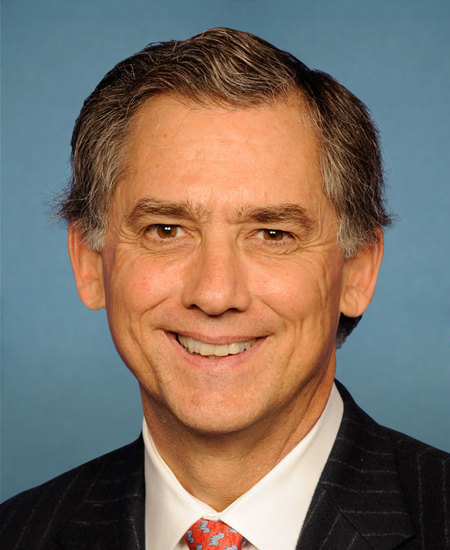
Rep. J. French Hill
Sponsored bills
Maddy summaryHR 554, the Taiwan Conflict Deterrence Act of 2023, requires the U.S. Treasury to report annually for three years on financial assets held by specific Chinese Communist Party officials involved with Taiwan, including Politburo members and certain Central Committee members. It mandates that U.S. financial institutions cannot engage in significant transactions with these officials or their immediate family (spouses, children, parents) if the Treasury finds they benefit from funds detailed in the reports. The prohibition on financial transactions expires either 30 days after the President certifies the threat to U.S. interests has ended or 25 years after the final report is submitted. The law aims to deter actions by China that threaten Taiwan by targeting financial ties of high-level officials.
Maddy summaryHJRES 125 is a congressional resolution seeking to block a Federal Reserve rule requiring large financial institutions to manage climate-related financial risks. It targets the rule published in the Federal Register on October 30, 2023 (88 Fed. Reg. 74183), which established "Principles for Climate-Related Financial Risk Management." The resolution would prevent this rule from taking effect by invoking a specific legal process under Title 5 of the U.S. Code. This disapproval resolution directly affects major banks and financial firms subject to the Federal Reserve's oversight.
Maddy summary# Summary of Proposed Digital Assets and Financial Technology Legislation This comprehensive legislation establishes a new regulatory framework for digital assets and financial technology in the United States, creating a balanced approach that promotes innovation while protecting consumers and maintaining market integrity. Key components include: 1. **Digital Asset Regulatory Structure**: - New requirements for digital commodity exchanges, including transparency standards, customer asset protection, and operational safeguards - Qualified digital commodity custodians with specific regulatory requirements - Digital commodity brokers and dealers with registration and operational standards 2. **New Regulatory Bodies**: - FinHub (Strategic Hub for Innovation and Financial Technology) within the SEC to foster responsible innovation - LabCFTC within the CFTC to serve as an information platform for financial technology innovation - CFTC-SEC Joint Advisory Committee on Digital Assets to promote regulatory harmonization 3. **Mandatory Studies**: - Study on decentralized finance (DeFi) examining its nature, risks, benefits, and integration with traditional markets - Study on non-fungible digital assets (NFTs) analyzing their market structure, benefits, and risks - Study on financial market infrastructure improvements to facilitate tokenized securities and derivatives 4. **Modernization of Regulatory Approach**: - Updates to SEC's mission to explicitly include "innovation" alongside "efficiency" - Enhanced information sharing between agencies - Clearer definitions of ancillary activities that don't require full regulatory registration The legislation aims to create a regulatory environment that encourages responsible innovation in digital assets while maintaining market integrity, consumer protection, and financial stability. It establishes a comprehensive framework for regulating digital commodities as a distinct asset class with specific requirements for market participants.
Maddy summaryHR 9428 amends Section 1382 of Title 18, U.S. Code, to increase the maximum prison sentence for breaching a military base from six months to one year. This bill directly affects individuals convicted of illegally entering or remaining on military property without authorization. The key provision is a straightforward penalty increase for this specific criminal offense. The bill makes no other changes to the law and focuses solely on raising the maximum term of imprisonment for this violation.
Maddy summaryHR 9395 requires the Secretary of Defense to provide Congress with a briefing on any attempted breach of a Department of Defense military installation occurring since January 1, 2021. Each briefing must include the immigration status and citizenship status of every person involved in the attempted breach. The bill directly affects the Department of Defense (which must provide the briefings) and Congress (which receives them). This is a procedural requirement focused on transparency about security incidents, not a policy change to military operations or immigration law.
Maddy summaryHR 9374, the Stand with Israel Act, prohibits U.S. federal funds from being used to support the United Nations or its entities if they restrict Israel's full participation as a member state. The bill specifically blocks funding for any UN body that expels, downgrades, or suspends Israel's membership or limits its ability to participate equally with other nations. This affects U.S. government contributions to the UN, requiring the Department of State and other agencies to halt funding for such UN actions. The key mechanism is a new provision in the UN Participation Act that mandates this funding restriction whenever Israel's UN participation is impaired.
Maddy summaryThis bill establishes regulatory sandboxes for financial institutions to test AI-driven products under modified regulatory requirements. It directly affects banks, brokers, credit unions, and other entities regulated by agencies like the SEC, Federal Reserve, or CFPB. Institutions can apply for temporary waivers of specific rules by submitting detailed proposals demonstrating public benefit, consumer protection, and no systemic risk, with agencies required to review applications within 90 days. Approved projects must operate under defined limits, terminate within a year, and report outcomes annually to Congress.
Maddy summaryThis concurrent resolution authorizes the use of Emancipation Hall in the Capitol Visitor Center for a ceremony on September 24, 2024, to unveil a statue of Johnny Cash provided by the State of Arkansas. The resolution permits the Architect of the Capitol to set conditions for physical preparations related to the event. It does not create new laws or affect any policies, as it solely addresses the ceremonial use of a public space for a commemorative event. The bill is sponsored by Representatives Crawford, Hill, Womack, and Westerman.
Maddy summaryHJRES 195 is a resolution seeking congressional disapproval of a rule issued by the Bureau of Consumer Financial Protection (CFPB) that would have regulated "Buy Now, Pay Later" (BNPL) loans accessed through digital user accounts under the Truth in Lending Act (Regulation Z). The rule, published in May 2024, aimed to require financial institutions to provide clear disclosures to consumers about BNPL terms and fees. If passed, this resolution would block the rule from taking effect, preventing the CFPB's proposed disclosure requirements for digital BNPL services from being enforced. The resolution directly affects the CFPB's regulatory authority and financial institutions offering BNPL products.