

Maddy summarySB 207 sets a deadline for new adverse possession claims in Indiana, prohibiting courts from hearing such cases after June 30, 2025. It directly affects individuals or entities attempting to gain legal ownership of property through long-term, open occupation without the owner's permission. The key provision establishes this cutoff date for filing new claims, while existing claims or cases filed before the deadline remain unaffected. This bill modifies Indiana’s property law to prevent future adverse possession disputes after the specified date.
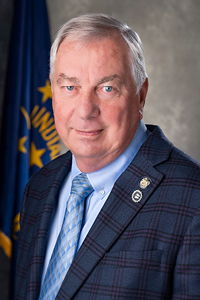
Sen. Jim Tomes
Sponsored bills
Requires the Indiana department of veterans' affairs to establish and administer a hyperbaric oxygen treatment program (program) to make grants to certain providers to provide diagnostic testing and hyperbaric oxygen treatment to qualified service members. Establishes program requirements. Requires the Indiana department of health to: (1) issue a request for proposals to offer treatment under the program; and (2) adopt rules to implement these provisions, including rules concerning program eligibility, treatment plan requirements, criteria for approving payments for treatment, and confidentiality. Provides that funding for the program is paid from the military family relief fund. Makes conforming amendments related to the sunset of the hyperbaric oxygen treatment pilot program.
Provides that certain insurance providers may not request to raise the insurer's rate more than 10% in any one year. Requires certain insurance providers to justify any requested rate increase to the insurance commissioner.
Prohibits plea agreements concerning: (1) promotion of child sexual trafficking; (2) promotion of sexual trafficking of a younger child; (3) child sexual trafficking; or (4) child solicitation; if a term of the plea agreement requires the prosecuting attorney to dismiss a charge in exchange for the defendant's agreement to plead guilty to a less serious offense. Adds facilities that provide entertainment exclusively directed toward children to the list of facilities at which a sexually violent predator or an offender against children may not work or volunteer, and increases the penalty for the offense of unlawful employment by a sexual predator to a Level 4 felony, with an enhancement to a Level 3 felony if the person has a prior conviction based on the violation of a condition of sex offender registration. Provides that a sexually violent predator or an offender against children who knowingly or intentionally is present at a facility that provides entertainment exclusively directed toward children commits attendance at a juvenile entertainment facility by a sex offender, a Level 4 felony, with an enhancement to a Level 3 felony if the person has a prior conviction based on the violation of a condition of sex offender registration.
Prohibits a person from knowingly or intentionally: (1) prescribing or possessing an abortion inducing drug; or (2) sending an abortion inducing drug to a person located in Indiana, if the person located in Indiana possesses the abortion inducing drug. Provides that each offense is a Class A misdemeanor with a Level 6 felony for subsequent offenses. Establishes a defense to possessing an abortion inducing drug. Provides for the discipline of a practitioner for a violation. Prohibits a nonprofit organization in Indiana from providing or offering to provide financial assistance to pay for, offset the cost of, or reimburse the cost of an abortion inducing drug. Gives the attorney general concurrent jurisdiction of actions concerning abortion inducing drugs. Requires a woman who is pregnant as a result of rape or incest to provide to her physician an affidavit attesting to the rape or incest before the physician performs the abortion. Prohibits state employee health plans, the state Medicaid program, policies of accident and sickness insurance, and health maintenance contracts from providing coverage for an abortion inducing drug. Makes conforming amendments.
Provides that a person at least 18 years of age commits sexual grooming, a Class A misdemeanor, if the person, with the intent to prepare or condition the child for future sexual activity, communicates with a child less than 14 years of age concerning sexual activity. Increases the penalty to a Level 6 felony if the grooming is committed by using a computer network, and to a Level 5 felony if the person has a prior conviction for a sex offense. Renames the offense of inappropriate communication with a child "sexual grooming", and increases the penalty to: (1) a Class A misdemeanor for the base offense; (2) a Level 6 felony if the offense is committed by using a computer network; and (3) a Level 5 felony if the person has a prior conviction for a sex offense.
Provides that the behavioral health and human services licensing board may not impose disciplinary sanctions against a practitioner if the basis of the licensing complaint is retaliatory against the practitioner for testifying in a child custody proceeding, a child in need of services proceeding, or a termination of parent-child relationship proceeding.
Defines "squatter" as an individual who occupies the property of another and who does not and has never had: (1) a rental agreement; (2) permission of the owner; or (3) another legal interest in the property. Permits a property owner to execute an affidavit stating that a squatter is occupying the person's property, and requires a law enforcement agency to dispatch one or more law enforcement officers to remove the squatter within 48 hours (or a later period if necessary for reasons of public safety). Requires a dispatched law enforcement officer to remove the squatter from the property unless the law enforcement officer discovers credible written evidence that the person is not a squatter.
Prohibits the state or a political subdivision of the state from assisting an individual in seeking or obtaining an abortion. Allows for the state or a political subdivision to inform an individual of alternatives to an abortion.
Makes it a Class B misdemeanor for: (1) a law enforcement officer to refuse to cooperate with state or federal agencies or officials in the enforcement of immigration laws; and (2) an individual to adopt a policy barring a law enforcement officer from cooperating with state or federal agencies or officials in the enforcement of immigration laws. Establishes certain defenses for the law enforcement officer.