A SENATE RESOLUTION declaring that the policy of the state is to protect the constitutional right to keep and bear arms.
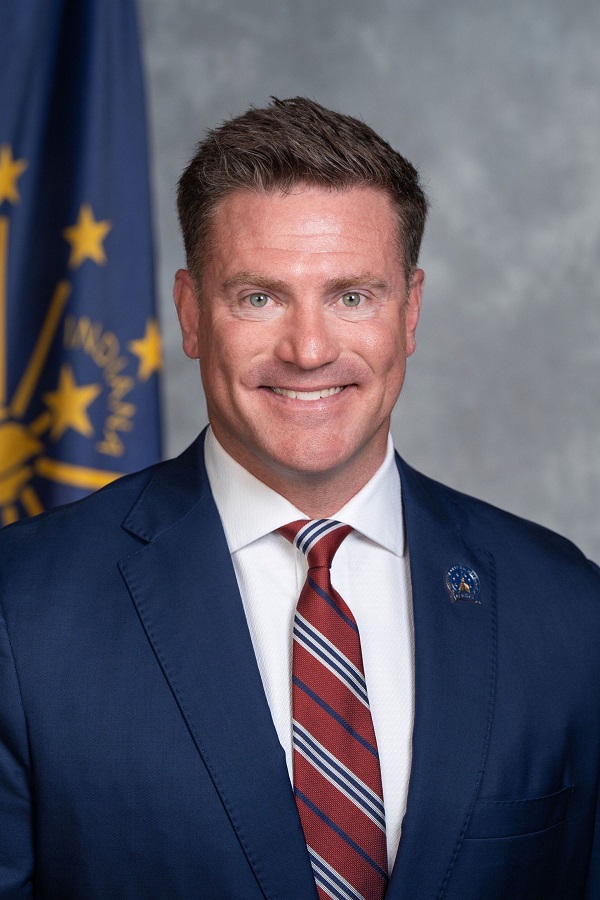
Sen. Chris Garten
Sponsored bills
Provides that the surviving spouse of a Purple Heart recipient may retain the Purple Heart specialty license plate as long as the surviving spouse does not remarry. Specifies that the surviving spouse is not eligible to receive a modified disability registration plate. Establishes the Armed Forces Expeditionary Medal specialty license plate.
Provides that a qualified nonresident veteran who enrolls in a state educational institution not later than three years after the date of the qualified nonresident veteran's discharge or separation from the armed forces of the United States or the Indiana National Guard is eligible to pay the resident tuition rate at a state educational institution. Establishes requirements for eligibility.
Extends the expiration date of the hyperbaric oxygen treatment pilot program for veterans from June 30, 2021, to June 30, 2025. Provides that certain: (1) billing documentation; or (2) attendance documentation; may be used to authenticate the receipt of hyperbaric oxygen treatments for the purpose of payment approval by the department of veterans' affairs. Removes a provision that requires the state department of health to request proposals concerning hyperbaric oxygen treatment from certain geographic areas of Indiana. Specifies that a certain appropriation does not revert to the state general fund until July 1, 2025.
A CONCURRENT RESOLUTION congratulating Silver Creek High School girls basketball team on winning the 2021 Indiana High School Athletic Association ("IHSAA") Class 3A championship title.
Effective March 30, 2022: (1) Repeals the law that requires a person to obtain a license to carry a handgun in Indiana; (2) Specifies that certain persons who are not otherwise prohibited from carrying or possessing a handgun are not required to obtain or possess a license or permit from the state to carry a handgun in Indiana; (3) Prohibits certain individuals from knowingly or intentionally carrying a handgun; (4) Creates the crime of "unlawful carrying of a handgun"; (5) Provides that a prohibited person who knowingly or intentionally carries a handgun commits a Class A misdemeanor; (6) Specifies that the unlawful carrying of a handgun is a Level 5 felony if a person: (A) is less than 23 years of age; and (B) has an adjudication as a delinquent child for an act described by IC 35-47-4-5 (unlawful possession of a firearm by a serious violent felon); (7) Allows a resident of Indiana who wishes to carry a firearm in another state under a reciprocity agreement entered into by Indiana and the other state to obtain from the superintendent of the state police department a reciprocity license; (8) Requires law enforcement agencies to make use of certain data bases when issuing reciprocity licenses; (9) Specifies the following fees for reciprocity licenses: (A) $0 for five year reciprocity licenses, and (B) $75 for lifetime reciprocity licenses; (10) Provides that a person who knowingly or intentionally exerts unauthorized control over a firearm of another person with the intent to deprive the person of any part of its value or use commits theft, a Level 5 felony; and (11) Allows for the imposition of an additional fixed term of imprisonment when a person knowingly or intentionally: (A) points; or (B) discharges; a firearm at someone the person knew, or reasonably should have known, was a first responder. Effective July 1, 2021: (1) Provides that the following must develop a process that allows law enforcement officers the ability to quickly access information about whether a person is a prohibited person who may not knowingly or intentionally carry a handgun: (A) The state police department; (B) The bureau of motor vehicles; (C) Local law enforcement agencies; and (D) Any other state entity with access to information related to persons who may not knowingly or intentionally carry a handgun; (2) Provides that the information made available to law enforcement officers must meet all state and federal statutory, constitutional, and regulatory requirements; and (3) Allows state entities to enter into a memorandum of understanding to ensure that all legal requirements are met. Defines certain terms. Makes conforming amendments.
Establishes a definition of "virtual instruction" for purposes of determining a school corporation's basic tuition support using the: (1) 2020 fall count; and (2) 2021 spring count; of average daily membership.
Extends the Indiana women's suffrage centennial commission (IWSCC) until July 1, 2024. Requires the IWSCC to commission the creation of a suitable monument to the people of Indiana active in the women's suffrage movement and the ratification of the Nineteenth Amendment to the Constitution of the United States. Requires the department of administration to install the monument commissioned by the IWSCC on the grounds of the state house before January 1, 2024.
Provides, with certain exceptions, that written or oral communications concerning the provision of peer support services and critical incident stress management services (CISM services) to a first responder are confidential and may not be disclosed without the first responder's consent. (Current law provides that communications concerning CISM services to an emergency responder are confidential.) Provides that a first responder's communication is not confidential and may be disclosed: (1) to prevent the first responder from committing a crime or fraud that the provider of CISM services or peer support services reasonably believes is likely to result in death, substantial bodily harm, or substantial economic injury to another; (2) if it conveys information regarding spousal abuse; (3) if the provider of CISM services or the peer support services was a witness or a party to the incident resulting in the provision of services to the first responder; or (4) if the first responder consents to disclosure. Provides that a person providing peer support services is not liable for damages for an act, error, or omission committed by the person in performing peer support services unless the act, error, or omission constitutes wanton, willful, or intentional misconduct.
Provides that a personal delivery device may operate in Indiana under certain circumstances, but may not operate on portions of any state route, U.S. route, or interstate highway comprising the state highway system located in a municipality. Requires a personal delivery device operator to maintain certain levels of insurance coverage. Provides that a personal delivery device is exempt from motor vehicle licensing and registration requirements. Provides that a political subdivision may participate in the regulation of personal delivery devices. Provides that local governments shall not be required to make or pay for infrastructure improvements for the purpose of better accommodating personal delivery devices. Provides that a political subdivision may not enact or enforce an ordinance or resolution relating to: (1) the design, manufacture, maintenance, certification, licensing, registration, taxation, assessment, or insurance of a personal delivery device; or (2) the types of property that may be transported by a personal delivery device.