

Establishes the scholarship for minority students pursuing health care careers (scholarship) and the minority students pursuing health care careers fund (fund). Provides that the commission for higher education (commission) administers the scholarship program and the fund. Prescribes qualifications necessary to: (1) receive an initial scholarship; and (2) qualify for renewal of the scholarship. Provides that the amount of the scholarship awarded for an academic year is the lesser of: (1) the balance of the scholarship recipient's total cost of attendance for the academic year after the application of any other financial assistance for which the scholarship recipient qualifies; or (2) $4,000. Requires a scholarship recipient to enter into a written agreement with the commission to: (1) use the scholarship solely to fund a course of study resulting in a degree or certificate that enables the individual to practice as a health care professional in Indiana; (2) apply for a position as a health care professional in Indiana following the individual's licensure or certification as a health care professional; and (3) if hired, practice as a health care professional in Indiana for at least three years. Requires a scholarship recipient to repay the scholarship if the scholarship recipient fails to: (1) complete the scholarship recipient's program of study; or (2) complete the terms of the scholarship recipient's agreement with the commission. Annually appropriates to the fund from the state general fund an amount sufficient to carry out the purposes of the scholarship program. Requires the commission to report to the general assembly not later than December 1, 2026, regarding the effect of the scholarship program.
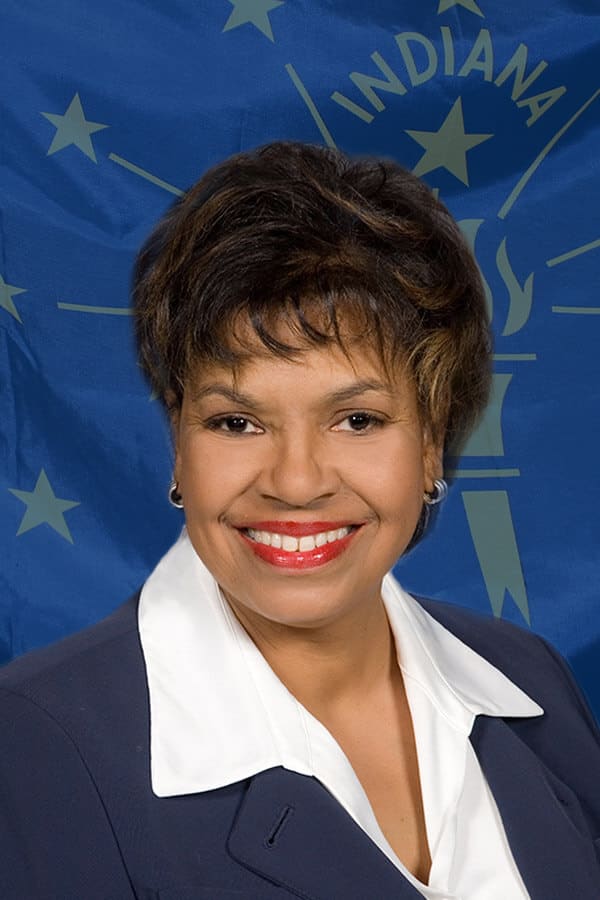
Sponsored bills
Adds a member to the Medicaid advisory committee who represents an organization that serves underserved or minority communities.
Directs certain civil forfeiture proceeds to the United Way organization in each county (or to a United Way organization that serves the county if the county lacks a United Way organization) to be used to provide grants to aid the community. Prohibits the use of certain other civil forfeiture proceeds to purchase or facilitate the acquisition of armored vehicles, military-style weapons, or surplus military equipment. Repeals a provision authorizing the transfer of seized property to the United States. Makes conforming amendments.
Requires a utility that: (1) is under the jurisdiction of the Indiana utility regulatory commission (IURC) for the approval of rates and charges; and (2) provides electric, natural gas, water, or wastewater utility service at retail to residential customers and low income customers in Indiana; to annually report to the IURC certain data concerning customer accounts and low income customer accounts. Provides that: (1) a utility shall report all required information in the aggregate and in a manner that does not identify individual customers and low income customers; and (2) the IURC may not require utilities to disclose confidential and proprietary business information without adequate protection of the information. Authorizes the IURC to adopt rules and emergency rules to implement these provisions. Provides that, beginning in 2023, the IURC shall annually compile and summarize the information received from utilities for the most recent reporting period and include the IURC's summary of the information in the IURC's annual report to the interim study committee on energy, utilities, and telecommunications.
Requires the state department of health to compile case and death data related to COVID-19 reported by health facilities and residential care facilities in a specified manner and publish the information on the state department's Internet web site. Requires the state department to update the data at least every seven days. Provides that the reporting and publishing requirements expire April 1, 2022.
Replaces statutory references to "dangerous communicable disease" with "serious communicable disease". Replaces statutory references to "carrier" with "individual with a communicable disease". Makes conforming amendments.
Provides that a qualifying farmer may apply to a designating body to have an area designated as an urban agricultural zone. Provides that the term "urban agricultural zone" does not include rooftop gardening or farming practices that occur on the top of a building or residential home. Provides that a designating body, before designating an area as an urban agricultural zone, must hold a public hearing and allow for public comment. Provides that a designating body may exempt lands located partially or wholly within an urban agricultural zone from property taxation. Specifies that a designating body may not impose a special benefit tax for public services provided to an urban agricultural zone, unless the designating body imposed the special benefit tax before it designated the area as an urban agricultural zone.
Provides for the automatic expungement of certain juvenile offenses. Prohibits a juvenile arrestee who meets certain requirements from being housed with adult inmates prior to trial, with certain exceptions. Establishes a procedure for determining juvenile competency. Provides that after a juvenile court has determined that a child is a dual status child, the juvenile court may refer the child to be assessed by a dual status assessment team under certain circumstances.
Defines "mental health diagnosis" and sets forth requirements that must be met in order for certain licensed professionals to provide a mental health diagnosis. Requires certain mental health professionals who are making a mental health diagnosis and who determine that the patient may have a physical condition that requires medical attention or has not been examined by a physician, an advanced practice registered nurse, or a physician assistant in the preceding 12 months to: (1) advise the patient to schedule, and offer to assist the patient with scheduling, a physical examination for the patient; (2) provide the patient with a list of practitioners and certain information concerning the practitioners; and (3) coordinate patient care with the practitioner as appropriate. Requires documentation of the actions of the licensed professional in the patient's medical record.
Reestablishes the 21st century energy policy development task force (task force), following its expiration on December 2, 2020. Provides that the task force consists of 17 members as follows: (1) Six members of the house of representatives, with four of those members appointed by the speaker, and two appointed by the minority leader. (2) Six members of the senate, with four of those members appointed by the president pro tempore, and two appointed by the minority leader. (3) The utility consumer counselor or the utility consumer counselor's designee. (4) The public finance director or the public finance director's designee. (5) Three members appointed by the governor, each of whom must have specified experience with respect to energy. Provides that: (1) one of the members appointed by the speaker; and (2) one of the members appointed by the president pro tempore; shall serve as co-chairs of the task force. Provides that an individual appointed to serve on the task force at any time before December 2, 2020, under the expired statute governing the task force may be appointed to serve on the task force after December 1, 2020, under these new provisions, at the discretion of the appointing authority. Provides that: (1) all meetings of the task force shall be open to the public in accordance with the state's open door law; and (2) all records of the task force are subject to the requirements of the state's public records law. Sets forth specific issues that the task force must study not later than November 1, 2022. Requires the task force to: (1) develop recommendations for the general assembly and the governor concerning these issues; (2) issue a report setting forth the recommendations developed; and (3) not later than November 1, 2022, submit the report to the executive director of the legislative services agency, the governor, the chair of the utility regulatory commission, and the utility consumer counselor. Provides that these provisions expire July 2, 2023.