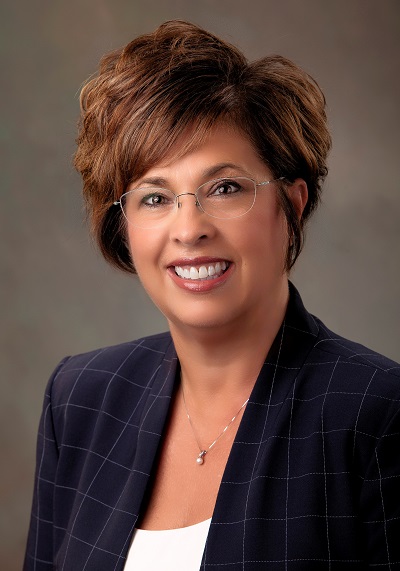
Photo of Stacey Donato
R Indiana Senate · District 18

Sen. Stacey Donato

Compare
Total votes
1,872
all sessions
Attendance
97%
48 missed
Near the chamber average
With party
97%
of cast votes
Near the chamber average
Bipartisan score
2%
crosses aisle rarely
Near the chamber average
Sponsored
432
bills & resolutions
Near the chamber average
Committees
6
assignments
432 bills and resolutions

Sponsored bills

Total
432
Primary
138
Co-sponsor
294
This page
432
matching current filters
Co-sponsor HB 1002
Vetoed · Indiana House · Co-sponsor
Enforcement of equal educational opportunity.

Defines "antisemitism", specifies that the public policy of the state is to provide educational opportunities free of religious discrimination, and provides that antisemitism is discrimination on the basis of race, creed, religion, or national origin.

Vetoed Mar 18, 2024 1 co-sponsor
Primary SB 149
Signed into law · Indiana Senate · Lead sponsor
Tobacco.

Prohibits a retail establishment from holding more than one active tobacco sales certificate (certificate) for a retail location at any time. Prohibits the alcohol and tobacco commission (commission) from issuing a certificate to certain persons. Provides that, if a majority interest in a business that holds a certificate is sold or transferred: (1) the new ownership must apply for a new certificate; and (2) the certificate and permit number held by the previous ownership are void 90 days after the sale or transfer of the ownership of the business. Specifies that an employee of a certificate holder (employee) must hold a valid: (1) driver's license issued by the state of Indiana or another state; or (2) identification card issued by the state of Indiana, another state, or the United States; to sell tobacco products. Requires an employee to have the driver's license, identification card, or a copy of these documents readily available to show an excise officer or law enforcement when selling tobacco products. Allows an employee who is unable to show these documents to provide certain evidence within five days. Permits the commission to impose a civil penalty on the certificate holder if an employee fails to timely produce this evidence. Provides that a person who recklessly, knowingly, or intentionally sells a tobacco product without a valid certificate commits a Class C infraction. Makes it a Class C misdemeanor for a person to operate a tobacco and vaping business within 1,000 feet of school property. Specifies exceptions.

Signed into law Mar 13, 2024 0 co-sponsors
Co-sponsor SB 202
Signed into law · Indiana Senate · Co-sponsor
State educational institution matters.

Amends the duties of state educational institutions' diversity committees. Provides that certain offices or individuals established or employed by a state educational institution (institution) regarding diversity programming must include within the mission of the office or position programming that substantially promotes both cultural and intellectual diversity. Establishes various requirements and restrictions for institutions regarding free inquiry, free expression, and intellectual diversity that does the following: (1) Requires the establishment of certain policies regarding: (A) disciplinary actions for certain persons that materially and substantially disrupt protected expressive activity; (B) limiting or restricting the granting of tenure or a promotion if certain conditions related to free inquiry, free expression, and intellectual diversity are not met; and (C) disciplinary actions that will be taken if, after a review, a determination has been made that a tenured faculty member has failed to meet certain criteria related to free inquiry, free expression, and intellectual diversity. (2) Requires the review and consideration, at least every five years, of certain criteria related to free inquiry, free expression, and intellectual diversity. (3) Requires the establishment of a procedure that allows students and employees to submit complaints that a faculty member or contractor is not meeting certain criteria related to free inquiry, free expression, and intellectual diversity and establishes requirements regarding the procedure and submitted complaints. (4) Establishes consideration requirements before an institution renews an employment agreement or other contract with, makes a bonus decision regarding, or completes a review or performance assessment of a faculty member or contractor. (5) Prohibits requiring an applicant, employee, or contractor to pledge allegiance to or make a statement of personal support for: (A) certain policies or actions; or (B) political or ideological movements. (6) Establishes restrictions regarding awarding admission, enrollment, employment, benefits, hiring, reappointment, promotion, or granting tenure to an applicant, employee, or contractor on the basis of the viewpoints expressed in a submitted pledge or statement. (7) Requires certain information be included in an institution's programming for new students. (8) Requires the adoption of a statement on neutrality that makes a distinction between the official positions of an institution from the individual viewpoints of the institution's employees, contractors, students, and alumni. (9) Allows the commission for higher education (commission) to establish a survey that attempts to collect information from students regarding the current perceptions of whether free speech and academic freedom are recognized and fostered by an institution in a manner that welcomes expression of different opinions and ideologies and requires an institution to promote and provide the survey to students. (10) Establishes various reporting requirements by institutions or the commission concerning complaints submitted regarding faculty members or contractors who are not meeting certain criteria related to free inquiry, free expression, and intellectual diversity. (11) Provides that certain individuals may request the commission to review a final decision by an institution concerning a violation of these provisions. Provides that the commission may enter into an agreement with the office of administrative law proceedings to review violations of certain provisions and issue an opinion on behalf of the commission. Requires each institution to submit certain information by September 1, 2024, and on September 1 of each year thereafter.


Signed into law Mar 13, 2024 1 co-sponsor
Co-sponsor SB 9
Signed into law · Indiana Senate · Co-sponsor
Notice of health care entity mergers.

Requires health care entities to provide notice of certain mergers or acquisitions to office of the attorney general. Specifies notice requirements. Requires the office of the attorney general to review the information submitted with the notice. Allows the office of the attorney general to: (1) analyze in writing any antitrust concerns with the merger or acquisition; and (2) issue a civil investigative demand for additional information. Specifies that the information is confidential.

Signed into law Mar 13, 2024 1 co-sponsor
Primary SB 211
Signed into law · Indiana Senate · Lead sponsor
Excellence in civic engagement designation and school meetings.

Requires the department of education (department), in collaboration with the commission for higher education and subject to the approval of the state board, to establish an excellence in civic engagement designation. Requires the department to develop recommendations for an excellence in civics education designation for schools. Provides that the public hearing required before a school employer and school employee may privately negotiate certain matters may take place at a regular or special meeting of the school's governing body.

Signed into law Mar 13, 2024 0 co-sponsors
Co-sponsor HB 1102
Signed into law · Indiana House · Co-sponsor
Child care.

Revises the definition of "child care home". Limits the number of children under twelve months of age that may be provided care in a child care home. Provides that certain child care programs are exempt from licensure. Amends certain licensing requirements for a class II child care home and a child care center. Provides that certain child care providers are eligible for voucher payments. Allows certain child care programs at schools to provide services to business employees' children when the business enters into a contract with the school and certain conditions are met.

Signed into law Mar 13, 2024 1 co-sponsor
Primary SB 282
Signed into law · Indiana Senate · Lead sponsor
Absenteeism and school attendance.

Amends the duties of an attendance officer and the state attendance officer. Requires, not later than November 1 of each year, the state attendance officer to submit a report to the legislative council containing recommended legislation based on the state attendance officer's discussions with attendance officers. Requires each governing authority of a school corporation and charter school to establish a truancy prevention policy regarding certain students in kindergarten through grade 6. Provides that a prosecuting attorney shall notify each parent of a child when an affidavit is filed regarding the child's compulsory attendance violations or if the child is a habitual truant.

Signed into law Mar 13, 2024 0 co-sponsors
Co-sponsor SB 150
Signed into law · Indiana Senate · Co-sponsor
Artificial intelligence and cybersecurity.

Creates the artificial intelligence task force (task force) to study and assess use of artificial intelligence technology by state agencies. Provides that political subdivisions, state agencies, school corporations, and state educational institutions (public entities) may adopt a: (1) technology resources policy; and (2) cybersecurity policy; subject to specified guidelines. Specifies requirements for: (1) public entities; and (2) entities other than public entities; that connect to the state technology infrastructure of Indiana. Provides, with regard to a licensing contract entered into by a state agency for use of a software application designed to run on generally available desktop or server hardware, that the contract may not restrict the hardware on which the state agency installs or runs the software. Provides that if a state agency enters into a contract with a person under which the state agency runs software on hardware owned or operated by the person, the office of technology shall ensure that the state agency fully complies with the licensing terms of all software run on the person's hardware. Provides that an executive or legislative state agency may submit to the office of technology and the task force an inventory of all artificial intelligence technologies in use, or being developed or considered by the state agency for use, by the state agency. Provides that, subject to specified exceptions: (1) title to any record of state government is held by the state; and (2) title to any record of a local government is held by that local government.

Signed into law Mar 13, 2024 1 co-sponsor
Primary HB 1258
Signed into law · Indiana House · Lead sponsor
Food regulation.

For provisions governing home based food products, repeals the term "potentially hazardous food product" and defines "time temperature control for safety food". Requires a local health department to: (1) issue a mobile retail food establishment permit and inspect a mobile retail food establishment in accordance with administrative rules adopted by the Indiana department of health (state department); and (2) establish an annual permit fee not to exceed $200. Requires a local health department, not later than January 1, 2025, to begin: (1) receiving applications for mobile retail food establishments; (2) collecting annual permit fees; (3) issuing mobile retail food establishment permits; and (4) conducting inspections of mobile retail food establishments. Prohibits, beginning January 1, 2025, a person from operating a mobile retail food establishment without a mobile retail food establishment permit from the local health department. Provides that a local health department may not adopt standards concerning mobile retail food establishments that are more stringent than the rules adopted by the state department.

Signed into law Mar 13, 2024 0 co-sponsors
Co-sponsor SB 2
Signed into law · Indiana Senate · Co-sponsor
Child care.

Requires the Indiana economic development corporation to annually report to the general assembly regarding funds dedicated to supporting child care under specified state and federal programs. Defines an "out-of-school-time program". Requires the office of the secretary of family and social services (FSSA) to publish on the FSSA website a dashboard providing monthly information regarding state and federal child care subsidies available to Indiana residents. Provides that a household is eligible to begin receiving assistance under the federal Child Care and Development Fund (CCDF) voucher program if the household, at the time of FSSA's initial determination of the household's income eligibility: (1) has a household income that does not exceed 85% of Indiana's state median income for the household's family size; (2) includes an individual who is employed by a licensed child care center, a licensed child care home, or a licensed or registered child care ministry; and (3) otherwise meets federal eligibility requirements for the CCDF program. Provides, with respect to the individual with certification in cardiopulmonary resuscitation (CPR) required to be present at all times when a child is in the care of a child care provider that is eligible to receive reimbursement through the CCDF program, that the individual is not required to be recertified in CPR annually. Provides that: (1) the early learning advisory committee must commission a third party evaluation to assess existing regulations for child care providers not later than May 1, 2024 (rather than July 1, 2024, under current law); and (2) FSSA must initiate the process of amending FSSA's rules in consideration of the findings of the third party evaluation not later than July 1, 2024. Requires, not later than September 30, 2024, the early learning advisory committee to: (1) complete a study regarding compensation in Indiana for early childhood educators and caregivers at out-of-school-time programs; (2) create an online dashboard to allow access to compensation data; and (3) issue a report containing the committee's findings and recommendations. Amends provisions regarding the On My Way Pre-K voucher program (program) to: (1) provide eligibility for children of child care employees; and (2) amend references to funds provided to children under the program as prekindergarten vouchers, rather than grants. Requires FSSA to establish a micro facility pilot program, under which FSSA shall: (1) develop a regulatory model that: (A) is applicable only to certain licensed or registered child care providers that provide child care for not less than three children and not more than 30 children for at least four hours per day (micro facilities); and (B) incorporates waivers or variances from FSSA's rules applicable to certain child care providers; (2) apply the regulatory model to at least three micro facilities and evaluate the operation of the micro facilities under the regulatory model; and (3) not later than October 1, 2026: (A) make a determination as to whether FSSA will adopt rules specific to micro facilities that incorporate some or all aspects of the regulatory model; and (B) submit to the general assembly a report regarding the pilot program. Requires FSSA to do the following: (1) Amend FSSA's rules to define a "substitute educator" caregiver type for purposes of FSSA's rules pertaining to all categories of child care providers regulated by FSSA. (2) Amend FSSA's rules to allow an employee of a child care provider who: (A) is 16 or 17 years of age; (B) is assigned to a lead caregiver who supervises the employee at all times during which the employee is supervising a child; (C) is never left alone with a child; and (D) meets specified qualifications; to be counted in child/staff ratios for school age child care rooms. (3) Amend FSSA's rules to allow an employee of a child care provider who: (A) is at least 18 years of age; and (B) meets specified qualifications; to serve as the staff person in charge of an infant/toddler room. (4) Issue a report to the general assembly not later than October 31, 2024, documenting the results attributable to: (A) the employer sponsored child care fund; and (B) the employer child care expenditure credit. (5) Study, in collaboration with other specified state agencies, opportunities for resource sharing across state agencies and local units of government to facilitate the fingerprinting of individuals for purposes of conducting national criminal history background checks and issue a report to the governor and the general assembly regarding the results of the study. Makes technical corrections.

Signed into law Mar 13, 2024 1 co-sponsor
Showing 151 to 160 of 432 bills
Previous 1 … 15 16 17 … 44 Next