

Memorializing the life of Zachary Steven Eckert.
A SENATE RESOLUTION memorializing the life of Zachary Steven Eckert.
Passed Jan 24, 2022
1 co-sponsor
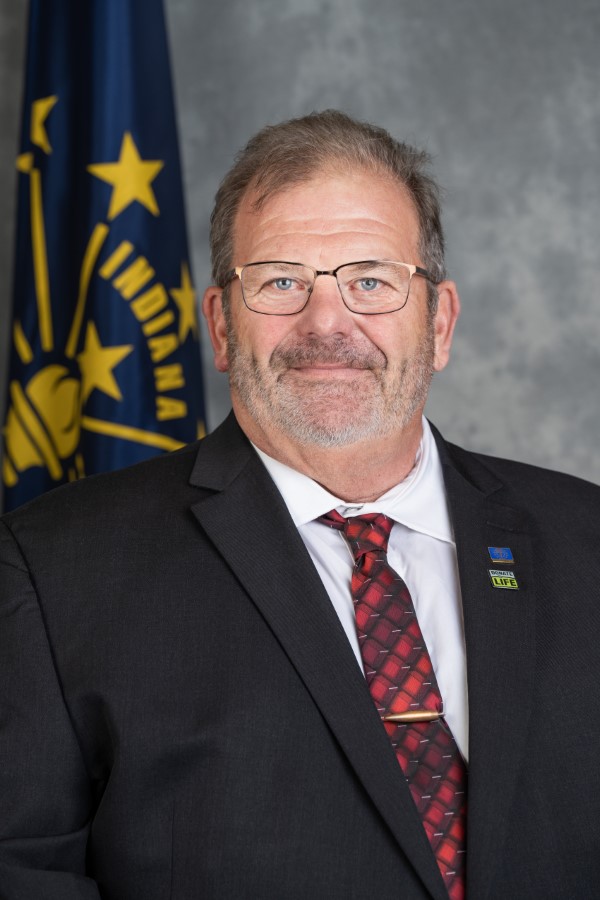
A SENATE RESOLUTION memorializing the life of Zachary Steven Eckert.
Makes the current offense of carrying a handgun without a license applicable only to persons who are at least 18 years of age but less than 21 years of age. Allows certain persons who are at least 21 years of age to possess or carry a handgun without a license unless the person fits into one of several categories, including a person who: (1) has been convicted of, or arrested for, specified crimes or delinquent offenses; (2) has been prohibited by a court from possessing a handgun or has been found by a court to be dangerous; or (3) has been found by a court to be mentally incompetent, has been involuntarily committed, or has been the subject of a 90 day or regular commitment. Allows certain persons who: (1) do not meet the requirements to receive a license to carry a handgun; and (2) are not otherwise barred from carrying or possessing a handgun by state law; to carry a handgun in specified instances. Makes it a Class A misdemeanor for particular persons to possess or carry a handgun. Increases the penalty to a Level 5 felony in some instances. Defines certain terms. Makes conforming amendments and repeals obsolete provisions. Makes a technical correction.
Provides that the Constitution of the State of Indiana guarantees the right of the people of Indiana to engage in diverse farming and ranching practices. Provides that the general assembly may not pass a law that unreasonably abridges the right of farmers and ranchers to employ or refuse to employ effective agricultural technology and livestock production and ranching practices. Provides that the new constitutional provision does not modify any: (1) provision of the common law; (2) statute relating to trespass or eminent domain; or (3) other property right, existing or previously enacted statute, or existing or previously adopted administrative rule.
Prohibits a county from increasing the apparent right-of-way for a county highway by requiring a dedication of additional right-of-way as part of a subdivision plat, and requires the county to acquire additional right-of-way through eminent domain. Prohibits a unit of local government from establishing or expanding a thoroughfare by requiring the dedication of private property as part of a subdivision plat, and requires the unit of local government to acquire private property for the establishment or expansion of a thoroughfare through eminent domain. Prohibits a county and a unit of local government from imposing an additional fee on applicants that file subdivision plats in which the county or unit of local government must proceed with eminent domain.
A SENATE RESOLUTION honoring Senator Karen Tallian upon her retirement from the Indiana Senate.
Provides that a local unit of government may not adopt or continue in effect any ordinance, rule, regulation, or resolution that: (1) bans; or (2) prohibits a person from owning, possessing, keeping, harboring, transporting, purchasing, or selling; a dog in a manner that is specific to breed.
Provides that an individual has the right to: (1) save and exchange seeds to grow food; and (2) grow, raise, produce, harvest, and consume the food that the individual chooses for the individual's own nourishment, sustenance, bodily health, and well-being. Specifies certain acts that are prohibited. Provides that a zoning ordinance may restrict but may not prohibit the growing or raising of food. Specifies that the board of animal health and the United States Department of Agriculture may enforce a state or federal law, rule, or regulation concerning animals. Specifies that the right to grow and raise food does not impair the terms of a lease or contract.
Provides that if a local order addresses an aspect of a declared emergency addressed by an executive order, the local order may be less stringent than the executive order to the extent permitted by the executive order. Provides that if a local order addresses an aspect of a declared emergency that is not addressed by an executive order or if a local order addresses an aspect of a declared emergency more stringently than an executive order, the local order may not take effect, or remain in effect, unless the local order is approved by the county legislative body (in the case of a county health department) or by an ordinance adopted by the city legislative body and approved by the mayor (in the case of a city health department). Provides that the appointment of a county health officer is subject to the approval of the county legislative body. Adds other good cause to the reasons for which a local health officer may be removed in counties other than Marion County. Specifies that a local health officer serves until a successor is appointed and qualified. Establishes an appeals process before legislative bodies of enforcement actions taken by local boards of health and local health officers in response to declared state and local public health emergencies.
Increases, from $40,000 to $80,000, the acquisition cost threshold for the business personal property tax exemption. Makes a technical correction.
Amends the law requiring a permit and compensatory mitigation for "wetland activity" (the discharge of dredged or fill material) in a state regulated wetland: (1) by changing the definition of "Class II wetland"; (2) by providing that wetland activity may be conducted without a permit: (A) in a Class I wetland; (B) in a Class II wetland with an area of not more than three-eighths acre; (C) in an ephemeral stream; and (D) in a Class II wetland that is located within the boundaries of a municipality and has an area of not more than three-fourths acre; (3) by providing that a permit is not needed for the development of cropland that has been used for agricultural purposes: (A) in the five years immediately preceding the development; or (B) in the 10 years immediately preceding the development if the United States Army Corps of Engineers has issued a jurisdictional determination confirming that the cropland does not contain wetlands subject to federal jurisdiction; (4) by providing that wetland activity in a Class II wetland with an area of more than three-eighths acre requires an individual permit; (5) by providing that: (A) maintenance of a field tile in a Class II wetland can be conducted with a general permit if certain conditions are met; and (B) maintenance of a field tile in a Class III wetland can be conducted with a general permit if certain conditions are met and the applicant obtains a site-specific approval; (6) by establishing conditions for obtaining a site-specific approval; (7) by eliminating the compensatory mitigation requirements for wetland activity in a Class I wetland; and (8) by requiring the department of environmental management (department) to make a decision to issue or deny an individual permit for wetland activity not later than 90 days (instead of 120 days) after receiving the completed application. Amends the law concerning a certification under Section 401 of the federal Clean Water Act for dredge and fill activity in a federally regulated wetland to require the department to make a final determination not later than 90 days (instead of 120 days) after receiving a completed application if the applicant requests a pre-coordination meeting. Establishes the Indiana wetlands task force, a 14 member body that: (1) is required to study and make recommendations concerning a number of wetlands issues; and (2) not later than November 1, 2022, issue a report to the general assembly and the governor setting forth its recommendations. Requires the department of natural resources to provide staff support to the task force.