

Defines "violent crime", "violent arrestee", "repeat violent arrestee", and "minimum bail amount", and requires: (1) a court to review the probable cause affidavit or arrest warrant before releasing a violent arrestee or repeat violent arrestee on bail; (2) bail to be set for a violent arrestee or repeat violent arrestee following a hearing in open court; and (3) a repeat violent arrestee released on bail to pay 100% of the minimum bail amount by cash deposit. Prohibits a third party who is not a close relative of a repeat violent arrestee from posting bail for the repeat violent arrestee. Requires mandatory bail revocation for a violent arrestee who commits a felony while released. Provides for victim notification of bail hearings. Requires nonmonetary release for non-violent arrestees under certain circumstances. Makes conforming amendments.
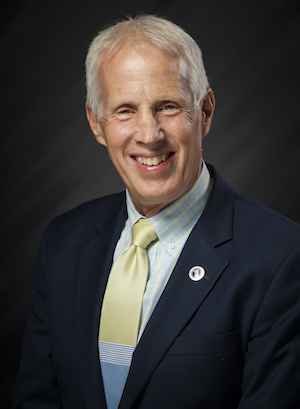
Rep. Bob Behning
Sponsored bills
Establishes the Indiana student enrichment grant program (program). Provides that an enrichment student is eligible to establish an Indiana enrichment scholarship account. Provides that an enrichment student may receive $1,000 to be used for certain qualified expenses. Provides that the department of education shall administer the program.
Allows licensed child caring institutions, group homes, and secure private facilities (residential child care facilities) to hire not more than one trauma informed support employee per living unit per shift. Provides for full reimbursement of the cost of employment of a trauma informed support employee for residential child care facilities that have four or more children residing in a living unit. Excludes trauma informed support employees from calculation of the ratio of direct care staff to children for purposes of rate setting for residential child care facilities.
Provides that a school corporation or charter school may not do the following: (1) Make available to a student who is enrolled in kindergarten through grade 5 any inappropriate sexual material. (2) Make available to a student who is enrolled in kindergarten through grade 12 any sexually explicit material. Provides that, if a school corporation or public school uses a third party vendor in providing a personal analysis, evaluation, or survey that reveals or attempts to affect a student's attitudes, habits, traits, opinions, beliefs, or feelings, the third party vendor and the school corporation or public school may not collect or maintain the responses to or results of the analysis, evaluation, or survey in a manner that would identify the responses or results of an individual student. Provides that the consent requirements for certain student personal analysis, evaluations, or surveys apply even if the analysis, evaluation, or survey is directly related to academic instruction. Requires, not later than June 30, 2022, and not later than June 30 each year thereafter, each public school to post on the public school's Internet web site, in a manner that is accessible by the public, certain information regarding learning materials and educational activities. Requires the department of education (department) to develop and post on the department's Internet web site a model plan for presenting the learning material or educational activity information. Requires the governing body of a school corporation to: (1) create a learning materials advisory committee (committee) comprised of parents, teachers, administrators, and community members; and (2) establish and implement educational activities and curricular materials review, discussion, and recommendation procedures for the committee. Requires the department to post on the department's Internet web site certain materials that assist staff in developing cultural competency for use in providing professional development programs. Provides that: (1) a state agency, a school corporation, or a qualified school or an employee of the state agency, school corporation, or qualified school shall not direct or otherwise compel a school employee to personally affirm, adopt, or adhere to; (2) a state agency, school corporation, or qualified school shall not include or promote concepts as part of a course of instruction or in a curriculum or instructional program, or allow teachers or other employees to use supplemental instruction materials that include or promote; or (3) teacher preparation programs shall not include or promote as part of a course of instruction or in a curriculum or instruction program, or allow faculty or other employees to use supplemental instructional materials that include or promote; certain tenets or concepts regarding sex, race, ethnicity, religion, color, national origin, or political affiliation or any anti-American ideologies. Prohibits requiring an employee of a school corporation or qualified school to engage in training that presents certain stereotyping or blame. Provides a duty to ensure that students are free to express their own beliefs and viewpoints if engaged in certain activities. Establishes a complaint process and allows for certain civil actions for violations.
Requires candidates for school board offices to be nominated in the same manner as candidates for all other elected offices are nominated, beginning after 2022. Provides that for school board offices elected in 2022, the political affiliation of each candidate, or the candidate's statement that the candidate is an independent candidate, must be stated on the ballot. Provides that the current statute relating to nomination of candidates for school board offices expires on January 1, 2023. Repeals other superseded statutes. Makes conforming changes.
Provides that the department of education (department) may adopt and provide to schools an early warning system that provides actionable data on students as early as elementary school. Provides that, not later than August 1, 2021, the department may contract with one or more vendors to provide an early warning system. Provides that, not later than January 1, 2022, each school corporation and charter school shall: (1) adopt and implement an Internet use policy; and (2) use hardware or install software on computers and other technology related devices owned by the school corporation or charter school to filter or block Internet access to materials that are harmful to minors. Requires each school corporation and charter school to post the Internet use policy on the school corporation's or charter school's Internet web site. Requires pupil enrollment for the career and technical education enrollment grant to, for informational purposes only, be determined at the same time that a school corporation's spring count of ADM is determined.
Establishes a panel to study charter school funding and methods for improving school building utilization by a school corporation.
Allows the priority enrollment period for the prekindergarten pilot program to begin later than April 1, 2021, in calendar year 2021. Provides that a school corporation may not enter into or renew a contract with an outside vendor to operate or manage a dedicated virtual education school of the school corporation unless the school corporation submits the most recent contract or proposed contract with the vendor to the department of education (department). Amends limits on the percentage of appropriated funds that may be used for grants to limited eligibility children under the prekindergarten pilot program. Provides that the department of education (department) shall make informational material that is evidenced based available on the department's Internet web site that may help teachers and other school employees identify a student who may have been impacted by trauma. Requires the department to provide a notice to each school corporation and charter school on how to access the informational material. Provides that a charter school may give enrollment preference to children who attend another charter school that is closed because of action by the state board of education (state board). Establishes the Cambridge International program (program). Requires the department to: (1) administer the program; and (2) submit a report regarding the program to the state board each year. Establishes the Indiana postsecondary prior learning assessment clearinghouse (clearinghouse). Requires the governor to direct the commission, department, and governor's workforce cabinet (cabinet), in collaboration with state educational institutions, to: (1) develop and regularly update the clearinghouse; and (2) collect information concerning prior learning assessments used by state educational institutions to award advanced standing or postsecondary credit. Requires each state educational institution to report prior learning assessment information. Requires the commission, department, and the cabinet to publish the clearinghouse information on its respective Internet web site. Requires the governor to direct the commission, department, and cabinet, in consultation with state educational institutions, to prepare model guidance and informational resources concerning postsecondary enrollment opportunities that incorporate work based learning experiences. Requires the governor to direct the commission, department, and cabinet to publish model guidance and information resources on its respective Internet web site. Prohibits a charter school organizer from entering into contracts under which an officer or employee of the organizer or a relative of an officer or employee of the organizer will receive compensation or proceeds. Provides an exception for de minimis contracts valued at $1,000 or less. Repeals a provision regarding high school credit for Cambridge International courses.
Provides that, not later than October 1, 2021, the department of education (department) shall issue a request for information for the purposes of exploring potential opportunities to improve the efficiency of noninstructional school services. Provides that the deadline for submission of responses to the request for information may not be later than February 1, 2022. Provides that, not later than March 1, 2022, the department shall prepare a report based on the responses.
Adds provisions that do the following: (1) Provide that the legislative body and the board of zoning appeals (BZA) of Lawrence, Speedway, Southport, and Beech Grove in Marion County (excluded city) have exclusive territorial jurisdiction within the excluded city's boundaries. (2) Require (rather than allow) the excluded city legislative body to conduct a hearing, acting as the plan commission, on a proposed zone map amendment affecting property within the excluded city. Provides that the excluded city legislative body (instead of the consolidated city and county legislative body) makes the decision regarding the zone map amendment. (3) Allow a member of the excluded city legislative body to appeal a decision of the BZA to the excluded city legislative body. (4) Provide that the excluded city legislative body's decision on the appeal is subject to judicial review. Requires all townships to be represented across all the divisions of the board of zoning appeals. Provides that not more than two members appointed to each division of the board of zoning appeals may be residents of the same township. Requires the appointing authority to consult with the township executive regarding the appointments. Requires appeals and applications for variances, special exceptions, special uses, contingent uses, and conditional uses to be allocated to a division of the board of zoning appeals that has at least one member who is a resident of a township in which the property is located that is the subject of the appeal or application.