

Provides that net proceeds from an allowable activity and related activities may be used only for the lawful purposes of the qualified organization, including the: (1) repair; (2) maintenance; or (3) improvement; of owned real property used for the lawful purposes of the qualified organization. Increases the single prize limit for a progressive or carryover pull tab game in charity gaming to $15,000. Also increases the total prize limit for one pull tab, punchboard, or tip board game in charity gaming to $15,000. Provides that a qualified organization must abide by the rules and regulations of the Internal Revenue Service regarding reporting and withholding rules for charitable prizes paid. Provides that for a raffle drawing, a retailer may not retain more than 20% of the proceeds, a retailer must establish and publish house rules, and the maximum amount of prizes in a raffle game is limited to $30,000. Provides that the total prizes for one type II gambling game, except for a raffle game, may not exceed $10,000. Provides that a single prize award for a winning ticket on a seal card game may not exceed $1,000. Provides that a single prize on a progressive or carryover pull tab game in a type II gambling game may not exceed $5,000. Provides that a type II gambling game includes raffles, progressive or carryover pull tab games, and sports-themed tip board and pull tab games. Specifies the end date for a licensed entity's accounting period. Replaces "annual casino night license" with "annual activity license". Specifies that the Indiana gaming commission (commission) may issue to a qualified organization an annual activity license to conduct a gambling activity approved by the commission, if certain requirements are met. Modifies restrictions applicable to a festival license. Modifies the restrictions applicable to a worker at a raffle conducted by a qualified organization. Removes a provision that allows the commission to authorize two bingo events each year at which the total prizes may not exceed $10,000. Provides that the commission may authorize a qualified organization to conduct a bingo event at which the total prizes exceed $6,000, and specifies that such a bingo event may be conducted at a festival. Provides that a person less than 18 years of age may sell tickets or chances for a raffle. Modifies a provision relating to the license fee for a three year charity gaming license issued to a qualified organization that is a bona fide veterans organization. Makes technical corrections and conforming amendments.
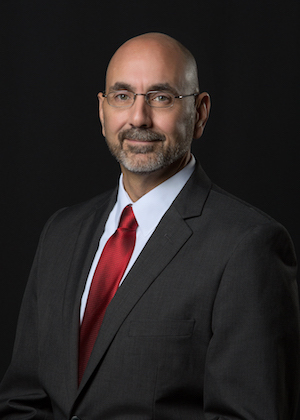
Rep. Steve Bartels
Sponsored bills
Provides that if any provision, or application of any provision, concerning the manufacture, importation, distribution, or retail sale of alcoholic beverages is deemed to be in conflict with federal law or unconstitutional, certain alcoholic beverage laws shall be construed to limit rather than expand the manufacture, importation, distribution, and retail sale of alcoholic beverages through a three-tier system. Provides a definition of "three-tier system". Defines the term "channel price". Allows a wholesaler to offer a channel price to a retailer if certain conditions are met. Amends the "entertainment complex" definition. Provides that the alcohol and tobacco commission (commission) has additional powers with regard to tobacco. Provides that certain references to alcoholic beverages in bottles include alcoholic beverages in containers. Modifies certain dates concerning alcohol retailer and dealer permits that are deposited with the commission and that may revert to the commission if the permit does not become active. Requires the disclosure of the names of the officers of a corporation or other entity applying for a permit in a published notice or Internet web site. Adds requirements for a permit holder when making an initial request for deposit of a permit. Eliminates Indiana residency requirements for retailers, dealers, and brewers. Provides that residential delivery by a beer retailer, liquor retailer, or wine retailer may only be performed by the permit holder or an employee who holds an employee permit. Requires a permit holder to maintain a written record of each delivery for at least one year that shows the customer's name, location of delivery, and quantity sold. Provides for "grab and go stores" that are accessible only by ticketed event attendees and provide self-service sales of alcoholic beverages in addition to sales of food and nonalcoholic beverages. Provides that certain provisions of the food master hall permit section do not apply to a food hall that: (1) is located in a certified technology park; and (2) operates in a certain type of building or complex of buildings. With certain exceptions, requires a permit applicant to provide the name and address of each person or entity holding at least a 2% interest in the permit and business. Removes the requirement that the department of local government finance consent to the continuation of a permittee's business by the permittee's heir. Requires a municipality to notify the chairman of the commission of any retailer or dealer premises annexed into the municipality, in order to ensure the correct distribution of excise funds. Allows the holder of a food hall vendor's permit and a retailer's permit who also holds a permit for a small brewery, a farm winery, or an artisan distillery to sell certain carry out alcoholic beverages at the retailer's permit premises. Provides that a farm wintery may place wine in bottles or other permissible containers. Allows a farm winery to sell wine by the can. Allows a farm winery to transfer wine from a storage facility or certain locations. Allows a farm winery to sell or transfer wine directly to a wine wholesaler. Provides that an artisan distiller may transfer liquor from a separate storage facility back to the artisan distiller. Allows an artisan distiller to sell or transfer liquor directly to a liquor wholesaler. Makes technical corrections and stylistic changes.
Specifies that the deadline for adjourning sine die for the 2021 session of the general assembly is November 15, 2021, and that the current deadline of April 29 remains in place for future long sessions. Provides that the regular technical session statute does not apply in calendar year 2021. Specifies the deadlines for signing enrolled acts and presenting them to the governor for bills passed after April 19, 2021, and before May 1, 2021. Specifies the following: (1) That the 2021 interim is the period beginning May 1, 2021, and ending November 15, 2021. (2) That for 2021, the prohibited period concerning fundraising activities is through April 29, 2021, rather than the date on which the general assembly adjourns sine die. (3) That the budget committee is required to meet at least once between April 30, 2021, and July 1, 2021. (Current law requires the budget committee to meet at least once in the two months following the general assembly adjournment sine die.) (4) The certification and distribution process for enrolled acts and the time frame for the process in 2021 will take place as usual. Provides that a redistricting commission is established to determine congressional districts if the general assembly adjourns sine die before November 15, 2021, without having enacted a law establishing congressional districts. (Current law refers to the adjournment of the general assembly without specifying an adjournment sine die or a particular date.)
Provides that a small claims court has jurisdiction over claims that do not exceed $10,000.
Provides that a person who transports a vehicle or combination of vehicles with an overweight divisible load is subject to overweight divisible load permitting. Removes certain requirements regarding transportation of commodities. Provides that the department of transportation may not issue a permit for an overweight divisible load if the owner or operator of the vehicle has not provided the department of state revenue with full payment for the permit prior to transporting the overweight divisible load. Provides that the department of state revenue shall determine the extent of civil penalties for overweight divisible loads under certain conditions. Provides that the civil penalty for each permitting violation for transporting overweight divisible loads is not more than $10,000 for each violation. Provides criminal or civil defenses in certain circumstances. Permits the department to determine at an administrative hearing whether a civil penalty should be assessed or reduced pursuant to a defense. Provides that the department of state revenue may not assess a penalty on a citation for an oversize load after more than one year has passed from the date the person receives the citation. Provides that the costs for storage of an abandoned vehicle with a length of at least 30 feet may not exceed $2,500. Makes technical corrections. Makes conforming changes.
Provides that a person commits battery on a public safety official if the offense is committed against a retired judicial officer while the retired judicial officer is serving as a judge, and allows a retired judicial officer to carry a handgun in the same manner as a judicial officer while the retired judicial officer is serving as a judge. Adds current and former probation officers and community corrections officers to the list of persons whose residential addresses may not be disclosed on a public property database website operated by a unit.
Amends the definition of "salary of a first class patrolman or first class firefighter" for the purpose of benefits paid from and contributions made to the 1977 police officers' and firefighters' pension and disability fund (fund). Establishes certain requirements if an employer certifies a new salary under IC 36-8-8-6.5. Changes the maximum age for an applicant to a police department from 35 to 39 years of age. Requires an employer that participates in the fund and provides longevity increases to pay an amount greater than or equal to the longevity increase paid in the previous year. Requires employers to provide reports or records requested by the system board, and permits the system board to fine the employer for each day that reports or records are late. Provides that an alleged failure of an employer to make required payments to the 1977 fund may be examined by the state board of accounts or by the Indiana public retirement system. Requires employers to submit, both annually and at the request of the system board, the salary of a first class patrolman or firefighter.
A CONCURRENT RESOLUTION recognizing Hoosier Direct Support Professionals.
Establishes a procedure permitting an immediate family member of a deceased individual to request the superintendent of the state police department to conduct a new investigation into the death of the individual if: (1) a local law enforcement agency has determined that the death was not the result of a criminal act by a third party; (2) the individual was not under the care of a physician or the victim of medical malpractice; and (3) the family member has a reasonable suspicion that the death was the result of a criminal act by a third party.
Specifies that the bill is severable. Provides that the general assembly may convene in an emergency session if the legislative council adopts a resolution making certain findings concerning a state of emergency declared by the governor. Specifies the maximum length of an emergency session. Provides that in an emergency session the general assembly may enact only bills relating to the agenda stated in the legislative council's resolution. Provides that the general assembly may adopt concurrent resolutions and each house may adopt simple resolutions during an emergency session. Establishes the legislative state of emergency advisory group. Creates the economic stimulus fund (ESF) for the deposit of all discretionary funds received by the state. Defines "discretionary funds" to mean federal economic stimulus funds received under federal legislation granting the state authority to determine the amounts and manner in which the federal economic stimulus funds may be expended. Provides that discretionary funds deposited into the ESF during a period in which the general assembly is convened in a regular session, an emergency session, or a special session may not be allotted or expended unless appropriated by the general assembly or reviewed by the budget committee. Provides that before discretionary funds deposited into the ESF during a period in which the general assembly is not convened in a regular session, an emergency session, or a special session may be allotted to or expended by a state agency or instrumentality, the allotment or expenditure must be reviewed by the budget committee. Provides that discretionary funds deposited into the ESF may not be expended, transferred, assigned, or otherwise removed from the ESF by the state board of finance, the budget agency, or any other state agency except as permitted under the provisions of the statute. Exempts federal economic stimulus funds obligated or expended before April 29, 2021, from the application of the statute. Provides that a violation of the disaster statute (IC 10-14-3) or an order authorized by that statute is a Class B infraction instead of a Class B misdemeanor.