Urges the legislative council to assign to an appropriate interim study committee the topic of availability and affordability of child care in Indiana. Requires the interim study committee to which the topic is assigned to: (1) consider means by which the availability and affordability of child care services in Indiana can be increased; and (2) not later than November 1, 2022, submit to the general assembly a strategic plan for increasing the availability and affordability of child care services in Indiana.
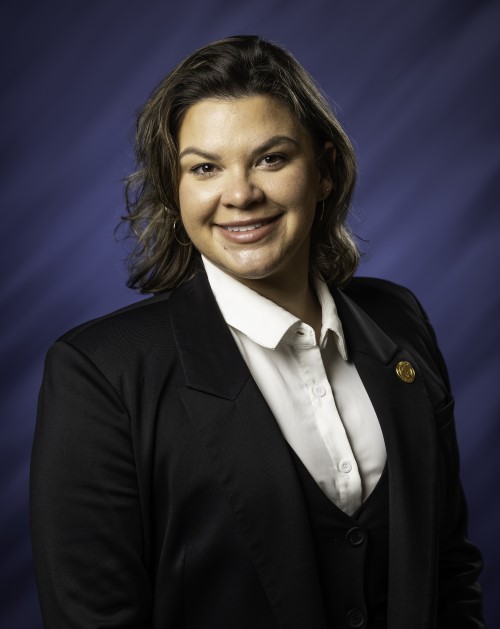
Rep. Maureen Bauer
Sponsored bills
Provides that a juvenile court in a child in need of services (CHINS) proceeding: (1) may extend the time to complete the required factfinding hearing: (A) for good cause shown; and (B) if the court determines that the extension is in the child's best interests; (2) may (rather than shall, under current law) dismiss a CHINS case without prejudice if the factfinding hearing is not held before the statutorily required deadline; (3) may not enter a dispositional decree approving or ordering placement of a child in another home if an: (A) individual who resides in the home; or (B) individual with whom a person residing in the home is engaged in a dating relationship or other ongoing, nonfamilial relationship (household member); has committed one or more specified offenses; and (4) may not approve a permanency plan under which the child would be placed: (A) with the child's parent, guardian, or custodian; or (B) with an adoptive parent; if a person who is currently residing in the home in which the child would reside has committed an act resulting in a substantiated report of child abuse or neglect or has committed one or more specified offenses. Provides that before reunifying a child with the child's parent, guardian, or custodian, the department of child services (department) shall (rather than may, under current law): (1) conduct a criminal history check of: (A) the parent, guardian, or custodian; and (B) a household member of the parent, guardian, or custodian; and (2) consider the results of the criminal history check in deciding whether it is safe for the child to return home. Provides that if the circumstances that prompted the removal of a child from the home of the child's parent, guardian, or custodian included danger to the child's physical or mental health or safety related to the use of alcohol or a controlled substance by the parent, guardian, or custodian, or by a household member of the parent, guardian, or custodian, the department may require as a condition of reunification of the child with the parent, guardian, or custodian that the parent, guardian, custodian, or household member: (1) successfully complete a substance abuse treatment program; and (2) submit to periodic, random testing for alcohol or controlled substances. Amends and adds to the conditions under which reasonable efforts to reunify a child with the child's parent, guardian, or custodian, or preserve a child's family, are not required. Provides that if a hearing regarding a petition to terminate the parent-child relationship is not held before the statutorily required deadline: (1) upon filing of a motion with the court by a party to the proceeding; and (2) absent good cause shown for the failure to hold the hearing before the statutorily required deadline; the court shall dismiss the petition without prejudice.

Allows a county fiscal body in a county in which there is at least one land bank (except in a county containing a consolidated city) to adopt an ordinance requiring every person who wishes to participate in a tax sale as a bidder to pay a neighborhood investment fee of not more than $150. Provides that, if a county fiscal body adopts an ordinance authorizing the imposition of a neighborhood investment fee, the county treasurer shall establish the neighborhood investment fee fund (fund) and specifies the manner in which neighborhood investment fees collected are to be distributed from the fund to land banks. Allows a county fiscal body in a county in which there is at least one land bank (except in a county containing a consolidated city) to adopt an ordinance to impose, in addition to the 5% penalty for delinquent real property taxes, an additional penalty of not more than 3% for a total penalty that may not exceed 8% of the amount of delinquent real property taxes (additional penalty ordinance). Provides that delinquent tax payments attributable to real property used as a principal place of residence and receiving the homestead standard deduction for the most recent assessment date are exempt from an additional penalty ordinance. Specifies the manner in which the amounts collected attributable to an additional penalty imposed on delinquent real property taxes are to be distributed to land banks.
Makes various changes to the statutes governing land banks that concern certain land bank powers, objectives, and duties. Provides (except in a county containing a consolidated city) that only a majority of directors appointed to the board of a land bank must be residents of the county, second class city, or third class city. Provides, in the case of a land bank created by an interlocal agreement, that only a majority of the members of the board of the land bank must be residents of the applicable eligible units that establish the land bank. Provides that a land bank may establish advisory committees composed of specified community members to consult with and advise the land bank on: (1) properties within the territory of the land bank that are imposing the greatest harm on residents and neighborhoods; (2) resident and neighborhood priorities for new uses of land bank properties; and (3) options for potential transferees of land bank properties. Provides, subject to certain limitations, that a land bank may use an interlocal agreement to establish processes to improve the quality of title and marketability of property the land bank owns to extinguish any liens that exist on the property. Provides that, if a land bank enters into an interlocal agreement, any employees of an eligible unit who may be contracted to provide staffing services to the land bank pursuant to the interlocal agreement retain their status as public employees of the eligible unit. Requires a county executive to provide a land bank in the county with a list of tracts located in the territory of the land bank that: (1) are delinquent on property taxes; and (2) have been offered for public sale at least two times and remain unsold; on an annual basis. Requires the county executive to transfer its interest in a tract on the list to a land bank if requested by the land bank not later than 90 days after it receives the list.
Requires the owner or operator of a coal combustion residuals (CCR) surface impoundment: (1) that is located in a 500 year flood zone, has caused a statistically significant increase in groundwater contamination, or does not have a composite liner that meets certain requirements; or (2) that is otherwise subject to a federal or state closure requirement; to remove all CCR from the CCR surface impoundment, return the site of the CCR surface impoundment to a nonerosive and stable condition, and either transfer the CCR for disposal in a landfill that meets certain requirements or put the CCR to an encapsulated beneficial use. Requires that the CCR be put to an encapsulated beneficial use whenever possible. Requires the owner or operator of a CCR surface impoundment to monitor for dust problems during removal of the CCR from the surface impoundment and requires the use of dust controls in the removal, transfer, and disposal of the CCR to minimize dust pollution. Requires the owner or operator of a CCR surface impoundment from which the CCR are being removed, in consultation with local government officials, to develop a plan for transporting the CCR after it is removed from the surface impoundment. Prohibits the department of environmental management (department) from approving a plan for closure of a CCR surface impoundment that does not meet these requirements. Requires the department to hold a public hearing on the approval or denial of a plan for the closure of a CCR surface impoundment.
Requires the person or entity having authority over a child care facility or preschool to test the drinking water in the child care facility or preschool before January 1, 2025, to determine whether lead is present in the drinking water in a concentration equal to or exceeding 15 parts per billion. Excepts a child care facility or preschool from this testing requirement if its drinking water: (1) was tested through the Lead Sampling Program for Schools and Child Care Facilities conducted by the Indiana finance authority in 2019 and 2020; or (2) has otherwise been tested for lead at least once after 2017. Provides that, if testing indicates that lead in the drinking water of a child care facility or preschool equals or exceeds 15 parts per billion, the person or entity having authority over the child care facility or preschool is required to take action to reduce the concentration of lead to below 15 parts per billion.
Requires the division of aging to perform a longitudinal study on the emergency placement of endangered adults and the feasibility of one or more permanent state operated facilities. Requires the division to submit an annual report to the general assembly.
Establishes the PFAS chemical blood testing program under the department of health (department) for the purpose of blood testing certain individuals for a higher concentration of PFAS chemicals to study the health effects of a higher concentration of PFAS chemicals in an individual's blood. Provides that not later than November 1 of each year, the department shall report to the legislative council on the results of the PFAS blood testing program for the previous state fiscal year.
Provides three days of paid leave for an employee of a state agency or a political subdivision to attend the funeral of the employee's relative or grieve the death of the employee's relative or a miscarriage experienced by the employee or the employee's spouse. Provides 150 hours of paid leave for a full-time employee of a state agency or a political subdivision and 75 hours of paid leave for a part-time employee of a state agency or a political subdivision upon: (1) the birth of the employee's child; (2) the birth of a child to the employee's spouse; (3) the placement of a child for adoption with the employee; or (4) the stillbirth of the employee's child. Provides unpaid leave of not more than 10 working days for an employee under certain circumstances related to the death of the employee's child, a stillbirth, or a miscarriage. Prohibits an employer from taking an adverse employment action against an employee who exercises the rights provided by the unpaid leave requirements. Allows the department of labor to collect civil penalties if an employer violates the unpaid leave requirements. Provides that an employee may bring a civil action against an employer to enforce the unpaid leave requirements.
Allows certain agents or employees of a law enforcement agency to serve as a victim advocate.