

Provides that if any provision, or application of any provision, concerning the manufacture, importation, distribution, or retail sale of alcoholic beverages is deemed to be in conflict with federal law or unconstitutional, certain alcoholic beverage laws shall be construed to limit rather than expand the manufacture, importation, distribution, and retail sale of alcoholic beverages through a three-tier system. Provides a definition of "three-tier system". Defines the term "channel price". Allows a wholesaler to offer a channel price to a retailer if certain conditions are met. Amends the "entertainment complex" definition. Provides that the alcohol and tobacco commission (commission) has additional powers with regard to tobacco. Provides that certain references to alcoholic beverages in bottles include alcoholic beverages in containers. Modifies certain dates concerning alcohol retailer and dealer permits that are deposited with the commission and that may revert to the commission if the permit does not become active. Requires the disclosure of the names of the officers of a corporation or other entity applying for a permit in a published notice or Internet web site. Adds requirements for a permit holder when making an initial request for deposit of a permit. Eliminates Indiana residency requirements for retailers, dealers, and brewers. Provides that residential delivery by a beer retailer, liquor retailer, or wine retailer may only be performed by the permit holder or an employee who holds an employee permit. Requires a permit holder to maintain a written record of each delivery for at least one year that shows the customer's name, location of delivery, and quantity sold. Provides for "grab and go stores" that are accessible only by ticketed event attendees and provide self-service sales of alcoholic beverages in addition to sales of food and nonalcoholic beverages. Provides that certain provisions of the food master hall permit section do not apply to a food hall that: (1) is located in a certified technology park; and (2) operates in a certain type of building or complex of buildings. With certain exceptions, requires a permit applicant to provide the name and address of each person or entity holding at least a 2% interest in the permit and business. Removes the requirement that the department of local government finance consent to the continuation of a permittee's business by the permittee's heir. Requires a municipality to notify the chairman of the commission of any retailer or dealer premises annexed into the municipality, in order to ensure the correct distribution of excise funds. Allows the holder of a food hall vendor's permit and a retailer's permit who also holds a permit for a small brewery, a farm winery, or an artisan distillery to sell certain carry out alcoholic beverages at the retailer's permit premises. Provides that a farm wintery may place wine in bottles or other permissible containers. Allows a farm winery to sell wine by the can. Allows a farm winery to transfer wine from a storage facility or certain locations. Allows a farm winery to sell or transfer wine directly to a wine wholesaler. Provides that an artisan distiller may transfer liquor from a separate storage facility back to the artisan distiller. Allows an artisan distiller to sell or transfer liquor directly to a liquor wholesaler. Makes technical corrections and stylistic changes.
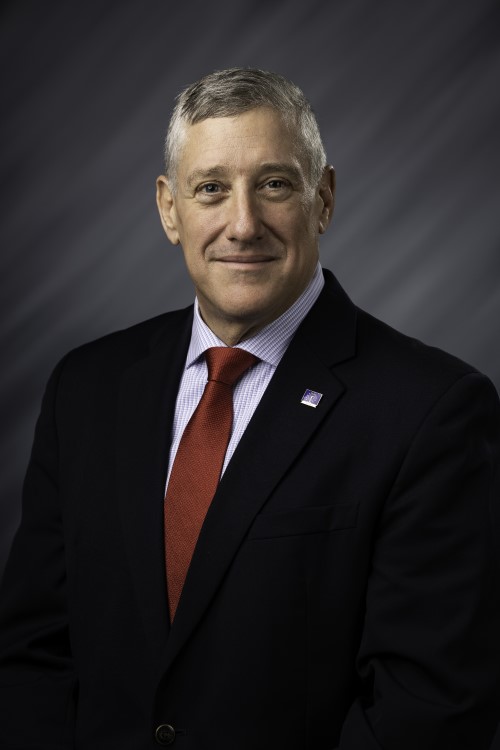
Rep. Ben Smaltz
Sponsored bills
Allows a food hall that: (1) is located in a certified technology park; and (2) is not located in a historic district or historic building; to be eligible for a food hall master permit. Provides that a project that: (1) borders a lake that is at least 750 acres; and (2) is within a municipality; is eligible for a municipal riverfront development project retailer's permit. Allows a person who holds: (1) a restaurant permit in an economic development area; and (2) an interest in a brewery, farm winery, or artisan distillery (production facility) located on or adjacent to the restaurant; to sell alcoholic beverages manufactured at the production facility for carryout in the restaurant's general merchandising area and from a self-serving display. Provides that a minor may: (1) be in the restaurant's general merchandising area; and (2) participate in a nondrinking tour of the production facility, if the minor is accompanied by an adult family member.
A CONCURRENT RESOLUTION recognizing Hoosier Direct Support Professionals.
Honoring Jerrilee K. Mosier on the occasion of her retirement.
Increases the maximum amount of covered taxes that may be captured in the Allen County PSCDA from $3,000,000 to $5,000,000. Provides for distribution of the covered taxes in the Allen County PSCDA as follows: (1) The first $2,600,000 to the Allen County War Memorial Coliseum. (2) The next $400,000 to the Allen County-Fort Wayne capital improvement board (board) for the Grand Wayne Center. (3) The remaining amount to the board to be split evenly between the Allen County War Memorial Coliseum and the Grand Wayne Center. Specifies the termination date of the Allen County PSCDA. Provides that the Evansville PSCDA (which is currently expired) is renewed beginning after June 30, 2021, for an additional 20 years, including the addition of the downtown convention center hotel to the Evansville PSCDA. Provides that the South Bend PSCDA (which is currently expired) is renewed beginning after June 30, 2021, for an additional 20 years, including the addition of three downtown hotels, the Howard Park event center, and facilities located at the Indiana University South Bend campus to the South Bend PSCDA. Provides that the maximum amount of covered taxes that may be captured in the renewed South Bend PSCDA is $2,000,000 per year. Revises the expiration date for the PSCDA chapter.
Specifies that the bill is severable. Provides that the general assembly may convene in an emergency session if the legislative council adopts a resolution making certain findings concerning a state of emergency declared by the governor. Specifies the maximum length of an emergency session. Provides that in an emergency session the general assembly may enact only bills relating to the agenda stated in the legislative council's resolution. Provides that the general assembly may adopt concurrent resolutions and each house may adopt simple resolutions during an emergency session. Establishes the legislative state of emergency advisory group. Creates the economic stimulus fund (ESF) for the deposit of all discretionary funds received by the state. Defines "discretionary funds" to mean federal economic stimulus funds received under federal legislation granting the state authority to determine the amounts and manner in which the federal economic stimulus funds may be expended. Provides that discretionary funds deposited into the ESF during a period in which the general assembly is convened in a regular session, an emergency session, or a special session may not be allotted or expended unless appropriated by the general assembly or reviewed by the budget committee. Provides that before discretionary funds deposited into the ESF during a period in which the general assembly is not convened in a regular session, an emergency session, or a special session may be allotted to or expended by a state agency or instrumentality, the allotment or expenditure must be reviewed by the budget committee. Provides that discretionary funds deposited into the ESF may not be expended, transferred, assigned, or otherwise removed from the ESF by the state board of finance, the budget agency, or any other state agency except as permitted under the provisions of the statute. Exempts federal economic stimulus funds obligated or expended before April 29, 2021, from the application of the statute. Provides that a violation of the disaster statute (IC 10-14-3) or an order authorized by that statute is a Class B infraction instead of a Class B misdemeanor.
Honoring healthcare workers for their efforts during the COVID-19 pandemic.
A CONCURRENT RESOLUTION urging the Indiana Department of Transportation to rename a bridge on U.S. Route 27 in Fort Wayne as the "Fort Wayne Veterans Memorial Bridge".
Effective March 30, 2022: (1) Repeals the law that requires a person to obtain a license to carry a handgun in Indiana; (2) Specifies that certain persons who are not otherwise prohibited from carrying or possessing a handgun are not required to obtain or possess a license or permit from the state to carry a handgun in Indiana; (3) Prohibits certain individuals from knowingly or intentionally carrying a handgun; (4) Creates the crime of "unlawful carrying of a handgun"; (5) Provides that a prohibited person who knowingly or intentionally carries a handgun commits a Class A misdemeanor; (6) Specifies that the unlawful carrying of a handgun is a Level 5 felony if a person: (A) is less than 23 years of age; and (B) has an adjudication as a delinquent child for an act described by IC 35-47-4-5 (unlawful possession of a firearm by a serious violent felon); (7) Allows a resident of Indiana who wishes to carry a firearm in another state under a reciprocity agreement entered into by Indiana and the other state to obtain from the superintendent of the state police department a reciprocity license; (8) Requires law enforcement agencies to make use of certain data bases when issuing reciprocity licenses; (9) Specifies the following fees for reciprocity licenses: (A) $0 for five year reciprocity licenses, and (B) $75 for lifetime reciprocity licenses; (10) Provides that a person who knowingly or intentionally exerts unauthorized control over a firearm of another person with the intent to deprive the person of any part of its value or use commits theft, a Level 5 felony; and (11) Allows for the imposition of an additional fixed term of imprisonment when a person knowingly or intentionally: (A) points; or (B) discharges; a firearm at someone the person knew, or reasonably should have known, was a first responder. Effective July 1, 2021: (1) Provides that the following must develop a process that allows law enforcement officers the ability to quickly access information about whether a person is a prohibited person who may not knowingly or intentionally carry a handgun: (A) The state police department; (B) The bureau of motor vehicles; (C) Local law enforcement agencies; and (D) Any other state entity with access to information related to persons who may not knowingly or intentionally carry a handgun; (2) Provides that the information made available to law enforcement officers must meet all state and federal statutory, constitutional, and regulatory requirements; and (3) Allows state entities to enter into a memorandum of understanding to ensure that all legal requirements are met. Defines certain terms. Makes conforming amendments.
Requires the Indiana law enforcement training board to establish mandatory training in de-escalation as part of the use-of-force curriculum, and requires de-escalation training to be provided as a part of: (1) pre-basic training; (2) mandatory inservice training; and (3) the executive training program. Establishes a procedure to allow the Indiana law enforcement training board to decertify an officer who has committed misconduct. Defines "chokehold" and prohibits the use of a chokehold under certain circumstances. Specifies that a law enforcement officer who turns off a body worn camera with the intent to conceal a criminal act commits a Class A misdemeanor. Requires an agency hiring a law enforcement officer to request the officer's employment record and certain other information from previous employing agencies, requires the previous employing agency to provide certain employment information upon request, and provides immunity for disclosure of the employment records. Makes an appropriation to the Indiana law enforcement training academy for making capital improvements.