

Establishes the Indiana first responders mental health wellness fund and program (fund and program). Provides that the division of mental health and addiction of the office of the secretary of family and social services (division) shall administer the fund and program. Provides that a first responder who meets certain requirements may apply to the division for: (1) costs associated with the first responder's active participation in a mental health treatment plan as determined by a psychologist or physician treating the first responder; and (2) compensation if the first responder is unable to work. Establishes requirements for obtaining compensation. Makes a continuous appropriation.
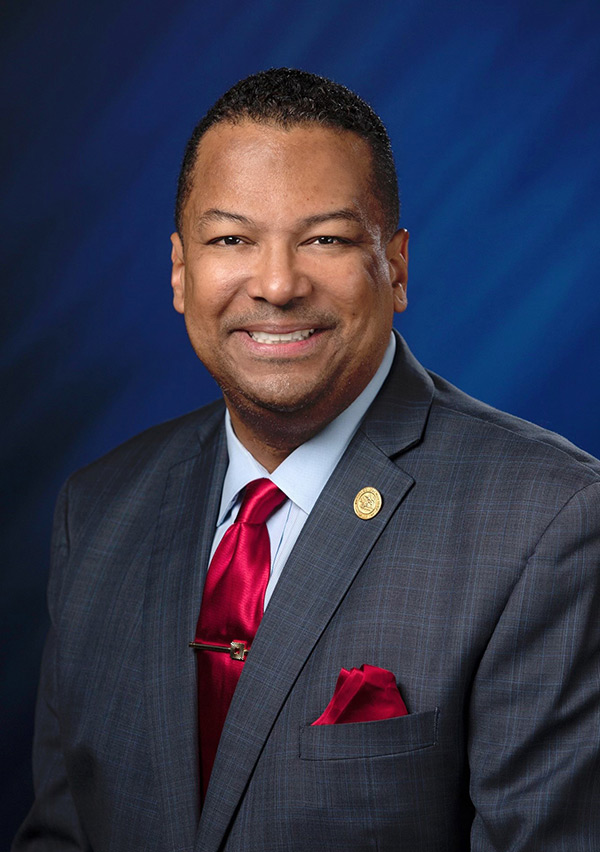
Rep. Earl Harris
Sponsored bills
Maddy summaryThis bill formally recognizes January 15 as Dr. Martin Luther King Jr. Day in the U.S. Congress. It is a procedural resolution to commemorate the holiday, directly affecting congressional proceedings and records. The bill does not create new policy or alter existing law, but affirms the institution's observance of the federal holiday honoring Dr. King's legacy.
Provides that an individual who meets certain conditions is eligible for the resident tuition rate as determined by a state educational institution. Requires such an individual to verify that the individual meets the criteria to receive the resident tuition rate.
Provides that an individual who is an Indiana resident and cannot provide proof of identity and lawful status in the United States may apply for a driving privilege card to obtain driving privileges. Sets forth the requirements to obtain a driving privilege card. Provides that a driving privilege card may not be used as identification for any state or federal purpose (other than to confer driving privileges), for the purpose of voting, or to verify employment. Requires an individual who holds a driving privilege card and operates a motor vehicle to verify and continuously maintain financial responsibility on any motor vehicle operated by the individual who holds the driving privilege card in the amount required by law. Provides that the bureau of motor vehicles may not disclose certain information unless presented with a lawful court order or judicial warrant. Requires an applicant for a driving privilege card or driving privilege card renewal to sign up for selective service. Requires the bureau of motor vehicles to submit an annual report to the legislative council and the interim study committee on roads and transportation. Makes conforming amendments. Makes technical corrections.
Provides that an identifying symbol for a medical condition on a driver's license, permit, or identification card may also be used to indicate an autism spectrum disorder. Requires an application for a driver's license, a permit, or an identification card to enable an applicant to indicate that the applicant has a medical condition of note and wishes to have information concerning the medical condition accessible to the state police department. Requires the bureau of motor vehicles (BMV) to disclose this information to the state police department. Requires the state police department to enter the information into the Indiana data and communication system computer. Prohibits the BMV and state police department from disclosing the information.
Provides that the commission for higher education shall determine a tuition rate and mandatory fee cost of living adjustment for specified postsecondary educational institutions. Requires that, except for cost of living adjustments, the tuition rate and mandatory fees at specified postsecondary educational institutions may not increase from the time the student initially enrolls until the student graduates for an undergraduate student who is an Indiana resident.
Provides that an individual who meets certain conditions is eligible for the resident tuition rate as determined by the state educational institution. Requires such an individual to verify that the individual meets the criteria to receive the resident tuition rate.
Establishes the hunger-free campus grant program (grant program) to provide grants to state educational institutions for purposes of addressing food insecurity among students enrolled in state educational institutions. Provides that the commission for higher education (commission) shall provide a grant under the grant program to a state educational institution, if at least one campus is designated by the commission as a hunger-free campus. Establishes criteria that a campus of a state educational institution must meet in order to be designated a hunger-free campus. Makes an appropriation.
Amends the remedy procedure to repair a motor vehicle that is subject to a stop sale directive to include new motor vehicles. Requires a purchaser, customer, or transferee of a rebuilt or salvage vehicle to sign a written acknowledgment of receipt of the disclosure for a rebuilt or salvage vehicle. Requires the dealer services division of the secretary of state (secretary) to prescribe the form of the written disclosure for a rebuilt or salvage vehicle. Establishes a required training course that an applicant for a used motor vehicle dealer license must complete in order to obtain a used motor vehicle dealer license. Requires dealers to be able to provide to the secretary dealer records in an electronic format. Provides that a dealer has 10 business days to produce electronic dealer records after an investigating or auditing employee of the secretary requests the records. Requires any item that is not a part of the advertised sale price of a motor vehicle to be a separate line item in the contract for sale or lease. Provides that: (1) the owner, lessor, or operator of a commercial motor vehicle; or (2) a person who leases or rents a commercial motor vehicle to another person; is not civilly liable for a tort claim based on the failure to install optional equipment on a commercial motor vehicle unless certain circumstances exist.
Provides that a state employee may affirmatively elect to enroll in the deferred compensation plan prior to the auto enroll date on day 31 of the state employee's employment. Removes a provision that sets a maximum employer surcharge for the legislators' defined benefit plan, state excise police, gaming agent, gaming control officer, and conservation enforcement officers' retirement plan, public employees' retirement fund, and Indiana state teachers' retirement fund (fund). Requires the board of trustees of the Indiana public retirement system (board) to develop the technological and administrative capabilities sufficient to categorize fund members into separate groups in which: (1) certain members receive a service based thirteenth check; and (2) certain members receive a cost of living adjustment. Requires the board to set the surcharge rates at a level to actuarially prefund: (1) annual indexed thirteenth checks for all current retired members and beneficiaries retired before July 1, 2025; and (2) 1% annual cost of living adjustments to future in-payment members and beneficiaries retired on or after July 1, 2025. Provides that the board shall not reduce the surcharge rates from the prior year. Allows the board to increase the surcharge rates by not more than 0.1% of payroll from the prior year. Requires certain political subdivisions to present to the interim study committee on pension management oversight regarding a delinquent employee retirement plan offered by the political subdivision. Requires, effective July 1, 2025, the trustee of the state police pension trust to maintain two supplemental allowance reserve accounts for the purpose of paying postretirement benefit adjustments. Increases the maximum date that a member or participant of certain retirement funds can participate in the deferred retirement option plan from 36 to 60 months. Requires the member or participant to notify their employer if the member or participant elects to enter or extend the deferred retirement option plan. Provides for a thirteenth check in 2024 for certain members, participants, or beneficiaries of the: (1) Indiana state teachers' retirement fund; (2) Indiana public employees' retirement fund; (3) state excise police, gaming agent, gaming control officer, and conservation enforcement officers' retirement plan; (4) state police pre-1987 benefit system; and (5) state police 1987 benefit system.