

Amends the definition of "eligible student" to include a sibling of a student with a disability with regards to the education scholarship account program (ESA). Provides that the sibling may not use the ESA account for certain ESA qualified expenses. Provides that an annual grant amount awarded under the career scholarship account (CSA) program may be used for costs related to obtaining a driver's license if certain conditions are met. Establishes conditions regarding the amount of funds that may be used from CSA annual grant amounts for transportation costs. Amends certain requirements regarding ESA and CSA participating entities regarding providing evidence of unencumbered assets. Changes certain CSA application time frames from seven days to 30 days. Requires each state educational institution to provide to the commission for higher education (commission) certain information regarding degrees, degree completion, faculty members, administrative support staff, costs, compensation, and debt loads. Requires the commission to prepare longitudinal analysis regarding certain data. Requires each private postsecondary educational institution and each out-of-state public and nonprofit degree granting institution that offers instructional or educational services or training in Indiana to provide to the department of education information to carry out certain reporting requirements and requirements related to the Indiana Graduates Prepared to Succeed dashboard. Allows for the revocation of an out-of-state public or nonprofit degree granting institution's authorization if the institution fails to provide the information. Adds teaching to the employment sectors eligible for the next level jobs employer training grant program. Amends requirements regarding: (1) eligibility for career coaching grants; and (2) instruction on career awareness.
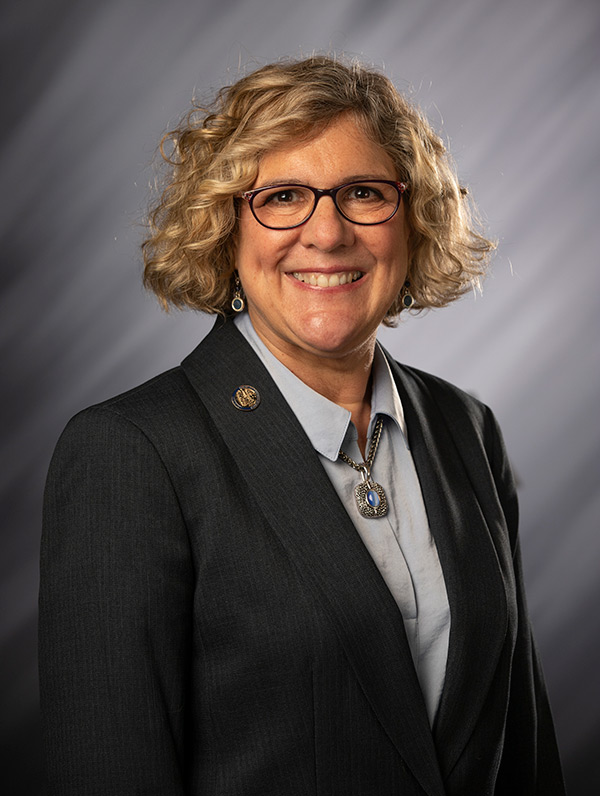
Rep. Julie Olthoff
Sponsored bills
Provides that a state employee may affirmatively elect to enroll in the deferred compensation plan prior to the auto enroll date on day 31 of the state employee's employment. Removes a provision that sets a maximum employer surcharge for the legislators' defined benefit plan, state excise police, gaming agent, gaming control officer, and conservation enforcement officers' retirement plan, public employees' retirement fund, and Indiana state teachers' retirement fund (fund). Requires the board of trustees of the Indiana public retirement system (board) to develop the technological and administrative capabilities sufficient to categorize fund members into separate groups in which: (1) certain members receive a service based thirteenth check; and (2) certain members receive a cost of living adjustment. Requires the board to set the surcharge rates at a level to actuarially prefund: (1) annual indexed thirteenth checks for all current retired members and beneficiaries retired before July 1, 2025; and (2) 1% annual cost of living adjustments to future in-payment members and beneficiaries retired on or after July 1, 2025. Provides that the board shall not reduce the surcharge rates from the prior year. Allows the board to increase the surcharge rates by not more than 0.1% of payroll from the prior year. Requires certain political subdivisions to present to the interim study committee on pension management oversight regarding a delinquent employee retirement plan offered by the political subdivision. Requires, effective July 1, 2025, the trustee of the state police pension trust to maintain two supplemental allowance reserve accounts for the purpose of paying postretirement benefit adjustments. Increases the maximum date that a member or participant of certain retirement funds can participate in the deferred retirement option plan from 36 to 60 months. Requires the member or participant to notify their employer if the member or participant elects to enter or extend the deferred retirement option plan. Provides for a thirteenth check in 2024 for certain members, participants, or beneficiaries of the: (1) Indiana state teachers' retirement fund; (2) Indiana public employees' retirement fund; (3) state excise police, gaming agent, gaming control officer, and conservation enforcement officers' retirement plan; (4) state police pre-1987 benefit system; and (5) state police 1987 benefit system.
Defines "fabricated media" as any of the following: (1) An audio or visual recording of an individual's speech, appearance, or conduct that has been altered without the individual's consent such that: (A) the media conveys a materially inaccurate depiction of the individual's speech, appearance, or conduct as recorded in the unaltered recording; and (B) a reasonable person would be unable to recognize that the recording has been altered. (2) An artificially generated audio or visual imitation of an individual that: (A) has been created without the individual's consent; (B) is sufficiently lifelike that a reasonable person would be unable to distinguish the speech or appearance of the imitation from the speech or appearance of the individual; and (C) is used to convey a fictional depiction of the individual's speech, appearance, or conduct. (3) Audio or visual media depicting the speech, appearance, or conduct of an artificially generated person, the appearance or speech of which is not a recognizable imitation of an identifiable individual. Requires certain election campaign communications that contain fabricated media to include a disclaimer. Allows a candidate depicted in fabricated media that does not include a required disclaimer to bring a civil action against specified persons.
Allows the BMV to add an additional compliance period for those seeking material error review regarding certain license suspensions.
Amends the circumstances under which reasonable efforts to reunify a child with the child's parent, guardian, or custodian or preserve a child's family are not required.
Provides that the department of child services may use a child advocacy center to coordinate a multidisciplinary team for responding to reports involving child abuse or neglect. Requires the child advocacy center to: (1) coordinate a multidisciplinary team that consists of specified professionals; (2) ensure that the multidisciplinary team members have specified training; (3) provide a dedicated child-focused setting designed to provide a safe, comfortable, and neutral place for a forensic interview and other child advocacy center services; (4) use written protocols; (5) use a case tracking system to provide information on essential demographic and case information; and (6) verify that multidisciplinary team members responsible for providing medical evaluations and mental health services have specified training. Provides civil immunity for a child advocacy center's employees, volunteers, and board members under certain circumstances. Allows otherwise confidential information regarding an investigation of child abuse or neglect to be made available to a child advocacy center when the child advocacy center has before it an investigation of child abuse or neglect in which it is facilitating a forensic interview or facilitating a case discussion or case review.
Provides that if a child has been removed from the child's parent for at least 12 of the most recent 22 months at the time of a periodic case review, the child's permanency plan must include at least one intended permanent or long term arrangement for care and custody of the child other than reunification of the child with the child's parent, guardian, or custodian. Provides that concurrent planning must be implemented if the child has been removed from the child's parent for at least 12 of the most recent 22 months at the time of a permanency hearing. Provides that the department may not: (1) take adverse action against a foster parent's license; or (2) remove a child from the home of a foster parent, relative of the child, or de facto custodian; on the basis of the foster parent, relative, or de facto custodian filing a notice with the court that a petition is required to be filed, but has not been filed, to terminate the parent-child relationship with regard to the child.
Recognizing the 100th anniversary of the establishment of diplomatic relations between the United States of America and Ireland.
Recognizing the month of February as Turner Syndrome Awareness Month.
A CONCURRENT RESOLUTION recognizing April as Parkinson's Awareness Month and April 11, 2024, as Parkinson's Awareness Day.