

Defines "core public health services" for purposes of public health laws. Adds members to the executive board of the Indiana department of health (state department). Removes a provision allowing the state department to establish branch offices. Provides that the state department may provide services to local health departments. Requires each local board of health to establish a local public health services fund to receive state funding. Provides a method of allocation of state funding to local boards of health, subject to state appropriations. Specifies the percentage of how additional funding may be expended on core public health services. Allows the local health department to enter into contracts or approve grants for core public health services. Allows the state department to issue guidance to local health departments. Requires the state department to make annual local health department reports available to the public. Changes the qualification requirements for a local health officer and requires certain training. Requires the state department to identify state level metrics and county level metrics and requires certain local health departments to report to the state department activities and metrics on the delivery of core public health services. Requires the state department to annually report on the metrics to the budget committee and publish information concerning the metrics on the Internet. Requires that a local health department post a position or contract for the provision or administration of core public health services for at least 30 days. Requires a local health department to provide certain education before administering a vaccine. Requires a multiple county health department to maintain at least one physical office in each represented county. Provides that a new city health department cannot be created after December 31, 2022, but allows current city health departments to continue to operate. Creates the Indiana trauma care commission. Allows a school corporation that cannot obtain an ophthalmologist or optometrist to perform the modified clinical technique vision test to conduct certain specified vision screenings. Requires the school to send to the parent of a student any recommendation for further testing by the vision screener. Allows for standing orders to be used for emergency stock medication in schools. Allows the state health commissioner or designee to issue a statewide standing order, prescription, or protocol for emergency stock medication for schools. Removes the distance requirement for an access practice dentist to provide communication with a dental hygienist. Repeals provisions concerning the Indiana local health department trust account.
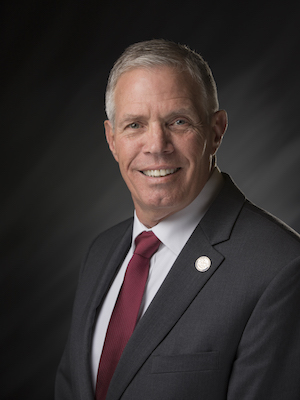
Rep. David Abbott
Sponsored bills
Specifies certain entities, actions taken, or factors considered to which the ESG commitment provisions do not apply. Provides that if the treasurer of state concludes that the service provider has made an ESG commitment, the treasurer of state shall provide the name of the service provider and research supporting the conclusion to the board of trustees of the Indiana public retirement system (board). Prohibits the board from making an investment decision with the purpose of influencing any social or environmental policy or attempting to influence the governance of any corporation for nonfinancial purposes. Prohibits the Indiana public retirement system (system) from making an ESG commitment with respect to system assets. Provides that in making and supervising investments of the system, the board shall discharge its duties solely in the financial interest of the participants and beneficiaries of the system for the exclusive purposes of providing financial benefits to participants and beneficiaries and defraying reasonable expenses of administering the system. Provides that the board, in accordance with certain fiduciary duties, shall make investment decisions with the primary purpose of maximizing the target rate of return on the board's investments. Prohibits the board from entering a contract or modifying, amending, or continuing a contract with a service provider that has made an ESG commitment unless taking the action violates the board's fiduciary duty to the system's participants and beneficiaries. Requires the board to continue contracting with a service provider that has made an ESG commitment if the board determines that there is not a comparable service provider to replace the service provider. Requires the board to, at least annually, tabulate and report all proxy votes made by a service provider that is not a private market fund in relation to the administration of the system. Specifies certain persons and entities that are immune from civil liability and entitled to indemnification. Requires the board to: (1) ensure that reasonable efforts are made during the due diligence process before an investment is made and in monitoring investments in the public employees' defined contribution plan, an annuity savings account for the public employees' retirement fund or the Indiana state teachers' retirement fund, the teachers' defined contribution plan, the legislators' defined contribution plan, and a private market fund to determine whether any investments would violate the requirement that the board discharge its duties solely in the financial interest of the participants and beneficiaries of the system; and (2) take appropriate action, if necessary, consistent with the board's fiduciary duties. Defines terms and makes conforming amendments.
Exempts military pay for members of a reserve component of the armed forces of the United States or the national guard from the individual income tax. (Current law provides an individual income tax exemption for members of a reserve component of the armed forces of the United States or the national guard for the period the member is mobilized and deployed.) Exempts military pay earned by members of an active component of the armed forces of the United States from the individual income tax. (Current law exempts from the individual income tax the military pay earned by members of the National Guard and reserve components of the armed forces of the United States while serving on active duty.)
Requires governing bodies of state and local agencies (excluding a state supported college or university) to provide, on a publicly accessible platform: (1) live transmissions of public meetings; and (2) an archive of copies of the live transmissions with links to any meeting agendas, minutes, or memoranda. Provides that if a governing body does not have Internet capability for live transmission of public meetings, the governing body shall record the meeting. Provides that transmissions and recordings of public meetings may be destroyed after 90 days.
Congratulating Vice Admiral Sean Buck on his retirement from the United States Navy.
A CONCURRENT RESOLUTION celebrating the achievements and contributions of Hoosier environmental leader Tim Maloney on his retirement.
Defines the term "pore space". Corrects a spelling error in the address of the carbon sequestration pilot project (pilot project). Provides that the pilot project will construct, operate, or use not more than two (2) carbon dioxide pipelines and will maintain operations only in Vigo and Vermillion counties. Requires the director of the department of natural resources to designate the operator of the carbon sequestration pilot project not more than 30 days after the Class VI well permit authorizing the operation of carbon dioxide injection wells at the site of the pilot project is issued by the U.S. Environmental Protection Agency. Provides that, for purposes of the pilot project, the title to pore space is vested in the person who holds in fee simple the surface interest in the land or water, as identified by the property records of the county, except in case of an explicit conveyance, exception, or reservation through a recorded conveyance to another person. Requires the pilot project operator, before the anticipated migration of injected carbon dioxide into pore space to notify the person who owns the pore space in fee simple of the anticipated migration of the carbon dioxide. Requires the carbon sequestration pilot project operator to make an offer of compensation to a pore space owner to provide that the offer of compensation must be at least a yearly payment of 40% of the average estimated cash rent per acre for the area of Indiana and the class of land, according to the Farmland Values and Cash Rents Survey Results published by Purdue University most recently before the offer of compensation is made, every year until the cessation of injection of carbon dioxide. Provides that a person who claims ownership of pore space may initiate non-binding mediation of the dispute with the pilot project operator concerning the pore space. Establishes a procedure for mediation and allows the pilot project operator to consolidate multiple requests for mediation into one or more mediation proceedings. Provides that if a person who claims ownership of pore space is unable to reach an agreement with the pilot project operator concerning the acquisition, lease, or occupancy of the pore space through negotiation or mediation, the person may pursue a civil action against the pilot project operator. Provides that, generally, in a civil action against the pilot project operator, the court may not grant injunctive relief, an order of possession, or monetary relief that exceeds the fair market value of pore space in Indiana. Provides, however, that these limits on monetary recovery do not apply in case of direct and tangible physical injury or damage to a person, tangible property, or an animal or in case of an effect of the pilot project on the sources of the public water supply used by a public utility. Provides that the code section authorizing the establishment of the carbon sequestration pilot project expires July 1, 2028, if the operator of the carbon sequestration pilot project is not issued a Class VI permit by the United States Environmental Protection Agency by that date.
Changes the formula for determining the fee for renewal of a watercraft registration. Determines the registration renewal fee amount for a watercraft according to which of 14 classes the watercraft falls into based on the value of the watercraft when it was new. Provides that the proceeds of each watercraft registration renewal fee shall be distributed as follows: (1) $5 shall be deposited in the fish and wildlife fund; (2) 75% of the remainder shall be deposited in the lake and river enhancement fund; and (3) 25% of the remainder shall be deposited in the conservation officers marine enforcement fund.
Provides that a public safety agency may not establish or maintain residency requirements for a public safety telecommunicator employed by a public safety agency.
A CONCURRENT RESOLUTION urging the Indiana Department of Transportation to rename the bridge on State Highway 27 over I-70 as the "Officer Seara Burton Memorial Bridge".