Maddy summaryHCR 13 is a concurrent resolution introduced by multiple representatives that symbolically affirms the statement "the American Dream belongs to all of us." It does not create new laws or policies, as concurrent resolutions are typically used for expressing legislative sentiment rather than enacting binding changes. The resolution was referred to the Judiciary Committee after its introduction on January 28, 2025. It has no direct effect on specific groups or concrete policy mechanisms.
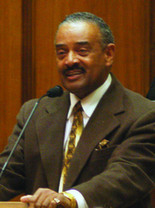
Rep. Vernon Smith
Sponsored bills
Maddy summaryThis resolution honors Top Ladies of Distinction, Inc. and its 50th Annual Area V Leadership Conference. It does not create new laws, allocate funds, or affect any legal rights or obligations - it is a symbolic gesture of recognition. The bill was introduced by multiple representatives and passed its first reading in January 2025. As a procedural resolution, it has no direct policy impact on constituents or legislation.
Allows the department of state revenue to allow exempt organizations to issue a blanket sales tax exemption certificate to cover exempt purchases from multiple vendors. Provides that a blanket exemption allows a taxpayer to use one blanket exemption at any of a single vendor's locations and does not require the taxpayer to issue a separate exemption certificate at each of the vendor's locations.
Amends the statute concerning distributed electricity generation as follows: (1) Repeals provisions requiring an electricity supplier's net metering tariff to remain available to customers until the earlier of: (A) January 1 of the first calendar year after the calendar year in which the aggregate amount of net metering facility nameplate capacity under the net metering tariff equals at least 1.5% of the electricity supplier's most recent summer peak load; or (B) July 1, 2022. (2) Repeals provisions requiring an electricity supplier to: (A) petition the Indiana utility regulatory commission (IURC) for a rate for the procurement of excess distributed generation produced by customers owning a distributed generation facility; and (B) credit, at the approved rate, customers for excess distributed generation supplied to the electricity supplier. (3) Provides that an electricity supplier's net metering tariff must be offered and remain available to customers at least until January 1 of the first calendar year after the calendar year in which the aggregate amount of net metering facility nameplate capacity under the net metering tariff equals at least 5% (versus 1.5% under current law) of the electricity supplier's most recent summer peak load. (4) Requires an electricity supplier to petition, before July 1, 2025, the IURC for approval of a new or amended net metering tariff that is subject to the following: (A) If the electricity supplier establishes a limit on the aggregate amount of net metering facility nameplate capacity made available for participation by customers under the net metering tariff, that minimum aggregate amount must be at least 5% of the most recent summer peak load of the electricity supplier. (B) Any limit on the aggregate amount of net metering facility nameplate capacity made available for participation by customers is subject to the reservation of: (i) at least 30% (versus 40% under current law) for participation by residential customers; and (ii) not more than 5% (versus 15% under current law) for participation by customers that install a net metering facility that uses organic waste biomass. (5) Provides that before July 1, 2025, the IURC shall make similar amendments to its net metering rules. (6) Provides that a customer that installs a net metering facility on the customer's premises before the net metering tariff of the customer's electricity supplier terminates under the bill's provisions shall continue to be served under the net metering tariff until the customer removes from the customer's premises or replaces the net metering facility. (Current law requires the customer to continue to be served under the net metering tariff until: (A) the customer removes or replaces the net metering facility; or (B) either July 1, 2032, or July 1, 2047, depending on the date of installation; whichever is earlier.) Specifies that any repairs, updates, or upgrades to portions of a net metering facility that do not increase the nameplate capacity of the net metering facility are not considered a replacement of the net metering facility for purposes of these provisions. (7) Makes conforming changes in other provisions of the statute. Adds a noncode provision that: (1) requires an electricity supplier to file, not later than July 1, 2025, a petition with the IURC for approval of a new or amended net metering tariff, as required under the bill; and (2) provides that upon the IURC's approval of the electricity supplier's new or amended net metering tariff: (A) the electricity supplier's excess distributed generation rate and tariff are no longer in effect; and (B) the electricity supplier's new or amended net metering tariff, as approved by the IURC, is in effect and available to the electricity supplier's customers.

Requires the department of education (department) to: (1) study and make recommendations concerning the categorization of student absences; (2) create a list of best practices to reduce student discipline related to student absenteeism and the number of chronically absent students; (3) develop guidelines and requirements for certain intervention strategies and school attendance improvement plans; (4) submit a report concerning attendance to the legislative council; and (5) develop attendance improvement targets for certain schools. Requires a school to implement an early warning system and assemble a school based team to monitor the system. Provides the duties and obligations of a school attendance coordinator and a child study team. Requires the governing authority of a school to adopt an attendance policy and develop an attendance improvement plan aligned with department guidelines and requirements. Requires a school to collect and document certain information concerning absences.
Allows a member of the 1925 police pension fund, 1937 firefighters' pension fund, 1953 police pension fund (Indianapolis), or 1977 police officers' and firefighters' pension and disability fund to withdraw from the deferred retirement option plan (DROP) and make an election to enter the DROP for a second time not earlier than three years after the date the member withdraws from the DROP. Provides that a member may make an election to enter the DROP only twice in the member's lifetime.
Provides that a person who: (1) has been convicted of a crime of domestic violence; and (2) knowingly or intentionally possesses a firearm; commits a Class A misdemeanor. Specifies certain defenses. Requires a court to issue an order, upon entry of a judgment of conviction for domestic battery or a crime of domestic violence, that: (1) prohibits ownership or possession of a firearm; (2) requires the defendant to surrender: (A) any firearm owned or possessed by the defendant; and (B) any license or permit to carry a handgun (license) owned or possessed by the defendant; and (3) requires confiscation, within 72 hours, of any firearm or license owned or possessed by the defendant. Provides that a domestic batterer who knowingly or intentionally fails to surrender a certain firearm or license commits a Class A misdemeanor, enhanced to a Level 6 felony in specific instances. Provides certain defenses. Specifies how a confiscated firearm or license shall be returned or disposed of if a person's right to possess a firearm is restored. Defines certain terms. Makes conforming amendments.
Maddy summaryThis bill would establish Juneteenth (June 19) as an official state holiday. It requires state offices to close on this date and ensures state employees receive paid time off, directly affecting state government operations and workers. The bill also makes minor legal updates to align other state laws with Juneteenth's new status as a recognized holiday.
Maddy summaryThis bill creates a new state agency called the Hoosier Scam Prevention Board to combat fraud and deceptive practices in Indiana. The board would be established under the state's existing administrative structure to coordinate efforts against scams affecting residents and businesses. Its primary function would involve developing strategies to prevent fraud and potentially providing resources to help victims. The legislation is currently in its early stages and has been referred to the Commerce, Small Business and Economic Development Committee for review.
Establishes billing procedures for municipal sewage or storm water user fees assessed for real property that is occupied by someone other than the owner. Provides that a lien does not attach for user fees assessed against real property occupied by someone other than the owner under certain circumstances. Requires the assessing entity to release certain liens and delinquent user fees upon receipt of a verified demand in writing from the owner.