Maddy summaryHR 10 is a ceremonial resolution recognizing February 5, 2026, as "Alpha Kappa Alpha Sorority, Incorporated, Day" at the Indiana State Capitol. It does not create new laws or affect any policies or groups beyond this formal acknowledgment. The bill was introduced by Representative Harris and coauthored by several colleagues, passing its first reading on January 27, 2026. As a procedural resolution, it serves solely to honor the sorority's contributions through a designated day of recognition.
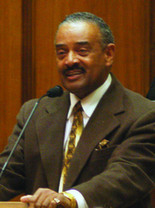
Rep. Vernon Smith
Sponsored bills
Maddy summaryHR 11 is a non-binding resolution honoring the Food Bank of Northwest Indiana for its community service. It was introduced by Representative Andrade and co-sponsored by multiple colleagues, passing its first reading on January 27, 2026. The resolution expresses legislative recognition but does not create new laws, allocate funding, or affect any policies or individuals. It serves solely as a symbolic gesture of appreciation for the food bank's work. No concrete policy changes or direct impacts on constituents are associated with this resolution.
Maddy summaryThis is a ceremonial resolution (HCR 11), not a policy bill. It formally honors the Hosea Family for their 31st Biennial Family Reunion. The resolution has no policy impact or direct effect on any individuals or groups beyond this symbolic recognition. It was adopted by voice vote as a non-binding gesture of appreciation.
Maddy summaryHR 8 designates February as "American Heart Month" through a congressional resolution. This procedural bill does not create new laws or affect specific groups; it formally recognizes the month to raise public awareness about heart health. The resolution has no direct policy impact, funding changes, or legal obligations. It was introduced by Representative Andrade and co-sponsored by numerous colleagues, with no further legislative action noted.
Maddy summaryHCR 6 is a symbolic resolution designating January as National Human Trafficking Prevention Month. It does not create new laws, allocate funds, or directly affect individuals or organizations - its purpose is solely to raise public awareness about human trafficking through official recognition. The resolution was introduced in the Senate and referred to committee in early 2026. As a concurrent resolution, it requires no legislative action to take effect.
Provides that a person who: (1) has been convicted of a crime of domestic violence; and (2) knowingly or intentionally possesses a firearm; commits a Class A misdemeanor. Specifies defenses. Requires a court to issue an order, upon entry of a judgment of conviction for domestic battery or a crime of domestic violence, that: (1) prohibits ownership or possession of a firearm; (2) requires the defendant to surrender: (A) any firearm owned or possessed by the defendant; and (B) any license or permit to carry a handgun (license) owned or possessed by the defendant; and (3) requires confiscation, within 72 hours, of any firearm or license owned or possessed by the defendant. Provides that a domestic batterer who knowingly or intentionally fails to surrender a certain firearm or license commits a Class A misdemeanor, enhanced to a Level 6 felony in specific instances. Provides defenses. Specifies how a confiscated firearm or license shall be returned or disposed of if a person's right to possess a firearm is restored.
Maddy summaryThis bill (HR 4) is a ceremonial resolution to formally recognize and commemorate Dr. Martin Luther King Jr. Day. It does not create new laws or affect any specific group; instead, it serves as a symbolic gesture by Congress to honor Dr. King's legacy and contributions to civil rights. The resolution was introduced and adopted in the House on January 12, 2026, with multiple co-sponsors. As a procedural measure, it has no direct policy impact beyond acknowledgment.
Allows a member of the 1925 police pension fund, 1937 firefighters' pension fund, 1953 police pension fund (Indianapolis), or 1977 police officers' and firefighters' pension and disability fund to withdraw from the deferred retirement option plan (DROP) and make an election to enter the DROP for a second time not earlier than three years after the date the member withdraws from the DROP. Provides that a member may make an election to enter the DROP only twice in the member's lifetime.
Requires the department of correction to issue a certificate of eligibility for rehabilitative release (certificate) to certain convicted persons. Provides that a certificate must be issued to the following: (1) A person sentenced for a crime other than murder who is at least 60 years of age, and has served at least 20 years in the department of correction. (2) A person serving a sentence for murder who is at least 62 years of age, and has served at least 30 years in the department of correction. Allows a convicted person who has received a certificate to file a petition for sentence modification without the consent of the prosecuting attorney. Provides certain criteria that the court must consider when ruling on a petition for sentence modification. Allows a court to grant a petition for sentence modification if the court finds, by clear and convincing evidence, that: (1) the convicted person is no longer a danger to public safety; (2) the convicted person has demonstrated significant rehabilitative efforts, including participation in educational, vocational, and therapeutic programs; and (3) the interest of justice supports sentence modification. Allows the state public defender to represent a convicted person on a petition for sentence modification that is based upon a certificate. Allows certain convicted persons to file a petition for sentence reduction. Requires a petition for sentence reduction to identify information related the convicted person, sentence sought to be reduced, and evidence in support of the request. Allows a court to dismiss an incomplete petition or set a hearing on a properly filed petition. Requires that notice of a hearing be served on the petitioner, convicted person, counsel, department of correction, prosecuting attorney, and the victim or witness. Requires a court to appoint a public defender to represent the convicted person. Provides that the court is to take certain factors into consideration when deciding a petition for sentence reduction. Specifies that if the evidence supports that the convicted person does not present a significant safety risk to the community, there is a rebuttable presumption that the convicted person's sentence should be reduced by at least 20%. Requires the court to issue a final appealable order with findings of fact.

Maddy summaryHR 3 is a ceremonial resolution honoring the Indiana Youth Services Association's 50th anniversary (golden anniversary). It was introduced by Representatives Smith V and McNamara and passed its first reading on January 6, 2026. The bill does not create new policies or affect specific programs - it simply recognizes the association's milestone through a formal congressional resolution. As a procedural measure, it has no substantive policy impact.