Urges the legislative council to assign to an appropriate committee during the 2024 legislative interim the issue of applying for and implementing a Medicaid waiver to include nutrition supports for certain Medicaid recipients.
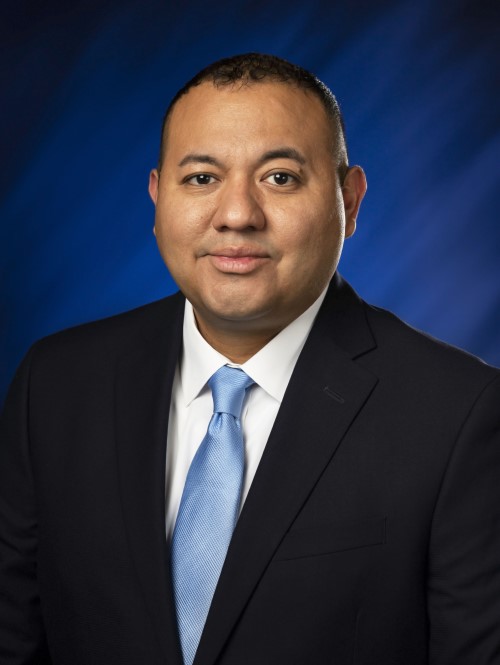
Rep. Mike Andrade
Sponsored bills
Requires each county to establish and maintain a Project Lifesaver program. Tasks the division of disability and rehabilitative services with ensuring compliance, and requires the division to report to the general assembly.
Requires the department of education to develop curricula concerning Internet and social media literacy. Permits a school corporation to offer an elective course on Internet and social media literacy.
Defines "child restitution order". Requires the court to order a person to pay child restitution if: (1) the person caused the death of a victim with a minor child; and (2) the person was convicted of: (A) operating a vehicle while intoxicated causing death; or (B) resisting law enforcement while using a vehicle and causing death or catastrophic injury. Provides certain factors for the court to consider when determining the amount of the child restitution order. Requires that the convicted person make child restitution order payments to the clerk of court and that the clerk of court has certain deadlines to deposit and remit the payment after receiving it. Provides that, if the convicted person is incarcerated, the court may allow not more than one year after release from incarceration for the convicted person to pay the child restitution order. Requires the court to offset a child restitution order by the amount of certain civil judgments.
Requires the individual or entity having authority over a public school building to test for radon in the lowest level of the school building before January 1, 2027, and report the test results to the Indiana department of health (state department). Requires the state department to record the test results in a data base and use the data base in its efforts to reduce the health risks of radon.
Provides that, subject to certain procedures and requirements, the office of the secretary of family and social services may apply to the United States Department of Health and Human Services: (1) for a Medicaid state plan amendment, a waiver, or an amendment to an existing waiver to require reimbursement for eligible certified community behavioral health clinic services; or (2) to participate in the expansion of a community mental health services demonstration program. Requires the division of mental health and addiction to establish and maintain a help line: (1) to provide confidential emotional support and referrals to certain resources to individuals who call the help line; and (2) that is accessible by calling a toll free telephone number. Establishes the Indiana behavioral health commission (commission) and sets forth the commission's membership. Changes the name of the "9-8-8 crisis hotline center" to "9-8-8 crisis response center". Makes conforming changes.
Defines "core public health services" for purposes of public health laws. Adds members to the executive board of the Indiana department of health (state department). Removes a provision allowing the state department to establish branch offices. Provides that the state department may provide services to local health departments. Requires each local board of health to establish a local public health services fund to receive state funding. Provides a method of allocation of state funding to local boards of health, subject to state appropriations. Specifies the percentage of how additional funding may be expended on core public health services. Allows the local health department to enter into contracts or approve grants for core public health services. Allows the state department to issue guidance to local health departments. Requires the state department to make annual local health department reports available to the public. Changes the qualification requirements for a local health officer and requires certain training. Requires the state department to identify state level metrics and county level metrics and requires certain local health departments to report to the state department activities and metrics on the delivery of core public health services. Requires the state department to annually report on the metrics to the budget committee and publish information concerning the metrics on the Internet. Requires that a local health department post a position or contract for the provision or administration of core public health services for at least 30 days. Requires a local health department to provide certain education before administering a vaccine. Requires a multiple county health department to maintain at least one physical office in each represented county. Provides that a new city health department cannot be created after December 31, 2022, but allows current city health departments to continue to operate. Creates the Indiana trauma care commission. Allows a school corporation that cannot obtain an ophthalmologist or optometrist to perform the modified clinical technique vision test to conduct certain specified vision screenings. Requires the school to send to the parent of a student any recommendation for further testing by the vision screener. Allows for standing orders to be used for emergency stock medication in schools. Allows the state health commissioner or designee to issue a statewide standing order, prescription, or protocol for emergency stock medication for schools. Removes the distance requirement for an access practice dentist to provide communication with a dental hygienist. Repeals provisions concerning the Indiana local health department trust account.

Increases the jury fee collected from a defendant who has committed a crime or committed certain violations to $6. (Current jury fee is $2.) Requires the clerk to collect a jury fee of $75 from a party filing a civil tort or plenary action. Increases the jury appearance fee to $30 per day for each day a juror is in attendance until the jury is impaneled. (Current rate is $15 per day.) Increases the juror payment rate to $80 per day for the first five days of trial and to $90 per day starting on the sixth day of trial until the jury is discharged. (Current rate is $40 per day.) Specifies that a prospective juror is considered to be in actual attendance if certain criteria are met, regardless of whether the prospective juror is not seated or is removed.
Provides that money in the National Guard tuition supplement program fund and the National Guard scholarship extension fund may not be expended, removed, or transferred from the respective fund except to be used for the purposes of the respective fund. Provides that an eligible applicant for: (1) a scholarship under the National Guard tuition supplement program; or (2) an educational cost exemption or award; may apply for a scholarship, exemption, or award to attend a state educational institution or an approved postsecondary educational institution under certain conditions.
Exempts military pay for members of a reserve component of the armed forces of the United States or the national guard from the individual income tax. (Current law provides an individual income tax exemption for members of a reserve component of the armed forces of the United States or the national guard for the period the member is mobilized and deployed.) Exempts military pay earned by members of an active component of the armed forces of the United States from the individual income tax. (Current law exempts from the individual income tax the military pay earned by members of the National Guard and reserve components of the armed forces of the United States while serving on active duty.)