Requires the bureau of motor vehicles (bureau) to suspend or revoke the current driver's license or driving privileges of an individual who is convicted of a moving traffic offense that causes the serious bodily injury or death of a vulnerable road user. Removes language requiring the bureau to revoke all certificates of registration and proof of registration issued to an individual convicted of certain moving traffic offenses.
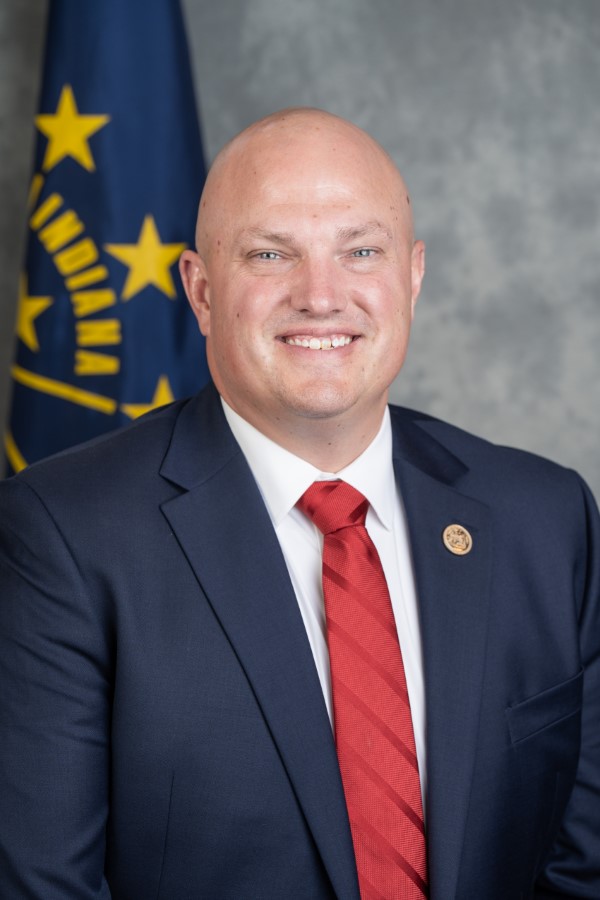
Rep. Blake Johnson
Sponsored bills
Authorizes a county or municipality to adopt and enforce an ordinance that regulates the use of an automated traffic enforcement safety device (device) to detect certain violations. Provides a civil penalty for a violation. Specifies that a civil penalty must first be applied to defray the cost of the installation, operation, and maintenance of the device. Specifies the manner in which the remaining money from the civil penalty must be distributed. Prohibits: (1) reporting a violation on a driving record; (2) using a violation to determine rates for motor vehicle insurance; (3) assessing points under the point system by the bureau of motor vehicles (bureau) for a violation; and (4) reselling data collected by an agent operating a device. Requires notification to the bureau, and the suspension of the registration of a motor vehicle if a violation is not paid. Makes conforming changes.
Defines "fabricated media" as recorded audio, a recorded image, or recorded video of an individual's speech, appearance, or conduct: (1) that has been altered without the individual's consent such that: (A) the media conveys a materially inaccurate depiction of the individual's speech, appearance, or conduct; and (B) a reasonable person would be unable to recognize that the recording has been altered; or (2) in which an artificially generated audio or visual imitation of an individual that: (A) has been created without the individual's consent; and (B) is sufficiently lifelike that a reasonable person would be unable to distinguish the speech or appearance of the imitation from the speech or appearance of the individual; is used to convey a fictional depiction of the individual's speech, appearance, or conduct; the creation of which is substantially dependent on the use of a generative adversarial network or another generative artificial intelligence technology. Prohibits a person who finances a campaign communication from disseminating fabricated media through the communication if: (1) the person knows, or reasonably should know, that the media is fabricated media; (2) the fabricated media depicts an individual who: (A) is a candidate in an election occurring not more than 90 days after the date on which the fabricated media is disseminated; and (B) has not consented to dissemination of the fabricated media; (3) the purpose of the dissemination is injuring a candidate in the election or influencing the outcome of the election; and (4) the fabricated media does not include a disclaimer that meets specified requirements. Allows a candidate depicted in fabricated media disseminated by a person in violation of this prohibition to bring a civil action against the person and specifies the relief that a court may grant a prevailing plaintiff.
Establishes a procedure for the lawful production and sale of cannabis in Indiana. Makes conforming amendments. Makes an appropriation.
Defines "fabricated media" as recorded audio, a recorded image, or recorded video of an individual's speech, appearance, or conduct: (1) that has been altered without the individual's consent such that: (A) the media conveys a materially inaccurate depiction of the individual's speech, appearance, or conduct; and (B) a reasonable person would be unable to recognize that the recording has been altered; or (2) in which an artificially generated audio or video imitation of an individual that: (A) has been created without the individual's consent; and (B) is sufficiently lifelike that a reasonable person would be unable to distinguish the speech or appearance of the imitation from the speech or appearance of the individual; is used to convey a fictional depiction of the individual's speech, appearance, or conduct. Provides that a person who pays for or sponsors a political campaign advertisement that: (1) expressly advocates for the defeat of a clearly identified candidate; and (2) includes fabricated media that: (A) depicts the identified candidate; and (B) was created without the consent of the identified candidate; commits a Class A misdemeanor and is subject to a civil action by the identified candidate. Provides that a person that pays for the creation of a publicly disseminated advertisement that: (1) includes fabricated media depicting a living individual without the consent of the individual; or (2) includes fabricated media depicting a deceased individual without the consent of the person entitled to exercise and enforce the individual's rights of publicity; commits a deceptive act that is actionable by the attorney general and is subject to a civil action by the individual or by the person entitled to exercise and enforce the individual's rights of publicity.
Makes appropriations to the Indiana housing and community development authority and the office of the secretary of family and social services to fund programs for housing and other supportive services for individuals experiencing homelessness.
Provides that if an examination of an audited entity is unable to be performed because the audited entity's accounts, records, files, or reports are not properly maintained or reconciled, the entity may be declared unauditable. Requires an unauditable entity to bring its accounts, records, files, or reports into an auditable condition within 90 days. Requires the state board of accounts (SBOA) to publish a list of entities declared to be unauditable on the SBOA's website. Provides that if an entity is declared unauditable and the fiscal officer is unable to perform the fiscal requirements of their position, the entity is required to hire outside assistance for guidance or to perform the fiscal requirements. Clarifies an exception regarding the liability of an elected official for acts that constitute gross negligence or intentional disregard of the official's duties. Requires the SBOA to annually call a conference for: (1) city and town controllers and clerk-treasurers, newly appointed city and town controllers, and city and town clerk-treasurers elect; and (2) township trustees and township trustees elect. Provides that elected officials must attend training every two years and that the SBOA shall keep attendance of elected officials and publish it on the SBOA's website. Makes an exception for school corporation treasurer personal liability. Provides that if there is an office of town clerk-treasurer that is vacant, and the town legislative body is unable to fill the office, the town legislative body may either: (1) enter into a local agreement with the town clerk-treasurer and town legislative body of another town in the state to assist a selected town legislative body member in performing the duties of the clerk-treasurer's office; or (2) enter into a contract with a certified public accountant to assist the town legislative body member in performing the duties of the clerk-treasurer's office. (Current law provides that the town legislative body may only enter into a contract with a certified public accountant after the town legislative body is unable to reach an agreement with another town.) Provides that if, after reasonable diligence, a town may hire any qualified person to perform the duties of the clerk-treasurer's office until the vacancy can be filled, or until the end of the current clerk-treasurer's term, whichever is first. Provides that newly elected officials shall complete five hours of training before taking office. Provides that elected officials shall certify completion of training requirements to the SBOA annually. Excludes self-supporting school lunch and the rental or sale of curricular materials as programs that may be established as separate funds. Repeals obsolete provisions. Makes technical corrections.

A CONCURRENT RESOLUTION urging the Indiana Department of Transportation to rename the bridge on State Highway 27 over I-70 as the "Officer Seara Burton Memorial Bridge".
Modifies the definition of "entertainment complex" for purposes of alcohol law. Provides that a primary source of supply, manufacturer, or wholesaler may supply equipment on a temporary and nondiscriminatory basis to the holder of a retailer permit or a temporary permit for the purpose of holding, storing, and dispensing product to consumers for a special event for the duration of the special event. Provides that certain brewers may sell or transfer beer to certain food manufacturers for the purpose of adding or integrating the beer into a product or recipe. Provides that a product that contains transferred beer may not contain more than 0.5% of alcohol by volume when the product leaves the food manufacturer's facility. Allows a small brewery to receive, bottle, and package beer from another small brewery if certain requirements are met. Makes technical corrections regarding a permit holder who manufactures not more than 90,000 barrels of beer in a calendar year for sale or distribution in the state. Increases, within a certain historic district, the number of alcoholic beverage restaurant permits from 10 to 15, and changes certain other requirements. Permits the issuance of three new three-way permits, three new two-way permits, and one new liquor dealer's permit to the town of Whitestown. Requires the alcohol and tobacco commission to issue a beer dealer's permit and a wine dealer's permit to an eligible grocery store. Increases the number of gallons of liquor that an artisan distiller may produce in a calendar year from 10,000 to 20,000. Amends the conditions in which a minor can lawfully be in a room on a licensed premises in which is located a bar over which alcoholic beverages are sold or dispensed by the drink.
Establishes the vision zero task force (task force) to study and make recommendations concerning: (1) the reduction and prevention of fatalities on roads and highways; and (2) other driving safety issues. Requires the task force to file an annual report with the interim study committee on roads and transportation. Requires the legislative services agency to provide staff support for the task force.