Maddy summaryHCR 6 is a symbolic resolution designating January as National Human Trafficking Prevention Month. It does not create new laws, allocate funds, or directly affect individuals or organizations - its purpose is solely to raise public awareness about human trafficking through official recognition. The resolution was introduced in the Senate and referred to committee in early 2026. As a concurrent resolution, it requires no legislative action to take effect.
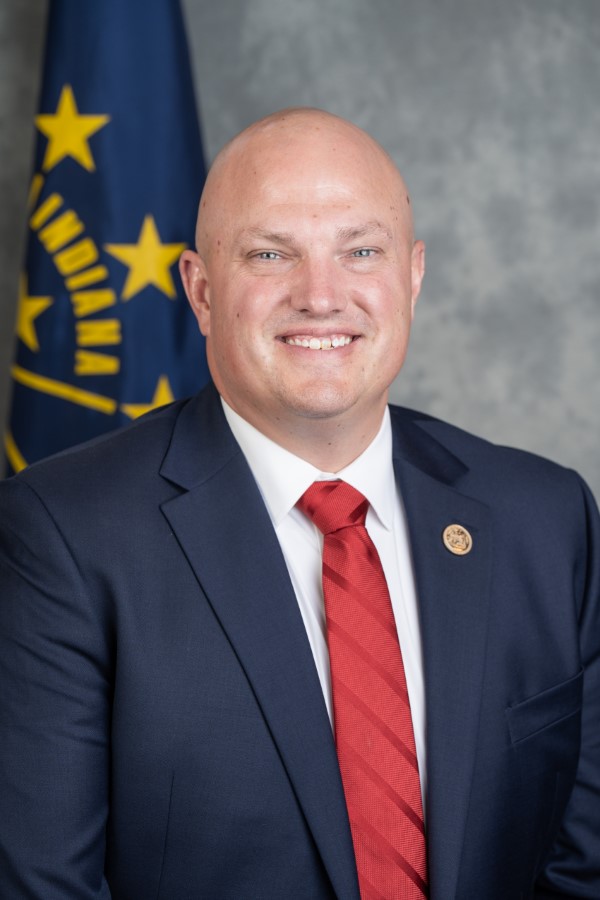
Rep. Blake Johnson
Sponsored bills
Allows the legislative body of a county and certain cities to adopt a resolution to place a referendum on the ballot to impose a local preschool referendum tax levy (levy) to fund administration of a preschool program and provide tuition and other assistance. Allows a unit to impose a levy if approved by a majority of the voters. Provides that voters may not approve a levy that is imposed for more than eight years. Specifies procedures for the referendum. Provides that a unit that imposes a levy must establish a preschool education program and a local preschool education referendum tax levy fund.
Provides that a wine retailer whose wine sales represent at least 60% of the annual gross income from the premises may allow customers to obtain sealed bottles of wine by self-service for consumption off the licensed premises.
Authorizes a county or municipality to adopt and enforce an ordinance that regulates the use of an automated traffic enforcement safety device (device) to detect certain violations. Provides a civil penalty for a violation. Specifies that a civil penalty must first be applied to defray the cost of the installation, operation, and maintenance of the device. Specifies the manner in which the remaining money from the civil penalty must be distributed. Prohibits: (1) reporting a violation on a driving record; (2) using a violation to determine rates for motor vehicle insurance; (3) assessing points under the point system by the bureau of motor vehicles (bureau) for a violation; and (4) reselling data collected by an agent operating a device. Requires notification to the bureau, and the suspension of the registration of a motor vehicle if a violation is not paid. Makes conforming changes.
Requires the bureau of motor vehicles to suspend or revoke the current driver's license or driving privileges of an individual who is convicted of a moving traffic offense that causes the death of a vulnerable road user.
Specifies that the horse racing commission (IHRC) may adopt rules that incorporate by reference the most current version of the: (1) model rules; and (2) model rules concerning foreign substances; adopted by the Association of Racing Commissioners International. Provides that, after June 30, 2025, the governor shall appoint the director of the IHRC and the director of the IHRC shall serve at the pleasure of the governor. Removes the requirement that the IHRC appoint an assistant director and provides that the director shall hire an assistant director. Provides that a contracted steward or judge is considered an employee of the IHRC for the purpose of receiving representation by the attorney general in certain suits. Changes references to the horse racing tracks. Provides that judges and stewards may suspend a license for not more than three years on behalf of the IHRC. (Current law allows judges and stewards to suspend a license for not more than one year on behalf of the IHRC.) Provides that the suspension of a license or the imposition of certain civil penalties must occur within 365 days (instead of 180 days) after the date of the violation. Provides that the Indiana gaming commission (commission) shall require an occupational license applicant and occupational licensee to submit fingerprints for review by the state police department (department) and the Federal Bureau of Investigation (FBI): (1) for a criminal history record check; and (2) in the form and manner required by the department and the FBI. Requires the department to provide the results of each requested criminal history record check to the commission. Allows the department to charge a fee for a criminal history record check and requires the commission to pay the fee from money received from fees collected from occupational license applicants or licensees. Provides a list of the individuals required to hold an occupational license. Provides that a horse's veterinary medical records and medical condition must be furnished within five business days without written client authorization to the IHRC as part of an investigation in which a horse under the care, control, or ownership of a licensee has been treated by a veterinarian. Provides that the state lottery commission shall not operate or authorize the operation of a lottery courier service. Requires the state lottery commission to adopt rules regarding the bulk purchase of lottery products. Allows a wine dealer that is not a package liquor store to deliver wine to a customer's residence or office. Provides three-way permits, subject to certain conditions, to the city of Warsaw and the town of Syracuse. Increases the number of gallons of liquor an artisan distiller may produce in a calendar year from 20,000 gallons to 30,000 gallons. Allows the holder of an artisan distiller's permit to manufacture liquor for another holder of an artisan distiller's permit if certain conditions are met. Provides that a municipality may not require a designated permittee or vendor within a designated refreshment area to purchase containers for alcoholic beverages from a certain vendor.
Makes the following changes: (1) Expands the purpose of the Richard D. Doyle tobacco education and enforcement fund. (2) Amends type II gambling game prize limits to include sports themed gaming. (3) Replaces a reference in the definition of a "Type II gambling game" to an Indiana gaming commission memorandum with a substantive definition. (4) Eliminates the requirement that a farm winery or artisan distiller annually submit excise tax returns to the alcohol and tobacco commission (ATC). (5) Removes a phrase that requires an e-liquid to contain nicotine to be considered a "tobacco product" under provisions concerning tobacco sales certificates. (6) Amends local alcoholic beverage board members' duties to reflect electronic record keeping. (7) Requires an employee or contractor who controls entry into age restricted premises or otherwise checks an individual's proof of age to complete alcohol server training. (8) Prohibits the ATC from issuing an alcoholic beverage permit unless a person has on file with the ATC a verified list containing the name and address of each person or entity: (A) with actual authority to direct or control the operation of the permit; and (B) holding at least a 5% (instead of 2%) interest in the permit and the business conducted, or to be conducted, under it. (9) Prohibits charging an individual a cover fee to access unlimited alcoholic beverages. Allows the sale of event packages. (10) Replaces, in statutes regarding unlawful sales to minors, references to "tobacco", "e-liquid", or "electronic cigarette" with the inclusive term "tobacco product". (11) Allows a person to participate electronically in an online auction or raffle but requires alcoholic beverage prizes to be collected in person. (12) Modifies the insurance coverage requirements that apply to specified permit holders. (13) Allows specified local government entities to permit the retail sale of alcoholic beverages in certain areas if a person that has an agreement to act as concessionaire for the permitted premises applies for and secures the necessary permits. (14) Establishes requirements regarding permittee donations to qualified organizations that are permittees conducting an event. (15) Prohibits, with exceptions, the sale, use, and distribution of flavored nitrous oxide. Repeals statutes that do the following: (1) Allow the ATC to require registration of alcoholic beverage brands and other information used in advertising. (2) Require attachment of an identification marker to a keg at the time of sale. (3) Make it a Class C misdemeanor to transport an alcoholic beverage to a retailer or dealer on a Sunday.

Maddy summaryHR 60 is a commemorative resolution that officially recognizes the first full week of May 2025 as Tardive Dyskinesia Awareness Week. This bill aims to raise public awareness about Tardive Dyskinesia.
Maddy summaryHCR 34 is a concurrent resolution formally acknowledging the work of Guardian ad Litem professionals and Court Appointed Special Advocates (CASAs) in child welfare cases. It recognizes their role in advocating for children's best interests within the court system. This resolution does not create new laws or alter policies; it is a ceremonial acknowledgment of these volunteers' contributions. The bill was introduced by Representative Garcia Wilburn and has advanced through initial readings in both chambers.
Maddy summaryHR 39 designates April as World Autism Month and April 2nd as World Autism Awareness Day through a symbolic congressional resolution. This bill does not create new laws or policies; it is purely a recognition measure to highlight these observances. The resolution has no direct impact on individuals, services, or funding but aims to raise public awareness about autism. It was introduced and coauthored by multiple representatives with no substantive policy changes.