

Provides that it is an unlawful employment practice to: (1) pay wages that discriminate based on sex for substantially similar work; (2) discharge, discipline, discriminate against, coerce, intimidate, threaten, or interfere with any employee or other person because the employee inquired about, disclosed, compared, or otherwise discussed the employee's wages; (3) require as a condition of employment nondisclosure by an employee of the employee's wages; or (4) require an employee to sign a waiver or other document that purports to deny the employee the right to disclose the employee's wage information. Provides that the civil rights commission has jurisdiction for the investigation and resolution of complaints of these employment actions.
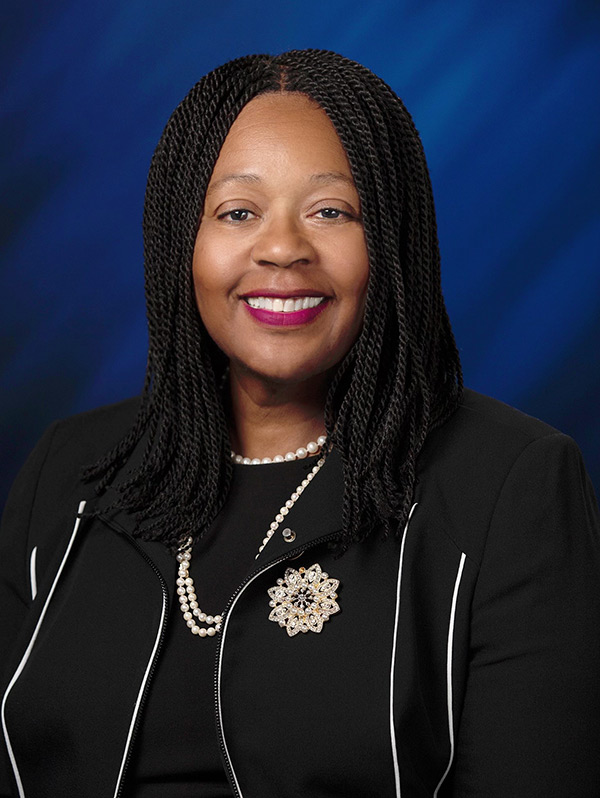
Rep. Carolyn Jackson
Sponsored bills
Prohibits health practitioners and other specified individuals from performing pelvic, prostate, or rectal examinations on an anesthetized or unconscious patient except in specified circumstances.
Prohibits the sale of flavored tobacco products and their components, including: (1) cigarettes, electronic cigarettes, and smokeless tobacco; and (2) tobacco products that have a characterizing flavor. Provides that a person or entity that sells a flavored tobacco product commits a Class C misdemeanor and may have the person's tobacco sales certificate revoked by the alcohol and tobacco commission.
Requires the person or entity having authority over a child care facility or preschool to test the drinking water in the child care facility or preschool before January 1, 2025, to determine whether lead is present in the drinking water in a concentration equal to or exceeding 15 parts per billion. Excepts a child care facility or preschool from this testing requirement if its drinking water: (1) was tested through the Lead Sampling Program for Schools and Child Care Facilities conducted by the Indiana finance authority in 2019 and 2020; or (2) has otherwise been tested for lead at least once after 2017. Provides that, if testing indicates that lead in the drinking water of a child care facility or preschool equals or exceeds 15 parts per billion, the person or entity having authority over the child care facility or preschool is required to take action to reduce the concentration of lead to below 15 parts per billion.
Requires each electric utility other than a municipally owned utility or a rural electric membership corporation (electricity provider) to biennially establish, or issue a request for third party proposals to establish, at least five community solar facilities, in which customers of the electricity provider: (1) subscribe to pay for and receive a specified amount of electricity generated by the community solar facility; and (2) are credited by the electricity provider in each billing cycle for the amount of electricity from the community solar facility for which the customer subscribes. Establishes a process for: (1) solicitation and selection of proposals by an electricity provider for the construction, ownership, and operation of community solar facilities in the electricity provider's service area; (2) submission of a community solar facility project plan by each electricity provider to the Indiana utility regulatory commission (commission); and (3) review and approval of submitted community solar facility project plans by the commission.
Celebrating February as Black History Month.
Provides three days of paid leave for an employee of a state agency or a political subdivision to attend the funeral of the employee's relative or grieve the death of the employee's relative or a miscarriage experienced by the employee or the employee's spouse. Provides 150 hours of paid leave for a full-time employee of a state agency or a political subdivision and 75 hours of paid leave for a part-time employee of a state agency or a political subdivision upon: (1) the birth of the employee's child; (2) the birth of a child to the employee's spouse; (3) the placement of a child for adoption with the employee; or (4) the stillbirth of the employee's child. Provides unpaid leave of not more than 10 working days for an employee under certain circumstances related to the death of the employee's child, a stillbirth, or a miscarriage. Prohibits an employer from taking an adverse employment action against an employee who exercises the rights provided by the unpaid leave requirements. Allows the department of labor to collect civil penalties if an employer violates the unpaid leave requirements. Provides that an employee may bring a civil action against an employer to enforce the unpaid leave requirements.
Defines "exigent circumstances" for purposes of action taken by the department of child services (DCS) with respect to a child. Allows DCS to interview a child at the child's school, except for at a nonaccredited nonpublic school with less than one employee, without parental consent if: (1) the DCS employee presents their credentials upon arrival at the school; and (2) DCS presents a written statement that DCS has parental consent, a court order, or exigent circumstances. Requires that the written statement shall not be maintained in the child's file and must protect the child's and child's family's confidentiality. Mandates that DCS provide assurances that the child's school, or its representative, has been invited to participate in the case plan process.
Allows a county executive and county fiscal body to adopt identical resolutions to initiate a court action to remove the county's auditor, treasurer, recorder, surveyor, or assessor (county officer) for: (1) neglect of duties; (2) charging illegal fees; or (3) failing to be physically present in the county officer's office for a reasonable amount of time each month. (Under current law, an action for removal of an officer may only be initiated in court on the oath of a person and for a violation described in (1) or (2)). Provides that it is a defense to an action for a violation described in (3) that the county officer's absence was due to serious illness of the county officer or the county officer's spouse, parent, child, or stepchild or military service.
Allows the division of family resources (division) to send certain notices to: (1) an applicant for licensure as a child care center, licensure as a child care home, or registration as a child care ministry; and (2) a licensed child care center, a licensed child care home, and a registered child care ministry; by electronic mail instead of by certified mail. Requires: (1) an applicant for licensure as a child care center, licensure as a child care home, or registration as a child care ministry to provide a current and valid electronic mail address to the division in the application; and (2) a licensed child care center, a licensed child care home, and a registered child care ministry to maintain the provided electronic mail address for the duration of the licensure or registration.