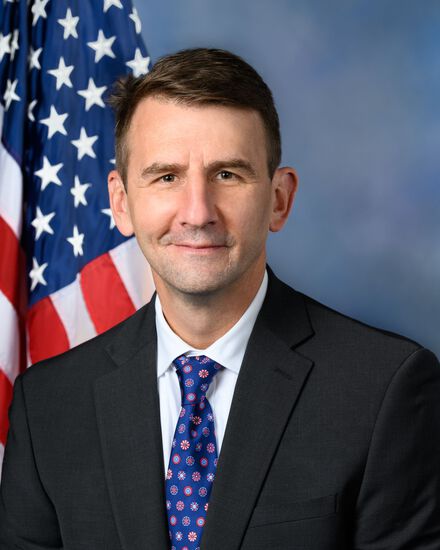
The Flock-Off Act prohibits federal agencies, state and local governments, and other recipients of federal funds from using federal money to purchase, operate, or maintain automated camera systems that capture biometric data or license plate information. The bill requires these entities to remove any existing covered camera systems within 180 days of enactment, with violations resulting in the withholding of further federal funding until reimbursed. Specific exceptions allow for the continued use of such systems within one mile of the U.S. borders for security purposes and on toll roads strictly for toll collection and enforcement.
The Concrete Pump Tax Fairness Act introduces a new mileage-based fee for owners of mobile concrete boom pump vehicles that travel within the United States. This tax charges $0.05 per mile for vehicles weighing 60,000 pounds or less and $0.07 per mile for heavier vehicles, with payments due quarterly. The bill requires the government to create a system that uses existing vehicle technology to track mileage while protecting operator privacy and minimizing administrative burdens. Additionally, the law allows these vehicles to use existing fuel tax credits to offset the new fee and excludes them from certain existing highway use requirements. All collected fees will be deposited into the Highway Trust Fund to support road infrastructure.
The Connected Vehicle Security Act of 2026 restricts the importation, sale, and use of connected vehicles and related technology from China, Russia, Iran, and North Korea to protect national security. Starting in 2027, the bill generally bans these vehicles if they originate from or are controlled by these countries, with separate restrictions on software and hardware taking effect in 2030. The Secretary of Commerce is authorized to issue specific exemptions for items that do not pose a security risk and must publish a list of approved products. The law also requires companies to submit declarations confirming their vehicles comply with the rules and imposes heavy fines for violations.
The Connected Vehicle Security Act of 2026 restricts the importation, sale, and manufacture of vehicles and related technology from specific countries, including China, Russia, Iran, and North Korea, to address national security concerns. The law defines prohibited items as connected vehicles, their software, and hardware components and sets different effective dates, with vehicle bans starting in 2027 and hardware restrictions beginning in 2030. A government official can grant exceptions for specific items after reviewing security risks and notifying Congress, while the agency must publish annual reports on enforcement actions and compliance.
This bill would restrict the issuance of commercial driver's licenses to only U.S. citizens, lawful permanent residents, and holders of specific work visas. It requires states to verify the citizenship or visa status of current CDL holders within 180 days of enactment and revoke licenses from those who do not meet these requirements. States that fail to comply with these verification and revocation deadlines would face federal funding penalties. Additionally, the bill mandates that all CDL testing and licensing processes be conducted in English.
The Gas Can Freedom Act of 2025 repeals two existing federal safety laws: the Portable Fuel Container Safety Act of 2020 and the Children’s Gasoline Burn Prevention Act. It removes current requirements for portable fuel containers to include flame mitigation devices or child-resistant features. The bill also prohibits the Consumer Product Safety Commission from creating new rules mandating these safety features in the future. This directly affects manufacturers of portable fuel containers and the CPSC, eliminating existing regulatory requirements and preventing new ones.
SJRES 46 is a joint resolution seeking congressional disapproval of an Environmental Protection Agency (EPA) rule concerning California's vehicle emission standards. The rule, submitted in 2023, relates to California's pollution control requirements for motor vehicles, including advanced clean trucks, zero-emission airport shuttles, and heavy-duty engine emissions. This resolution would block the rule from taking effect using a specific federal disapproval process under Title 5 of the U.S. Code. If passed, the rule would have no legal force, meaning California's current standards would remain without the EPA's formal approval for these specific provisions.
Senate Joint Resolution 45 seeks to block an Environmental Protection Agency (EPA) rule that would have allowed California to enforce its Advanced Clean Cars II vehicle emission standards. The resolution uses the congressional disapproval process under federal law to declare the EPA rule invalid, preventing California from implementing its stricter pollution controls for cars and trucks. If passed, this resolution would stop the rule from taking effect, meaning California could not override federal vehicle emission standards with its own requirements. The bill directly affects California's ability to set state-level environmental regulations for motor vehicles and the EPA's regulatory authority.
The ELITE Vehicles Act repeals federal tax credits for purchasing new electric vehicles, used clean vehicles, and commercial clean vehicles. It also eliminates the tax credit for installing electric vehicle charging infrastructure. These changes apply to vehicles purchased or with a binding contract entered into 30 days after the bill's enactment. The bill directly affects consumers and businesses that previously used these credits to offset the cost of electric vehicles and charging stations.
HR 4117, the Fuel Emissions Freedom Act, would repeal all federal and state fuel emissions standards for motor vehicles. It specifically targets Clean Air Act sections 202 and 209, as well as Corporate Average Fuel Economy (CAFE) standards under 49 U.S.C. 32902-32918, and nullifies all existing regulations under these provisions. The bill prohibits both the federal government and states from establishing or enforcing any future fuel emission standards for vehicles. This would directly affect automobile manufacturers, who would no longer need to comply with emissions regulations, and states, which would lose authority to set their own standards. The bill’s key mechanism is the complete removal of regulatory requirements related to vehicle emissions.