

Partnerships for Affordability and Student Success Act This bill commits states to maintaining support for affordable higher education, and it authorizes federal-state partnerships to provide for higher education access, affordability, and completion. Specifically, the bill requires states to maintain support for institutions of higher education (IHEs) and for student financial aid at levels that are equal to or greater than the average levels of such support for the three most recent academic years. The bill also requires the Department of Education, after entering into an agreement with states, to award incentive grants to states to (1) provide grants to eligible students attending IHEs or participating in accredited study abroad programs, (2) reduce the cost of attendance at public IHEs, and (3) provide subgrants to eligible IHEs to reduce student costs and improve outcomes for students and graduates. Each state that receives such grant funds shall report annually on its progress in meeting its public postsecondary education goals and comprehensive plan for public higher education. Private, nonprofit IHEs may voluntarily elect to participate in a state's efforts under its comprehensive plan for postsecondary education.
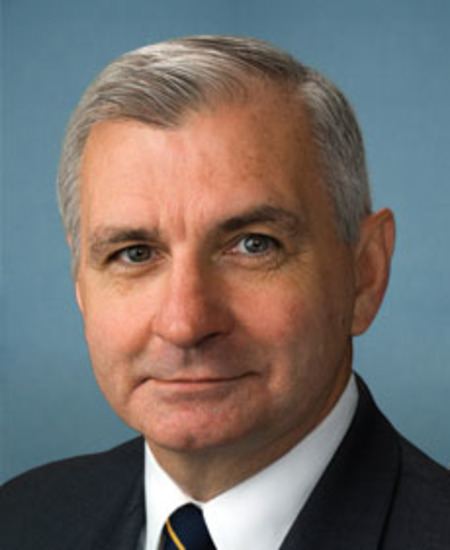
Sen. Jack Reed
Sponsored bills
This resolution condemns the recent rise in anti-Semitic violence and harassment targeting Jewish Americans. The resolution (1) recommits to combating anti-Semitism in all forms; and (2) calls on elected officials, faith leaders, and civil society leaders to denounce and combat all manifestations of anti-Semitism. The resolution urges the President to continue the leadership role of the United States in combating anti-Semitism internationally, advance accurate Holocaust education and counter Holocaust denial and distortion, ensure the physical security of Jewish institutions and organizations, and produce an analysis that accounts for the level and scope of the threat that anti-Semitism poses to the people of the United States. The resolution urges law enforcement agencies to fully participate in the data collection process of the Federal Bureau of Investigation to improve anti-Semitic hate crime data collection.
Children Don't Belong on Tobacco Farms Act This bill prohibits as a form of oppressive child labor the employment of any employee under age 18 who has direct contact with tobacco plants or dried tobacco leaves.
This bill prohibits smoking on the premises of any Veterans Health Administration facility. The bill defines smoking as the use of cigarettes, cigars, and pipes (i.e., the heating or combustion of tobacco), as well as the use of any electronic nicotine delivery system.
Refund Equality Act of 2021 This bill permits legally married same sex couples to amend their tax returns to file as married filing jointly for returns outside of the statute of limitations.
COVID-19 Vaccine Developers Gold Medal Act This bill provides for the award of a Congressional Gold Medal to recognize all those whose efforts led to the development of COVID-19 vaccines that received emergency use authorizations.
Afghan Allies Protection Act of 2021 This bill modifies a program providing special immigrant visas to eligible citizens or nationals of Afghanistan who assisted U.S. efforts there and addresses related issues. The bill extends the program through 2023 and increases the number of visas available. An individual may become eligible for a visa after assisting U.S. efforts in Afghanistan for one year, whereas currently some individuals must have served for two years. Furthermore, for an applicant qualifying for a visa by performing duties with a NATO mission in Afghanistan, the bill eliminates a requirement that the duties performed qualify as sensitive and trusted duties. The bill removes a requirement that the individual has experienced or is facing an ongoing serious threat due to their assistance to the United States or NATO. The Department of State or the Department of Homeland Security may postpone the program's medical examination requirement. An individual who received a postponement must undergo a medical exam within 90 days of admission into the United States. The bill also expands surviving family member benefits for the Afghanistan program (and a similar program for Iraq) to a surviving spouse or child of an individual who submitted an application to the Chief of Mission that would have been approved but for the individual's death. Currently, such survivor benefits only apply if the deceased individual's petition was approved.
This resolution expresses support for the rights, freedoms, and equal treatment of lesbian, gay, bisexual, transgender, and queer (LGBTQ) individuals. The resolution r ecognizes that LGBTQ rights are human rights and protected by the laws of the United States and international treaties. Additionally, the resolution encourages the celebration of LGBTQ Pride Month in June.
Women's Health Protection Act of 2021 This bill prohibits governmental restrictions on the provision of, and access to, abortion services. Specifically, governments may not limit a provider's ability to prescribe certain drugs, offer abortion services via telemedicine, or immediately provide abortion services when the provider determines a delay risks the patient's health. Furthermore, governments may not require a provider to perform unnecessary medical procedures, provide medically inaccurate information, comply with credentialing or other conditions that do not apply to providers whose services are medically comparable to abortions, or carry out all services connected to an abortion. In addition, governments may not (1) require patients to make medically unnecessary in-person visits before receiving abortion services or disclose their reasons for obtaining such services, or (2) prohibit abortion services before fetal viability or after fetal viability when a provider determines the pregnancy risks the patient's life or health. The bill also prohibits other governmental measures that are similar to the bill's specified restrictions or that otherwise single out and impede access to abortion services, unless a government demonstrates that the measure significantly advances the safety of abortion services or health of patients and cannot be achieved through less restrictive means. The Department of Justice, individuals, or providers may bring a lawsuit to enforce this bill, and states are not immune from suits for violations. The bill applies to restrictions imposed both prior and subsequent to the bill's enactment.
This resolution offers the condolences of the Senate regarding the death of Senator John William Warner and expresses deep appreciation for his outstanding and important service to his country.