

Maddy summaryThe Milk From Family Dairies Act of 2026 establishes a new Dairy Market Stabilization Program to regulate milk production and pricing for commercial dairy producers across the United States. This program sets a variable floor price for milk based on production costs and limits how much milk each producer can sell without paying a fee, while redistributing those fees as dividends to producers who stay within their limits. The bill creates regional boards with producer representation to oversee these rules and includes a five-year referendum to determine if the program should continue. Additionally, the legislation suspends existing federal dairy insurance programs, increases import fees and lowers dairy import quotas, and provides funding for infrastructure and training aimed at supporting small-scale and family dairies.
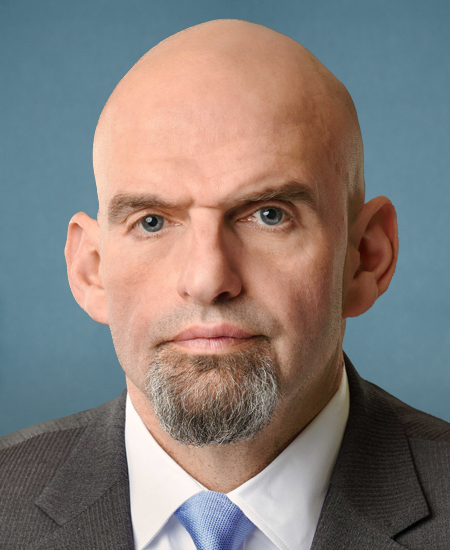
Sen. John Fetterman
Sponsored bills
Maddy summaryThe Small Farm Conservation Act creates a dedicated subprogram within the Environmental Quality Incentives Program to provide financial and technical assistance specifically for small-scale agricultural producers. This new initiative allocates at least 30 percent of program funds between 2027 and 2031 to support farms that are smaller than their state's median size, with special eligibility for socially disadvantaged groups, veterans, and those in high-poverty areas. Key provisions include a minimum payment of $2,500, a 50 percent bonus for soil health management on operations of 50 acres or less, and a streamlined application process designed to reduce administrative burdens. To ensure effective delivery, the bill requires the Natural Resources Conservation Service to hire and train staff familiar with small farm challenges, designate coordinators in every state, and publish outreach materials in multiple languages.
Maddy summaryThe CHILE Act of 2026 creates a new federal program to provide emergency financial assistance to producers of specialty crops, such as fruits, vegetables, and nuts, when they face adverse events like economic crises or market disruptions. Under this framework, the Secretary of Agriculture would calculate payments based on the producer's recent sales history and a specific payment factor designed to cover losses, while also accounting for the higher input costs and diverse business structures common in this sector. The legislation sets a total funding limit of $5 billion for fiscal year 2027, with higher payment caps for large-scale farming operations that derive at least 75 percent of their income from agriculture.
Maddy summaryThe Pell Grant Preservation and Expansion Act of 2026 aims to increase financial aid for college students by doubling the maximum Federal Pell Grant award to $10,000 for the 2026-2027 school year, with amounts rising annually to reach $15,000 by 2031-2032. The bill also changes the funding structure so that Pell Grants become a mandatory program that automatically adjusts for inflation rather than relying on annual congressional appropriations. Additional provisions expand eligibility to include students with negative financial aid indexes, provide special rules for recipients of means-tested benefits, and allow Dreamer students who become citizens or permanent residents to qualify for aid. The legislation further restores the total number of semesters a student can receive Pell Grants from 12 to 18 and modifies how institutions determine satisfactory academic progress to reduce penalties for students struggling with course requirements.
Maddy summaryS 1782, the Charlotte Woodward Organ Transplant Discrimination Prevention Act, prohibits hospitals and transplant centers from denying organ transplants or related services solely because of a person’s disability. It requires these covered entities to make reasonable modifications to policies - such as considering a patient’s support network or providing communication aids - to ensure access for qualified individuals with disabilities who meet medical eligibility. The bill allows exceptions only if a physician determines a disability is medically significant to the transplant, but does not permit denial based on inability to independently manage care with available support. This applies to all stages, including evaluation, listing, and post-transplant care, while ensuring it doesn’t override stronger protections under existing disability laws like the ADA.
Maddy summaryThe No Robot Bosses Act prevents employers from relying predominantly on automated systems to make hiring, firing, or other employment decisions, while also requiring these systems to be transparent about how they evaluate workers. Companies using such technology must disclose how the system works, train their staff on potential biases, and allow employees to opt out of having their applications or management handled by algorithms. The bill mandates that developers and employers conduct detailed pre-deployment evaluations and annual impact assessments to ensure these tools do not discriminate or harm workers' rights. A new Fairness and Transparency Office within the Department of Labor will oversee compliance, investigate violations, and enforce penalties that include substantial fines and protections against retaliation for whistleblowers.
Maddy summaryThe Stop Spying Bosses Act establishes new federal rules to limit how employers collect, use, and share employee data, primarily affecting businesses with at least 11 workers and their employees. It prohibits employers from gathering sensitive information such as biometric scans, off-duty activities, or political views unless the data is strictly necessary for specific job functions like ensuring safety or administering benefits. The law requires employers to clearly disclose what data they collect and how it influences decisions about hiring, firing, or promotions, while also granting workers the right to access and correct their own records. To enforce these standards, the bill creates a new Worker Protection and Technology Division within the Department of Labor, which will investigate violations and provide whistleblower protections against retaliation. Additionally, the legislation invalidates pre-dispute arbitration agreements that would stop workers from joining class-action lawsuits regarding privacy violations.
Maddy summaryThis Senate resolution reaffirms the importance of the United States protecting refugees and displaced persons globally and within the country. It highlights specific statistics on displacement crises and criticizes current administration actions, such as an indefinite suspension of refugee admissions and cuts to foreign aid. The bill calls on government officials to restore the Refugee Admissions Program, lift bans on entry, and provide humanitarian support to vulnerable populations. While it does not change existing laws, it serves as a formal statement of support for refugee rights and urges the executive branch to resume resettlement efforts.
Maddy summaryThe CHILD Labor Act strengthens existing federal protections against child labor by expanding the definition of hazardous work for minors and requiring stricter oversight of companies in supply chains. It mandates that federal contractors and recipients of federal financial assistance ensure no child under 16 is employed and that those aged 16 or 17 are not engaged in dangerous labor, with penalties for violations extending to parent companies that fail to verify their subcontractors' compliance. The legislation also increases fines for child labor offenses, allows the Department of Labor to issue stop-work orders, and establishes new civil damages for victims of these violations. Additionally, the bill requires the government to publish annual reports on work-related injuries and deaths while funding training programs to help identify and prevent child labor abuses.
Maddy summaryThe America the Beautiful Act reauthorizes the National Parks and Public Land Legacy Restoration Fund through 2033, increasing its annual funding from $1.9 billion to $2 billion. It requires that projects funded by the Legacy Restoration Fund must secure at least 15% of their costs from public donations, which will be solicited through public awareness campaigns, donation locations at recreation sites, and during the purchase of recreation passes. The bill also mandates new reporting requirements for deferred maintenance and disposal of assets no longer serving public interest, while ensuring donations are credited to the Fund and allocated to specific projects.