

Maddy summaryThis bill, known as the Local Data for Better Conservation Act, would require the federal government to use data collected by states when deciding whether to list or remove species from the endangered or threatened lists. The key provision adds a new requirement to the Endangered Species Act mandating that the Secretary of the Interior must accept and integrate state-collected information into listing determinations. This change directly affects state agencies that gather biological and environmental data, as well as federal wildlife officials who make conservation decisions. The bill aims to incorporate local knowledge and regional expertise into federal conservation assessments without altering the overall framework of the Endangered Species Act.
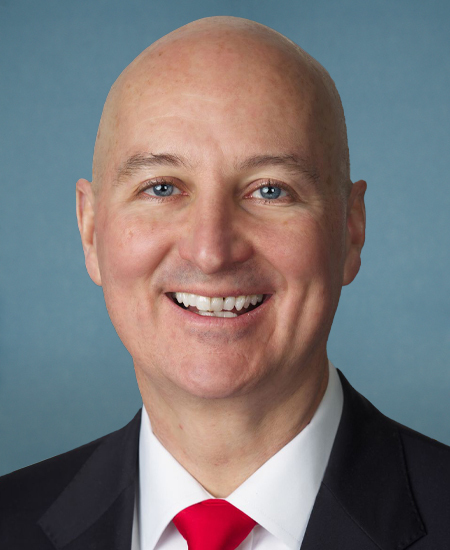
Sen. Pete Ricketts
Sponsored bills
Maddy summaryThis bill requires the Department of Defense and Veterans Affairs to improve mental health screenings for service members before they separate from military service. It mandates that existing PTSD, alcohol use, and violence risk screens be validated tools, and directs officials to consider adding substance use screening to these assessments. The law sets a 120-day deadline for full implementation of these changes after enactment. The primary beneficiaries are separating service members, ensuring they receive standardized, evidence-based mental health evaluations during their transition.
Maddy summaryThis bill prohibits public colleges and universities receiving federal funding from denying religious student groups access to campus facilities or official recognition solely because of their religious beliefs, practices, or standards. It directly affects public higher education institutions and religious student organizations seeking equal treatment alongside secular groups. The key mechanism requires institutions to provide religious groups with the same rights, benefits, and privileges - such as meeting space, event scheduling, and official status - as non-religious student organizations. This policy change ensures religious groups cannot be discriminated against in campus activities through the threat of withheld federal funding.
Maddy summaryThe Child Care Modernization Act of 2025 amends the Child Care and Development Block Grant Act to improve access to high-quality child care for working parents. It requires states to develop plans with input from parents, providers, and employers, and to set payment rates that cover providers' full costs including staff salaries and benefits. The bill creates a new grant program to expand child care supply through facilities improvements and support for providers serving priority populations like homeless children, rural communities, and children with disabilities. It clarifies eligibility requirements, including income limits for families and definitions for "eligible child" and "eligible activity." The act aims to increase the number of low-income children in high-quality child care settings while supporting the child care workforce.
Maddy summaryThis bill, the Conscience Protection Act of 2025, strengthens protections for healthcare providers and organizations that refuse to participate in certain medical procedures (including abortion, assisted suicide, and sterilization) based on religious, moral, or ethical beliefs. It creates a private right of action allowing affected entities to seek legal remedies when their conscience rights are violated, addressing a gap in current law where victims could not defend their rights in court. The bill amends the Public Health Service Act to prohibit discrimination against such healthcare entities and establishes clearer enforcement mechanisms through the Department of Health and Human Services, including administrative investigations and civil actions. It directly affects healthcare providers, hospitals, insurers, and other health-related organizations operating under federal funding. The bill aims to address inconsistent enforcement of existing conscience protections like the Weldon Amendment, which has been challenged in cases such as California's abortion coverage mandate.
Maddy summaryThis bill, titled the Stop Insider Trading Act, would restrict Members of Congress and their spouses and dependents from purchasing stocks in publicly traded companies. It requires these individuals to provide advance public notice at least seven days before selling any covered investments, with the notice filed with the Clerk of the House or Secretary of the Senate. The law includes exceptions for certain occupational transactions and reinvested dividends, and establishes penalties including fees and mandatory sales for violations.
Maddy summaryThis bill requires the Department of Veterans Affairs (VA) to improve coordination when veterans receive care from community providers. It directs the VA's Under Secretary for Health to develop guidance for VA medical centers on obtaining final medical documentation after community care referrals, set performance goals for this documentation, and mandate core training for community care providers. The bill also requires the VA to monitor provider training completion and ensure clear communication about training requirements. Finally, it mandates regular reports to Congress on implementation progress, starting 120 days after enactment.
Maddy summaryThis bill requires VA-employed physicians or nurse practitioners to sign a veteran's death certificate within 48 hours of learning of their death (for natural causes), addressing delays that have lasted up to eight weeks. It directly affects veterans' families and survivors who face blocked burial arrangements and delayed access to benefits due to these certification delays. The bill also mandates annual VA reports to Congress on compliance, including the percentage of timely certifications and reasons for delays. Key provisions focus on setting a clear 48-hour deadline for VA providers and creating transparency through mandatory reporting. It does not override state medical certification laws or require VA staff to violate their licensing requirements.
Maddy summaryThe Love Lives On Act of 2025 modifies veterans' and military survivors' benefit rules to prevent remarriage from automatically ending eligibility. It directly affects surviving spouses of veterans or military members who remarried, ensuring they retain access to key benefits. Key provisions include: (1) preventing termination of veterans' dependency compensation (under 38 U.S.C. §1311/1562) due to remarriage; (2) stopping termination of military Survivor Benefit Plan annuities solely for remarriage, with specific rules for those who remarried before age 55; and (3) expanding TRICARE coverage to include remarried widows/widowers whose subsequent marriage ended (via death, divorce, or annulment). These changes restore or maintain benefits that were previously lost upon remarriage.
Maddy summaryThis resolution formally recognizes 2026 as the International Year of Rangelands and Pastoralists, acknowledging the ecological and economic importance of these lands to the United States. The bill highlights that rangelands cover a significant portion of U.S. territory and support domestic production of food, fiber, and energy while providing critical ecosystem services like carbon storage and wildfire risk reduction. It encourages federal agencies, universities, and organizations to engage in education, research, and outreach activities related to sustainable rangeland management during the designated year. The measure does not create new laws or funding but serves to raise awareness and promote collaboration among stakeholders involved in rangeland stewardship.