

Maddy summaryThis resolution designates October 26, 2025, as "Day of the Deployed," continuing an annual Senate tradition established in 2011. It symbolically honors deployed U.S. military personnel and their families, calling for public reflection on their service. The resolution does not create new laws or benefits but encourages citizens to observe the day with ceremonies recognizing military contributions. It specifically references the service of over 2 million deployed troops since 9/11 and the ongoing global military presence.
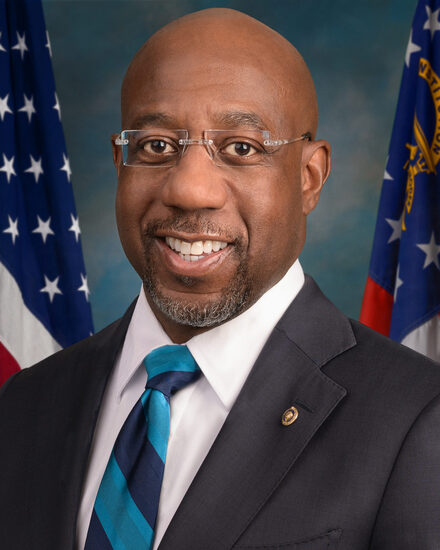
Sen. Raphael G. Warnock
Sponsored bills
Maddy summaryThis bill directs the Secretary of Agriculture to conduct a feasibility study for designating the Benton MacKaye Trail as a National Scenic Trail. The 287-mile trail, which runs through Georgia, Tennessee, and North Carolina across federal lands and protected areas, directly affects the communities along its route and the Benton MacKaye Trail Association. The study must be completed within one year of the bill's enactment, assessing factors like the trail's current maintenance (95% on federal land, managed since 1980 by a nonprofit) and its economic benefits to rural areas. It does not designate the trail as a National Scenic Trail, only authorizes a study to determine if that step is appropriate.
Maddy summaryThis bill provides back pay to federal employees, military personnel, and certain contractors who lost compensation due to a government funding lapse during the period from October 1, 2025, through the bill's enactment date. It appropriates funds from the Treasury to cover "standard employee compensation" (including base pay, allowances, and benefits) for all covered individuals during the shutdown period, requiring agencies to distribute payments within 7 days of enactment. The funds may only be used for this specific purpose and cannot be redirected to other agency needs. The pay is retroactive to September 30, 2025, treating affected individuals as if they had received full pay continuously during the shutdown.
Maddy summaryThis bill ensures federal employees, contractors, and military personnel affected by a government shutdown starting October 1, 2025, receive their regular pay and benefits during the shutdown period. It appropriates funds to cover standard pay, allowances, and benefits for "covered individuals" until appropriations are enacted (the "termination date"). The bill also prohibits agencies from implementing layoffs or placing employees on administrative leave for more than 10 workdays during the shutdown. It applies retroactively to September 30, 2025, and charges the costs to future appropriations.
Maddy summaryS 3031, the Keep America Flying Act of 2026, provides temporary funding to ensure continued pay and benefits for critical aviation personnel during the 2025-2026 federal budget gap. It appropriates funds for Federal Aviation Administration (FAA) air traffic controllers, Transportation Security Administration (TSA) screeners, and their contractors who support flight safety and security operations. This funding covers standard pay, allowances, and benefits for these staff until regular appropriations are enacted or by September 30, 2026. The bill directly affects FAA and TSA employees and contractors whose work is essential to maintaining safe air travel.
Maddy summaryThis bill ensures uninterrupted food assistance benefits for SNAP recipients during a government funding gap. If Congress fails to pass full funding for the Department of Agriculture by September 30, 2025, the bill directs the Treasury to provide necessary funds to keep SNAP benefits flowing without interruption. It also covers missed benefits retroactively from September 30, 2025, through the bill’s enactment date. The funding stops once Congress enacts actual fiscal year 2026 appropriations for the Department of Agriculture. This directly affects approximately 40 million low-income individuals and families who rely on SNAP benefits.
Maddy summaryThis bill requires the installation of human trafficking awareness signs at rest stops and welcome centers along interstate highways. It adds a new project category to federal transportation funding programs specifically for procuring and installing these signs. The bill also expands a Department of Transportation advisory committee to include state transportation departments, mandating their appointment within 9 months of enactment. These changes directly affect state transportation agencies managing rest stops and travelers using interstate highway facilities.
Maddy summaryThis non-binding Senate resolution expresses concern about rising book bans in schools and libraries, citing data showing over 6,800 individual book removals since July 2024 across 23 states. It highlights how bans disproportionately target books about race, LGBTQ+ experiences, and marginalized histories - such as *The Handmaid’s Tale* and *Maus* - and urges schools to follow established guidelines for handling book challenges. The resolution calls for returning books removed from military schools under recent executive orders and opposes content-based censorship in public education.
Maddy summarySRES 434 is a resolution expressing the U.S. Senate's support for designating October 5-11, 2025, as "National 4-H Week." It recognizes the 4-H youth development program - which serves nearly 6 million young people nationwide through hands-on learning in health, science, and leadership - as a key initiative of the Cooperative Extension System and the Department of Agriculture. The resolution does not create new laws or impose requirements but symbolically acknowledges 4-H's role in empowering youth with leadership skills and community engagement opportunities.
Maddy summarySRES 422 is a non-binding Senate resolution recognizing polycystic ovary syndrome (PCOS) as a serious health condition affecting many women and girls. It formally supports designating September 2025 as "PCOS Awareness Month" to raise public and medical awareness about PCOS and its related health risks, including infertility, diabetes, heart disease, and mental health challenges. The resolution urges improved diagnosis, treatment, and research but does not create new laws or allocate funding. Introduced by Senators Warren, Fischer, Blumenthal, and others, it serves solely as an awareness tool without legal force.