

Maddy summaryThis bill requires federal agencies to provide detailed information about payments they authorize, including the purpose, funding source, and activity type. It mandates agencies to verify bank account information before payments are made and gives the Treasury Department access to the National Directory of New Hires, tax information, and Social Security data to help identify and prevent improper payments. Agencies must periodically verify payment information accuracy and report on payments exempt from these requirements due to sensitive operations. These provisions apply to all federal agencies using Treasury disbursement systems, aiming to improve government spending efficiency through better data sharing and verification processes.
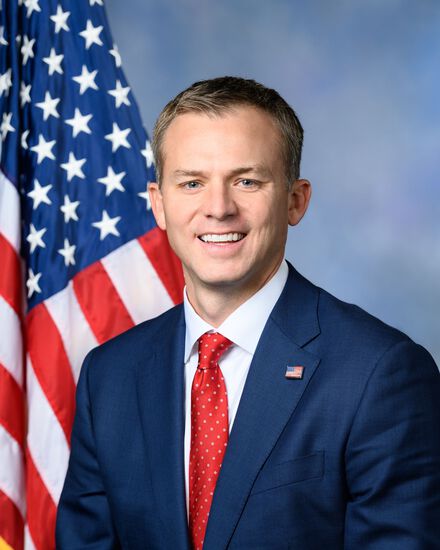
Rep. Blake D. Moore
Sponsored bills
Maddy summaryHR 4329, the Building Civic Bridges Act, creates an Office of Civic Bridgebuilding within the Corporation for National and Community Service to support projects reducing community divisions. It establishes a 3-year pilot grant program funding nonprofits, community groups, and schools to run projects that foster respect across diverse communities, address unmet needs like health or safety concerns, and improve social cohesion. Grants require projects to use research-based approaches, engage polarized communities, ensure participant safety, and track outcomes using standardized criteria. The program is funded exclusively through existing donations (not new federal funds) and mandates consultation with diverse community leaders and researchers. The Office will also compile research on civic bridgebuilding best practices for public access.
Maddy summaryThis bill requires drug manufacturers to pay rebates to Medicare when their "selected drugs" (cancer and complex therapies subject to negotiated maximum fair prices) are used. Manufacturers must calculate rebates based on the difference between current Medicare payment rates (ASP+6) and new negotiated rates (MFP+6), covering the gap for beneficiaries. This lowers patient coinsurance from the current 20% of ASP+6 to 20% of MFP+6 for these specific drugs during the negotiated price period. The rebates are paid to the Medicare trust fund and apply to Medicare Part B beneficiaries using these drugs, directly affecting drug manufacturers and patients covered under Medicare Part B.
Maddy summaryHRES 564 is a non-binding House resolution calling on the U.S. government to prioritize the return of Ukrainian children abducted by Russia before any peace agreement is finalized. It cites 19,546 confirmed reports of unlawful child deportations to Russia or occupied territories as of April 2025, noting only 1,274 have been returned. The resolution condemns Russia's actions as violations of the Geneva Convention and Genocide Convention, including forced adoptions and Russification policies. It urges that all abducted children be returned prior to concluding peace talks, emphasizing this as a necessary condition for a just resolution to the war. The resolution does not create new law but expresses congressional position on a key issue in U.S. diplomatic efforts.
Maddy summaryThe CONNECT for Health Act of 2025 expands Medicare telehealth coverage by removing geographic restrictions that limited where patients could receive care, expanding the types of health care providers who can offer telehealth services, and eliminating the requirement for an in-person visit before receiving telemental health services. The bill includes specific provisions to support telehealth use for Native American health facilities, rural health clinics, and Federally Qualified Health Centers. It requires the Centers for Medicare & Medicaid Services to collect and publish data on telehealth usage and impacts, and to develop resources to improve accessibility for people with disabilities and limited English proficiency. Program integrity measures are added to monitor telehealth billing practices and prevent fraud while maintaining coverage for telehealth services during public health emergencies.
Maddy summaryThe Apples to Apples Comparison Act of 2025 requires the Centers for Medicare & Medicaid Services (CMS) to publish detailed Medicare spending data starting in 2025. It mandates that CMS release machine-readable, county- and Metropolitan Statistical Area-level expenditure information for over 30 distinct beneficiary categories (e.g., Part A-only enrollees, Medicare Advantage members, and those with supplemental coverage) on its public website. The law also requires the Medicare Payment Advisory Commission (MedPAC) to analyze Medicare Advantage vs. traditional Medicare spending patterns beginning in 2026, with public methodology and data transparency. Additionally, the Medicare Trustees must include disaggregated expenditure data in their annual reports starting in 2026. This bill directly affects how CMS and federal agencies collect and share Medicare spending data, not beneficiaries' coverage or costs.
Maddy summaryThis bill amends the existing Bureau of Land Management Foundation to rename it the "Foundation for America’s Public Lands" and adjusts its governance structure. Key provisions include gradually increasing the board size from 12 to 18 members over four years and requiring specific representation on the board (e.g., energy producers, ranchers, recreation groups, and mining industry representatives). The bill prohibits using foundation funds for litigation or lobbying and clarifies that gifts or donations can be used to support the Bureau of Land Management’s "multiple use" mission. It does not create new programs but reauthorizes and refines the existing foundation’s operations and funding mechanisms.
Maddy summaryHR 3923, the Wildfire Coordination Act, establishes a permanent Wildfire Science and Technology Advisory Board within the U.S. Department of the Interior. The Board coordinates federal wildfire research, translates scientific findings into practical applications, and shares best practices with fire departments, researchers, and tribal/state/local governments through online portals and workshops. It includes 18 non-federal members representing fire services, private sector entities, researchers, and public health experts, alongside senior officials from 15 federal agencies. The bill authorizes $10 million in funding and requires the Board to submit a report to Congress within two years detailing progress, barriers, and future research priorities.
Maddy summaryHR 3904, the U.S. Bicycle Production and Assembly Act, exempts specific bicycle parts from import duties when used for assembling or manufacturing complete bicycles in the United States. It directly affects U.S. bicycle manufacturers and importers who must certify parts will be used domestically and provide documentation to customs. The bill creates a new tariff code (9903.87.11) covering 30 specific part categories (e.g., frames, electrical components, tires) and requires importers to confirm parts are for U.S. assembly. It sets concrete goals: 2 million bicycles assembled annually within 5 years and 5 million within 10 years, with a mandatory report to Congress evaluating progress.
Maddy summaryHR 3777, the Public Land Search and Rescue Act, creates a federal grant program to fund remote search and rescue activities on public lands managed by the Interior or Agriculture Departments. The program provides up to 75% federal funding for eligible states or local teams to purchase equipment, maintain gear, and reimburse costs for locating and rescuing people lost or injured in remote areas. Priority is given to areas with high visitor-to-resident ratios, and grants require applicants to be legally authorized to conduct such rescues. This bill directly affects state/local search and rescue organizations operating on federal lands by providing new funding mechanisms for their remote operations.