

Maddy summaryHR 909, the Crime Victims Fund Stabilization Act of 2025, modifies how funds from the False Claims Act are deposited into the Crime Victims Fund. It specifies that from 2025 through 2029, certain False Claims Act proceeds (specifically those for qui tam plaintiff payments and government damage reimbursements) cannot be deposited into the fund. This change directly affects the composition of the Crime Victims Fund by excluding these specific revenue streams during the specified period. The bill does not create new benefits or alter victim services; it only adjusts fund allocation rules for existing False Claims Act revenues.
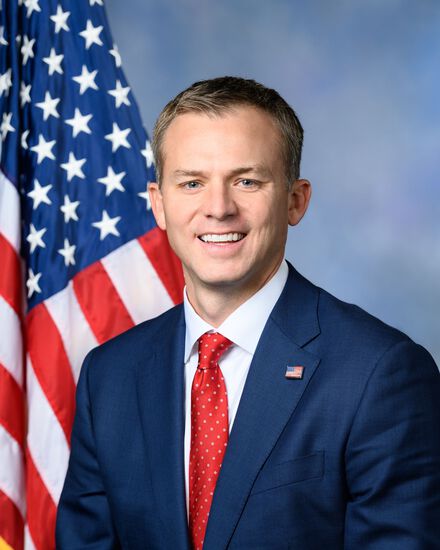
Rep. Blake D. Moore
Sponsored bills
This resolution expresses the sense of the House of Representatives that (1) Congress should adopt a fiscal target to reduce the federal budget deficit to 3% of gross domestic product or less as soon as possible and no later than the end of FY2030; and (2) after the target is achieved, Congress should continue to pursue further deficit reduction with the goal of achieving a balanced federal budget.
Modernizing Access to our Public Waters Act or the MAPWaters Act of 2025 or the MAPWaters Act of 2025 This act directs the Forest Service and the Department of the Interior to standardize and publish data relating to the public's access to federal waterways for recreational use. (Sec. 3) The Forest Service and Interior must jointly develop and adopt interagency standards for data collection and dissemination of geospatial data relating to public outdoor recreational access of federal waterways and federal fishing restrictions. The standards must ensure compatibility and interoperability among applicable federal databases with respect to collection and dissemination of such data. (Sec. 4) Within five years, the Forest Service and Interior must also digitize and make publicly available online certain geographic information system data about (1) federal waterway restrictions, (2) federal waterway access and navigation information, and (3) federal fishing restrictions. They must also update the data about waterway restrictions, waterway access, and navigation information at least twice per year. Data about fishing restrictions must be updated in real time as changes go into effect. The Forest Service and Interior must also develop a process to allow members of the public to submit questions or comments regarding the data regarding waterway restrictions, waterway access, and navigation information. The requirements under this section do not apply to irrigation canals and flowage easements. (Sec. 5) To carry out the act, the Forest Service and Interior may (1) coordinate and partner with nonfederal agencies, private entities, and nonprofit partners; and (2) enter into agreements with third parties. The Forest Service and Interior may work with the U.S. Geological Survey to collect, aggregate, digitize, standardize, and publish data on their behalf. (Sec. 6) The Forest Service and Interior must annually report to specified congressional committees on their progress in meeting the requirements of this act.
Maddy summaryThis bill expands the Veterans Community Care Program to cover eyeglass lens fittings as an authorized medical service, directly affecting veterans who receive care through non-VA providers under the program. It amends the law to explicitly include "fittings for eyeglass lenses" in the list of covered services, allowing eligible veterans to schedule these appointments at nearby community providers. The Department of Veterans Affairs must establish regulations to implement this change, ensuring veterans can access these fittings without needing to go through VA facilities. A report on implementation progress, challenges, and veteran benefits must be submitted to Congress within 180 days of the bill's enactment.
Maddy summaryThe Geothermal Tax Parity Act (HR 6873) updates U.S. tax code to treat geothermal energy projects the same as oil and gas projects for tax purposes. It allows geothermal developers to deduct exploration and development costs (amortization) and removes restrictions on passive loss deductions that previously limited geothermal investments. This directly affects geothermal energy companies, investors, and developers by providing tax parity with the oil and gas industry. The changes apply to taxable years beginning after the bill’s enactment date. The bill makes no new funding commitments but adjusts existing tax rules to support geothermal development.
Maddy summaryThe "Peace Through Strength Against Russia Act of 2025" proposes to significantly expand and strengthen U.S. sanctions against the Russian Federation and its supporters. The bill mandates blocking property and restricting visas for Russian government officials, state-owned financial institutions, and entities supporting Russia's defense industrial base or war efforts in Ukraine, including those involved in kidnapping Ukrainian children. Key provisions prohibit U.S
Maddy summaryAlyssa's Act of 2025 expands the Federal Clearinghouse on School Safety Evidence-based Practices to collect and analyze school safety data, including information on school shootings and emergency response effectiveness. The bill creates a National School Safety Data Center to track incidents, injuries, and response methods, while requiring emergency response maps for schools to meet specific digital standards for accessibility and real-time updates. It also establishes a program to develop and test panic alarm technology for schools, and mandates annual reports on school safety master plans developed by states and local educational agencies. The legislation requires coordination with the U.S. Secret Service's National Threat Assessment Center to align school safety practices with evidence-based approaches.
Essential Caregivers Act of 2025 This bill prohibits certain health care facilities from limiting the access of essential caregivers to residents of those facilities, including during designated emergency periods. Specifically, the bill generally prohibits Medicare skilled nursing facilities, Medicaid nursing facilities, Medicaid intermediate care facilities, and associated inpatient rehabilitation facilities from restricting the access of essential caregivers to residents of the facilities, including during emergency periods in which visitation rights are otherwise restricted. During emergency periods, facilities may restrict access for an initial period of up to seven days and for one additional maximum seven-day period (if the additional period is approved by the state health department). Facilities may restrict access for a total of 7 days (or 14 days with the approval of the state health department) during an emergency period. Essential caregivers must agree to comply with any safety protocols set by the facility, which may be no more stringent for caregivers compared to those for staff. Caregivers who fail to comply with these requirements may be denied access, subject to an appeals process.
University of Utah Research Park Act This bill confirms the use by the University of Utah of approximately 593 acres of specified nonfederal land in Salt Lake City, Utah, as a university research park and for related university purposes (including development of student housing and a transit hub) as a valid public purpose.
Maddy summaryThis bill amends the Southwest Forest Health and Wildfire Prevention Act of 2004 to add Utah as an eligible state for the Wildfire Research Institute program. It updates two specific sections of the law - adding Utah to the list of states that can establish such institutes and modifying a reference to include Utah alongside Colorado. The bill directly affects Utah by enabling it to participate in the existing federal research program. No new funding, regulations, or policy changes are introduced; it solely expands eligibility under current law.