

Combatting Racist Training in the Military Act of 2021 This bill prohibits the Armed Forces and academic institutions of the Department of Defense from promoting specified anti-American and racist theories (e.g., that any race is inherently superior or inferior to any other race). Specifically, the bill prohibits including anti-American and racist theories or materials in curricula, reading lists, seminars, workshops, trainings, or other educational or professional settings in a manner that could appear as sponsorship, approval, or endorsement; contracting with, hiring, or otherwise engaging speakers, consultants, diversity trainers, and other persons for the purpose of advocating anti-American and racist theories; compelling members of the Armed Forces to affirm or profess belief in anti-American and racist theories; and segregating members of the Armed Forces by race in any setting, including educational and training sessions.
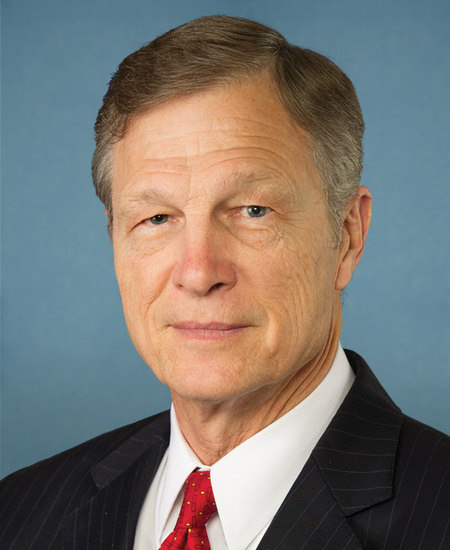
Rep. Brian Babin
Sponsored bills
One Federal Decision Act of 202 1 This bill provides statutory authority for the policy that requires federal agencies to coordinate environmental reviews and authorization decisions for major infrastructure projects. It also sets a goal for completing environmental reviews within two years. The Department of Transportation (DOT) must review existing practices, procedures, programmatic agreements, and applicable laws to identify potential changes that would facilitate an efficient environmental review process for projects. All authorization decisions for construction of a major project must be completed within 90 days of the issuance of a record of decision for the project, although the lead agency could extend the deadline in some cases. The lead agency must develop an environmental review schedule with the project sponsor that is consistent with an agency average of not more than two years for the completion of the environmental review process for major projects. DOT must also (1) establish a performance accountability system to track each major project, and (2) provide other relevant federal agencies with a list of categorical exclusions under the National Environmental Policy Act that are applicable to highway projects and that would accelerate project delivery. The bill also eliminates the two-year limitation on filing claims seeking judicial review of permits, licenses, or approvals issued by a federal agency for railroad projects.
This resolution calls for the International Olympic Committee to rebid the 2022 Winter Olympics if China fails to demonstrate significant progress in securing fundamental human rights. The resolution also expresses support for the well-being of Olympic athletes and the integrity of sport.
Get Americans Back To Work Act This bill makes an individual ineligible for federal pandemic unemployment compensation (FPUC) after June 30, 2021. It also reduces the amount of FPUC to $150.00 for weeks of unemployment ending after May 31, 2021, and ending on or before June 30, 2021. Under current law, an individual is eligible for FPUC for weeks of employment ending on or before September 6, 2021 in the amount of $300.
Repealing Illegal Freedom and Liberty Excises Act or the RIFLE Act This bill repeals the excise tax on the transfer of firearms. The bill shall not be construed as placing any regulated firearms under the jurisdiction of the U.S. Consumer Product Safety Commission.
Anti-CCP Espionage via Social Media Act of 2021 or the ACES Act of 2021 This bill requires certain actions related to ByteDance Ltd., the Chinese parent company of TikTok (a video-sharing mobile application). Specifically, the bill grants Executive Order 13942 the force and effect of law. That order prohibits certain transactions by any person subject to the jurisdiction of the United States with ByteDance. The bill provides statutory authority for that prohibition and specifies exceptions. Further, the bill establishes enforcement procedures and penalties for related violations. The bill requires ByteDance, within 90 days of this bill's enactment, to divest itself of (1) any assets or property used to enable or support ByteDance's operation of the TikTok application in the United States, and (2) any data obtained or derived from TikTok application or Musical.ly application users in the United States. The bill outlines further requirements and procedures for such divestment. The Committee on Foreign Investment in the United States (CFIUS) must review proposed sales or transfers by ByteDance to a third party. CFIUS may implement measures as necessary to verify compliance with the required divestment. CFIUS must review and issue a report to the President on the relationship of each covered U.S. business with ByteDance to determine the effects of such relationship on U.S. national security. The President may take actions to suspend or prohibit the relationship.
Preventing Foreign Attempts to Erode Healthcare Innovation Act This bill prohibits the use of federal funds to support, allow, or facilitate the negotiation or approval of any measure at the World Trade Organization to waive intellectual property rights, including the petition titled Waiver from Certain Provisions of the TRIPS Agreement for the Prevention, Containment, and Treatment of COVID-19 . (The petition was submitted by India and South Africa to suspend all intellectual property rights associated with COVID-19 innovations, such as vaccines.)
Taiwan International Solidarity Act This bill requires the Department of State to annually report to Congress on efforts by China to undermine Taiwan's participation in international organizations or Taiwan's relationships with other countries.
No Taxpayer Funding for the U.N. Population Fund This bill prohibits the use of funds to provide contributions directly or indirectly to the United Nations Population Fund (UNFPA). The UNFPA is a United Nations agency that supports access to sexual and reproductive health services, including voluntary family planning, maternal health care, and sexuality education.
Resist Executive Amnesty on Defense Installations Act or the READI Act This bill prohibits the use of a military installation to house an alien who is unlawfully present in the United States or undergoing removal proceedings.