

Maddy summaryHCONRES 3 is a non-binding congressional resolution expressing support for pro-life facilities, groups, and churches targeted by vandalism and threats following the Supreme Court's Dobbs decision. It condemns specific incidents like graffiti, window-smashing, and arson at pregnancy centers and churches (e.g., in Frederick, MD, and Portland, OR), while recognizing the role of these organizations in supporting pregnant women. The resolution calls on the Biden Administration to use law enforcement to protect these facilities but does not create new laws or policies. As a symbolic measure, it has no legal effect on the incidents described.
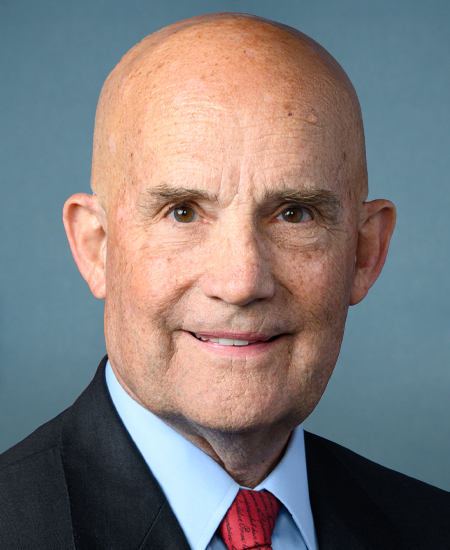
Rep. Keith Self
Sponsored bills
This resolution declares that every state within the United States has the sovereign right to exclude any person who does not have the right to be there. It also declares that the states along the southern border (1) are being invaded by terrorists, narco-terrorist cartels, and criminal actors; and (2) have the sovereign and unilateral authority to defend themselves against such an invasion.
Maddy summaryThis bill blocks federal funding for colleges that operate or partner with campus health clinics providing abortion drugs or abortions to students or staff. It requires institutions receiving federal funds to annually certify that no such services are offered at their on-campus clinics. The law specifically excludes hospital-based clinics from coverage and defines "abortion drugs" as medications intended to terminate pregnancy (excluding specific medical exceptions). It directly affects public and private colleges receiving federal aid, as most institutions of higher education qualify for such funding.
Maddy summaryThis bill renames a U.S. Postal Service facility at 620 East Pecan Boulevard in McAllen, Texas, as the "Agent Raul H. Gonzalez Jr. Memorial Post Office." It updates all federal references to the location to reflect this new name. The bill has no policy impact - it is purely a ceremonial designation honoring an individual. No other provisions or affected groups are involved.
Maddy summaryHR 434, the Service Restoration Act, protects military service members and academy cadets/midshipmen who refused a COVID-19 vaccine and were involuntarily separated. It prohibits using federal funds to mandate the vaccine, bans adverse actions (like separation or demotion) for refusal, and requires the military to reinstate affected individuals to their previous rank and grade with back pay. The bill also mandates that any separation for vaccine refusal be retroactively reclassified as an "honorable discharge" and removes all related records from service files. This applies specifically to those separated solely for vaccine refusal between 2021 and the bill's enactment.
Life at Conception Act This bill declares that the right to life guaranteed by the Constitution is vested in each human being at all stages of life, including the moment of fertilization, cloning, or other moment at which an individual comes into being. Nothing in this bill shall be construed to authorize the prosecution of any woman for the death of her unborn child.
Teleabortion Prevention Act of 2023 This bill restricts the use of telehealth for chemical abortions (also known as medication abortions). Specifically, it requires a provider who dispenses or prescribes medication for a chemical abortion to physically examine the patient, be physically present at the location of the chemical abortion, and schedule a follow-up visit for the patient. The bill provides an exception for a chemical abortion that is necessary to save the life of a mother whose life is endangered by a physical disorder, illness, injury, or condition. The bill establishes criminal penalties—a fine, a prison term of up to two years, or both—for a provider who does not comply with the requirements. A patient who undergoes a chemical abortion may not be prosecuted.
Standardizing Thresholds Of Penalties for Fentanyl Act or the STOP Fentanyl Act This bill reduces the drug quantity thresholds that trigger a mandatory minimum prison term for a defendant who manufactures, distributes, imports, exports, or possesses with intent to distribute fentanyl. The bill also creates enhanced criminal penalties for certain violations involving fentanyl that was imported along the U.S.-Mexico border. Specifically, the bill reduces from 400 to 5 grams the fentanyl quantity and from 100 to 0.05 grams the fentanyl analogue quantity that trigger a mandatory minimum prison term for high-level first-time or repeat offenders. It also reduces from 40 to 0.5 grams the fentanyl quantity and from 10 to 0.005 grams the fentanyl analogue quantity that trigger a mandatory minimum prison term for low-level first-time or repeat offenders. Additionally, the bill creates enhanced mandatory minimum prison terms for importing or exporting fentanyl that was imported along the U.S.-Mexico border.
Maddy summaryThis bill prohibits senior federal employees (those in Senior Executive Service roles), their spouses, and dependent children from holding most stocks, bonds, or derivatives during their federal service. It exempts diversified mutual funds, Treasury securities, and investments held in qualified blind trusts. Employees must annually certify compliance with these rules to their ethics office, and violations can result in fines (up to 10% of the investment's value) or requiring profit disgorgement. The law applies 12 months after enactment, with a 180-day divestiture period for existing holdings.
Maddy summaryThe GAS Act (HR 337) prohibits any federal agency from banning the sale or use of gas-burning stoves in the United States. This applies to all agencies defined under federal law, including the Environmental Protection Agency and Consumer Product Safety Commission. The bill directly blocks agencies from enacting new regulations that would restrict gas stoves, preventing future regulatory actions. It does not affect existing stove sales or current agency authority but sets a clear restriction on future rulemaking.