This resolution expresses the sense of the House of Representatives that (1) clean water is a national priority, and (2) the 2020 final rule titled The Navigable Waters Protection Rule: Definition of "Waters of the United States" should not be withdrawn or vacated.
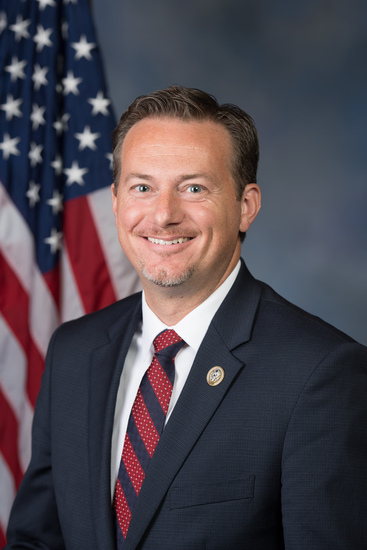
Rep. Michael Cloud
Sponsored bills
This resolution honors and recognizes the patriotism and contributions made by generations of veterans service organizations and commends the members of such organizations for their dedicated service to members of the Armed Forces, veterans, their families, and their communities. Additionally, the resolution encourages citizens to volunteer their support and services to veterans service organizations and to promote awareness of the contributions of such organizations to members of the Armed Forces, veterans, and their families.
This resolution condemns Iranian state-sponsored terrorist attacks against U.S. citizens and officials and Iranian dissidents and expresses support for the people of Iran who are engaged in legitimate and peaceful protests against the Iranian regime.
State Tax Freedom Act This bill removes a prohibition on states and territories using COVID-19 relief funding under the American Rescue Plan Act of 2021 to offset a reduction in revenue resulting from a reduction in taxes or a delay in the imposition of a tax or tax increase. Additionally, the bill requires the Department of the Treasury to refund the state, territory, or tribal government any money that was repaid to the federal government since enactment of the American Rescue Plan Act of 2021 due to the state cutting taxes.
Federal Agency Sunset Commission Act of 2021 This bill provides for the establishment of the Federal Agency Sunset Commission to submit to Congress a schedule for review and abolishment of each agency, including each advisory committee. The schedule for review shall be in the form of a joint resolution. Each agency shall be abolished unless reauthorized by Congress. For each agency, the commission must schedule a date of abolishment to occur at least once every 12 years. The commission must (1) review and evaluate the efficiency and public need for each agency using specified criteria; (2) analyze the authority claimed by the executive branch but not specifically authorized by statute; (3) recommend whether each agency should be abolished, reorganized, or continued; and (4) report to Congress on introduced legislation that would establish a new agency or a new program. The Government Accountability Office and the Congressional Budget Office, in cooperation with the Congressional Research Service, shall prepare an inventory of federal programs to assist Congress and the commission in carrying out this bill. The bill provides for expedited consideration of the schedule for review and abolishment.
This bill directs the Department of State to include additional information in its annual reports concerning Taiwan's participation at the World Health Organization's World Health Assembly (WHA) as an observer. The report shall describe changes and improvements to the State Department's plan to support Taiwan's observer status at the WHA, following any meetings at which Taiwan did not participate under such status. (China has opposed Taiwan's participation in the WHA.)
Protecting Religion from Government Act of 2021 This bill prohibits a state or local government from imposing any law or regulation limiting the ability of a house of worship to hold any religious service or celebrate any religious ceremony in person. It creates a federal cause of action allowing a person to challenge a state or local regulation limiting the ability of the individual or religious institution to hold in-person services.
Recognition of Local Interests in NEPA Decision Making This bill sets forth requirements for determining the venue for judicial review of an agency action under the National Environmental Policy Act of 1969 (NEPA). Specifically, the bill requires a proceeding for judicial review of an agency's compliance with NEPA to be brought in the U.S. district court for a district in which the authorized activity is proposed to be carried out or the U.S. District Court for the District of Columbia.
Born-Alive Abortion Survivors Protection Act This bill establishes requirements for the degree of care a health care practitioner must provide in the case of a child born alive following an abortion or attempted abortion. Specifically, a health care practitioner who is present must (1) exercise the same degree of care as would reasonably be provided to any other child born alive at the same gestational age, and (2) ensure the child is immediately admitted to a hospital. Additionally, a health care practitioner or other employee who has knowledge of a failure to comply with the degree-of-care requirements must immediately report such failure to law enforcement. A health care practitioner who fails to provide the required degree of care, or a health care practitioner or other employee who fails to report such failure, is subject to criminal penalties—a fine, up to five years in prison, or both. An individual who intentionally kills or attempts to kill a child born alive is subject to prosecution for murder. The bill bars the criminal prosecution of a mother of a child born alive under this bill and allows her to bring a civil action against a health care practitioner or other employee for violations.

Whole Milk for Healthy Kids Act of 2021 This bill revises requirements for milk provided by the National School Lunch Program of the Department of Agriculture (USDA). Currently, schools participating in the program must provide milk that is consistent with the most recent Dietary Guidelines for Americans; USDA regulations require milk to be fat-free or low-fat and allow only fat-free milk to be flavored. The bill removes these restrictions and instead permits schools to offer students whole, reduced-fat, low-fat, and fat-free flavored and unflavored milk.