Backing the Independent Decisions of Employees against Nefarious Mandates Act of 2021 This bill creates a private right of action for an individual against an employer for a vaccine-related injury or death in connection with a COVID-19 vaccine mandate.
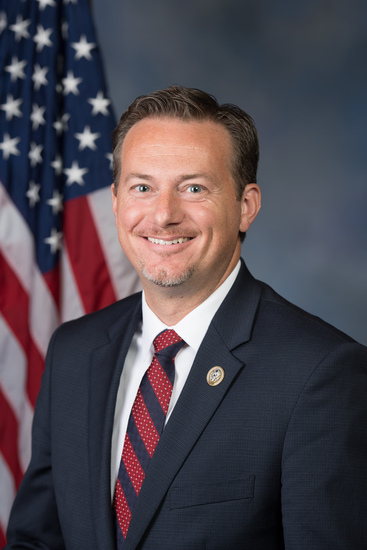
Rep. Michael Cloud
Sponsored bills
Don't Jab Me Act This bills allows a civil action to be brought against the United States by a federal employee for injuries sustained as a result of a COVID-19 vaccination mandate.
Make the Migrant Protection Protocols Mandatory Act of 2021 This bill requires the Department of Justice (DOJ) to remove certain aliens from the United States while such an alien's application for admission is pending. Specifically, if an alien arrived by land from a foreign country bordering the United States and the alien is not clearly and beyond a doubt entitled to admission into the United States, DOJ must return that alien to that bordering foreign country while the alien's application for admission is pending. (Currently, DOJ may choose to detain such an alien or return the alien to the bordering foreign country while the application for admission is pending.)
Freedom From Union Violence Act of 2021 This bill revises the federal criminal statute commonly known as the Hobbs Act, which prohibits the obstruction of interstate commerce by robbery or extortion (or by attempting or conspiring to commit robbery or extortion). Currently, an extortion offense includes obtaining property of another with consent through the wrongful use of force, violence, or fear. Typically, violations are investigated by the Federal Bureau of Investigation and prosecuted by the U.S. Attorney's Office. First, this bill broadens the scope of prohibited conduct by (1) eliminating the requirement that the means used to obtain property (i.e., the use of force, violence, or fear) must be wrongful, and (2) expanding extortion to include obtaining property of another by wrongful use of fear not involving force or violence. Second, the bill explicitly states that the maximum fine is $100,000. Third, the bill exempts from the federal prohibition conduct that (1) is incidental to peaceful picketing during a labor dispute, (2) consists solely of minor bodily injury or damage to property, and (3) is not part of a pattern of violent conduct or of a coordinated violent activity. A violation involving exempted conduct is subject to prosecution only by state and local authorities.

Teleabortion Prevention Act of 2021 This bill restricts the use of telehealth for chemical abortions (also known as medication abortions). Specifically, it requires a provider who dispenses or prescribes medication for a chemical abortion to physically examine the patient, be physically present at the location of the chemical abortion, and schedule a follow-up visit. The bill provides an exception for a chemical abortion that is necessary to save the life of a mother whose life is endangered by a physical disorder, illness, injury, or condition. The bill establishes criminal penalties—a fine, a prison term of up to two years, or both—for a provider who does not comply with the requirements. A patient who undergoes a chemical abortion may not be prosecuted.
No Taxpayer Funding for the Central American Minors Program Act This bill prohibits using federal funds to carry out the Central American Minors program, a Department of Homeland Security and Department of State program that reunites qualified children from El Salvador, Guatemala, and Honduras with their parent who is lawfully present in the United States.
Nuclear Family Priority Act This bill imposes limits on various types of family-sponsored immigration visas. The alien parents of U.S. citizens shall not qualify for visas for immediate relatives , which are not subject to any direct numerical limits. Currently, the spouses, unmarried children under 21, and parents of citizens are considered immediate relatives. The bill also creates a nonimmigrant visa for such parents of citizens. Such aliens shall not be eligible for employment or any public benefits. The bill also reduces the baseline annual cap for family-sponsored visas from 480,000 to 88,000, and revises the methods for calculating the cap. Currently, the 480,000 cap may be adjusted depending on various factors but shall not be less than 226,000. Preference allocations (visa categories subject to various annual caps) for various family-sponsored visas shall be eliminated, including those for the siblings and married children of citizens. The bill provides for a preference allocation for the unmarried children under 21 and spouses of permanent residents, subject to the 88,000 annual cap.
Protecting Individual Sovereignty Through Our Laws Act or the PISTOL Act This bill modifies the definition of rifle for purposes of the National Firearms Act to exclude from such definition a pistol equipped with a rear brace or rear attachment designed to assist the shooter in controlling the pistol. The bill also directs the Department of Justice to amend applicable regulations governing pistols to provide that the presence or absence of rear mounted braces or attachments that can assist a user in controlling the pistol shall not cause a firearm to be considered a pistol.
Mahsa Amini Human rights and Security Accountability Act or the MAHSA Act This bill requires the President to impose property- and visa-blocking sanctions on certain persons (individuals and entities) affiliated with Iran. The President must make determinations about whether certain existing sanctions apply to specified persons and impose the applicable sanctions, including determinations concerning (1) the Supreme Leader of Iran and any official in the Office of the Supreme Leader of Iran, (2) the President of Iran and any official in the Office of the President of Iran, and (3) any entity overseen by the Office of the Supreme Leader of Iran which is complicit in supporting human rights abuses or terrorism.
Trucking Workforce Improvement Act This bill repeals the final rule of the Federal Motor Carrier Safety Administration related to minimum training standards for entry-level commercial motor vehicle operators.