

Maddy summaryThe No WAR Act prohibits Congress from using budget reconciliation procedures to fund military hostilities against Iran unless such actions are explicitly authorized by a formal declaration of war or a specific authorization for the use of military force. This legislation directly affects the legislative process by establishing a point of order that blocks any reconciliation bill attempting to provide budget authority for offensive military operations, strikes, or covert actions targeting Iranian military forces, territory, or government institutions. The bill also defines proxy forces as any foreign military or irregular groups operating with U.S. direction or material support, ensuring these entities are included in the restrictions on unauthorized funding. By amending the Congressional Budget and Impoundment Control Act, the measure aims to prevent the use of budgetary shortcuts to bypass the constitutional requirement for congressional approval before engaging in armed conflict with Iran.
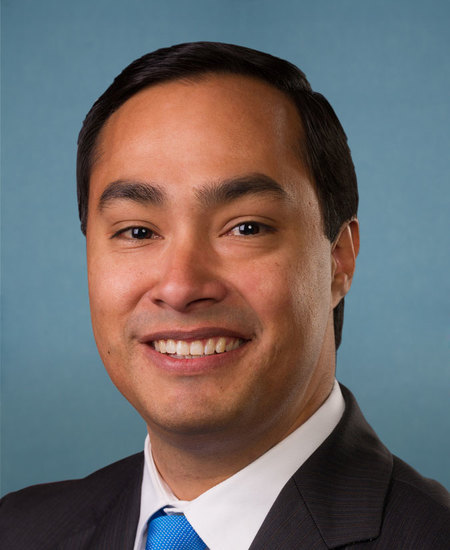
Rep. Joaquin Castro
Sponsored bills
Maddy summaryThis bill, titled the Protecting Human Rights and Public Health in Foreign Assistance Act, aims to cancel specific regulations issued by the Department of State. It directly affects the federal government by prohibiting any department or agency from enforcing, implementing, or proposing rules related to protecting life, combating discriminatory equity ideology, and combating gender ideology in foreign aid programs. The legislation treats these cancelled rules as if they never existed, effectively nullifying their impact on future foreign assistance policies.
Maddy summaryThis bill prohibits the Department of Homeland Security from using federal funds to create or expand new immigration detention facilities, including warehouses, tents, and modular structures. It directly affects immigration enforcement agencies by banning the construction, renovation, or operation of non-traditional detention centers and preventing the transfer of funds to such projects. The legislation requires any money previously allocated for these facilities to be redirected toward affordable healthcare and housing services instead. Effective immediately upon enactment, the ban applies to all existing federal funds and prevents the use of current budgets for establishing or operating alternative detention models.
Maddy summaryThis resolution expresses the House of Representatives' support for the International Atomic Energy Agency's (IAEA) crucial role in global nuclear security and safety. It encourages the United States and other IAEA member states to ensure the Agency has reliable and sufficient resources, including financial contributions to its Nuclear Security Fund, to successfully carry out its duties.
Maddy summaryThis bill extends the time limit for prosecuting export control violations from the current period to ten years. It directly affects individuals and companies that may have committed violations under the Export Control Reform Act of 2018. The key provision establishes a ten-year window from the date of the violation during which the government can file charges or initiate legal proceedings. This change applies to both civil penalties and criminal prosecutions related to export control breaches.
Maddy summaryThe MATCH Act requires U.S. agencies to align export controls on semiconductor manufacturing equipment with allied nations to prevent adversaries from accessing critical technology. It mandates a 150-day period for diplomatic efforts to secure countrywide denial policies from allied suppliers, after which U.S. jurisdiction would extend to equipment exported from countries not complying with these controls. The bill specifically targets semiconductor manufacturing equipment that the U.S. cannot currently produce in high volume and includes a list of Chinese companies deemed to warrant comprehensive restrictions. If allies fail to implement matching controls, the Act would allow the U.S. to regulate equipment exported from non-compliant allied countries and restrict servicing of restricted items at facilities in adversary nations. The legislation includes a sunset provision that expires five years after enactment, with annual reporting requirements to Congress on progress and compliance.
Maddy summaryThe Momnibus Act is a comprehensive legislative bill designed to improve maternal health outcomes across the United States by addressing social determinants of health, expanding access to care, and reducing disparities among pregnant and postpartum individuals. The bill establishes a federal task force to coordinate efforts between agencies and stakeholders to eliminate preventable maternal mortality and severe morbidity, while providing sustained funding to community-based organizations to address nonclinical factors like housing, nutrition, and transportation. Key provisions include extending WIC eligibility to 24 months postpartum, creating grants to grow and diversify the perinatal workforce, implementing respectful maternity care training for all healthcare employees, and establishing compliance programs to track and address bias in maternity care settings. The legislation also includes specific measures for incarcerated mothers, veterans, and vulnerable populations affected by climate change, alongside funding for maternal mental health services and technology-enabled care models to expand access in underserved areas.
Maddy summaryThis resolution expresses the sense of the House of Representatives that former President Donald Trump, his Special Envoy Steven Witkoff, and all federal officials must comply with the Constitution's Foreign Emoluments Clause. It specifically calls for them to immediately turn over to the Department of the Treasury any payments received from the United Arab Emirates or other foreign states. Furthermore, the resolution urges them to divest from all business interests linked to foreign governments, including those tied to United Arab Emirates officials.
Maddy summaryThis resolution expresses the House of Representatives' opinion that the Department of Justice and other federal agencies should not administratively settle legal claims for money filed against the United States by a sitting President, specifically referencing President Donald Trump. The House believes that such settlements would violate the Domestic Emoluments Clause of the Constitution, which prevents a President from receiving payments from the government beyond their official salary. Therefore, the resolution advises the Department of Justice to refuse any administrative settlement of these claims, while clarifying that a President can still pursue lawsuits in independent courts. This position directly affects how the Department of Justice would handle such claims from a President.
Maddy summaryThis bill establishes a 17-member Commission on Presidential Capacity to Discharge the Powers and Duties of the Office. This commission, composed primarily of medical professionals and former high-ranking executive officials, would be activated by a concurrent resolution of Congress. Its duty would be to conduct a medical examination of the President to determine if they are mentally or physically unable to discharge the powers and duties of the office due to conditions such as illness, disability, or substance use. Following the examination, the commission would report its findings and a declaration on the President's capacity to Congress and the Vice President, with any refusal by the President to undergo examination taken into consideration.