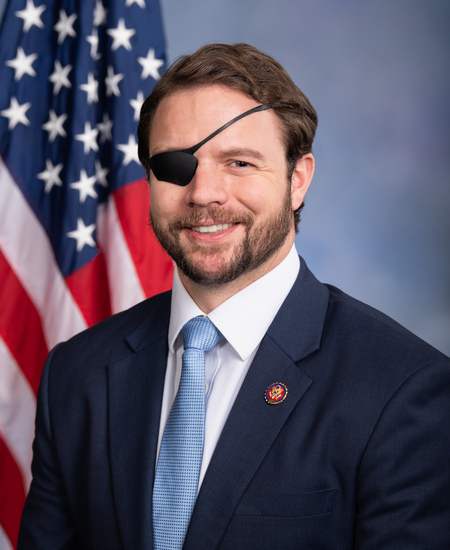
ATF Accountability Act of 2021 This bill establishes a federal statutory process for licensed gun dealers, importers, and manufacturers to appeal rulings and determinations by the Bureau of Alcohol, Tobacco, Firearms and Explosives.
Sponsored bills
Federal Initiative To Guarantee Health by Targeting Fentanyl Act This bill places fentanyl-related substances as a class into schedule I of the Controlled Substances Act. A schedule I controlled substance is a drug, substance, or chemical that has a high potential for abuse; has no currently accepted medical value; and is subject to regulatory controls and administrative, civil, and criminal penalties under the Controlled Substances Act.
Violence Against Women Extension Act of 2021 This bill reauthorizes for FY2022 various programs and activities authorized by the Violence Against Women Act of 1994 and subsequent legislation and administered by the Office on Violence Against Women within the Department of Justice.
Stop Higher Education Espionage and Theft Act of 2021 This bill establishes a process for designating foreign actors as foreign intelligence threats to higher education. Specifically, the Federal Bureau of Investigation (FBI) must designate a foreign actor as a foreign intelligence threat to higher education if the foreign actor has committed, attempted to commit, or conspired to commit certain actions in connection with an institution of higher education (IHE), such as espionage, misuse of visas, or theft of trade secrets. Prior to making such a designation, the FBI must submit notice to Congress and the Department of Justice. Upon the designation of a foreign actor as a threat, the Department of State must revoke the nonimmigrant visa issued to the foreign actor present in the United States, and the Department of Homeland Security must initiate removal proceedings against the foreign actor. Additionally, the bill provides for judicial review and a process for revoking a foreign actor's designation as a threat. Finally, the bill also requires an IHE to disclose to the Department of Education any gift or contract with a foreign intelligence threat, including the fair market value of the gift or contract.
Regulations from the Executive in Need of Scrutiny Act of 20 21 This bill revises provisions relating to congressional review of agency rulemaking. Specifically, the bill establishes a congressional approval process for a major rule. A major rule may only take effect if Congress approves of the rule. A major rule is a rule that results in (1) an annual effect on the economy of $100 million or more; (2) a major increase in costs or prices for consumers, individual industries, government agencies, or geographic regions; or (3) significant adverse effects on competition, employment, investment, productivity, innovation, or the ability of U.S.-based enterprises to compete with foreign-based enterprises. In addition, the bill establishes a congressional disapproval process for a nonmajor rule. A nonmajor rule may only take effect if Congress does not disapprove of the rule.
Lawful Interstate Transportation of Firearms Act This bill revises criminal provisions related to the interstate transportation of firearms and ammunition. An individual may transport a firearm between two places (e.g., states) where it is legal to possess, carry, or transport the firearm. During transport, the firearm must be unloaded and secured or securely stored. Additionally, an individual may transport ammunition, or a detachable magazine or feeding device, between two places where it is legal to possess, carry, or transport the ammunition, magazine, or feeding device. During transport, the ammunition, magazine, or feeding device must not be loaded into a firearm and must be securely stored. The term transport includes staying in temporary lodging; stopping for food, fuel, vehicle maintenance, an emergency, or medical treatment; or any other activity incidental to the transport. The bill prohibits the arrest or detention of an individual for a state or local firearm or ammunition violation unless there is probable cause to believe the individual failed to comply with the provisions of this bill, and there is probable cause to believe the individual committed another crime.

Border Visibility and Security Act This bill directs the Department of Homeland Security (DHS) to install surveillance technology and take other actions with respect to the U.S.-Mexico border. DHS shall deploy the most practical and effective technology available to achieve situational awareness and operational control of the border. Such technology may include radar surveillance systems, tunnel detection technology, and unmanned aerial vehicles. DHS is authorized to waive legal requirements as necessary in order to implement the necessary surveillance technology along the border. DHS shall also (1) construct a navigable road along at least 700 miles of the southwest border, (2) permanently eradicate certain foliage that grows along the Rio Grande river, and (3) report to Congress a comprehensive strategy about the barriers and technologies needed to secure operational control along the border. Drug cartel funds that have been criminally forfeited to the U.S. government shall be reserved for security measures along the U.S.-Mexico border.
STOP Straw Purchases Act This bill establishes new criminal offenses and penalties to deter straw purchases of firearms (i.e., firearm purchases from a licensed gun dealer by one person on behalf of another person). Current law prohibits and imposes penalties—a fine, a prison term of up to 10 years, or both—for making false statements in connection with the acquisition of a firearm from a federally licensed dealer. This bill increases the statutory maximum prison sentence—from 10 years to 25 years—for a violation by a person who is acting as a straw purchaser. Under this bill, a straw purchaser is a person who makes false statements involving deception about the identity of the actual buyer and knows or has reasonable cause to believe the actual buyer intends the firearm to be (1) used in a crime of violence or drug trafficking crime, or (2) transferred to a prohibited person. Additionally, the bill establishes new related criminal offenses. Specifically, it prohibits and imposes penalties for inducing another person, as a leader of a straw purchasing ring, to act as a straw purchaser in a continuing series of transactions from which the person obtains income or resources; or obtaining a firearm by inducing another person to act as a straw purchaser. Finally, the bill directs the Bureau of Alcohol, Tobacco, Firearms and Explosives to include in the Firearms Transaction Record form a statement outlining penalties for acting as a straw purchaser.
Homeland and Cyber Threat Act or the HACT Act This bill allows claims in federal or state court against foreign states that conduct or participate in cyberattacks against U.S. nationals.
State Border Security Reimbursement Act of 2021 This bill requires the federal government to reimburse eligible states for their border security expenses. To be eligible, a state must have expended more than $2.5 billion on border security and enforcement in the 10 years before this bill's enactment. If such a state provides an accounting of all of its nonfederally funded border security expenses any time up to 180 days after this bill's enactment, the federal government shall reimburse the full amount.