

Maddy summaryHJRES 144 is a congressional disapproval resolution targeting a specific rule issued by the Department of Veterans Affairs (VA) on December 31, 2025, which addressed "Reproductive Health Services" (90 Fed. Reg. 61310). This resolution directs Congress to disapprove the VA rule under Chapter 8 of Title 5, U.S. Code, meaning the rule would have no legal effect if passed. The bill directly affects the VA's implementation of reproductive health services for veterans, as it seeks to nullify the agency's existing policy. This is a procedural measure, not a substantive policy change, aimed solely at blocking the VA's rule through congressional action.
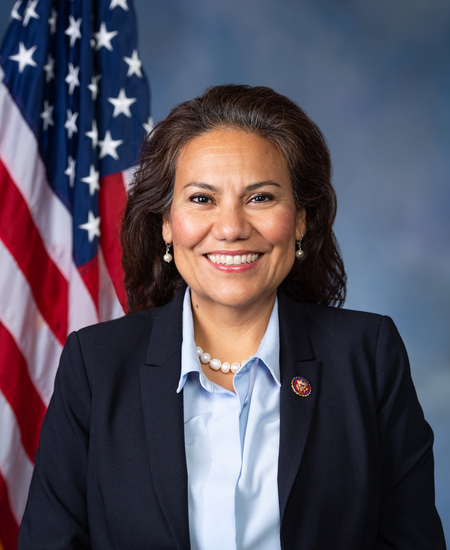
Rep. Veronica Escobar
Sponsored bills
Maddy summaryHR 4105, the VET Act of 2025, establishes a federal grant program to help veterans, active-duty service members transitioning out of the military, and their spouses secure jobs in the energy industry. The program provides grants to energy companies (including manufacturers of solar, wind, or nuclear equipment) to cover costs like job training, recruitment, and relocation for eligible individuals - prioritizing those with military energy experience, in opportunity zones, or facing barriers like homelessness. Grants are capped at $10,000 per hire, with a maximum $500,000 annual limit per company, funded at $60 million yearly from 2026-2031. Companies must report on job retention, employee satisfaction, and program outcomes to the Department of Labor, with a final evaluation due to Congress by 2030.
Maddy summaryThe Find It Early Act requires most health insurance plans, Medicare, Medicaid, TRICARE, and VA benefits to cover certain breast cancer screenings without cost-sharing for specific at-risk groups. It affects individuals at increased breast cancer risk (as determined by medical guidelines), those with dense breast tissue (as defined by the American College of Radiology), and others requiring screening due to factors like age, race, ethnicity, or family history. The bill mandates coverage for various screening methods including mammograms, ultrasounds, MRI, and other technologies at frequencies recommended by the National Comprehensive Cancer Network. This requirement takes effect for plan years beginning January 1, 2026, removing financial barriers to early detection.
Maddy summaryHRES 996 is a resolution introduced by multiple House members to impeach Kristi Lynn Arnold Noem, the Secretary of Homeland Security, for alleged violations of law and the Constitution. It outlines three articles of impeachment: obstructing congressional oversight by denying access to detention facilities and withholding funds, violating public trust through warrantless arrests and excessive force (including tear gas on children), and self-dealing by awarding federal contracts to associates without competitive bidding. If approved by the House, this resolution would formally charge Noem, triggering a Senate trial to determine her removal from office. The resolution itself does not enact new policy but initiates the constitutional impeachment process against a sitting Cabinet official.
Maddy summaryThis bill prohibits U.S. federal funds from being used to support Venezuela's oil and petroleum sector, including financing infrastructure projects, purchasing property, providing insurance, making payments to companies, or government advocacy. It directly affects all federal agencies and programs that manage taxpayer money, preventing them from funding any aspect of Venezuela's oil industry. The bill requires the Secretary of State to submit annual reports to specific congressional committees detailing any related activities and confirming compliance. These provisions aim to restrict U.S. financial involvement in Venezuela's oil sector using clear, non-ambiguous language.
Maddy summaryHR 6088, the *Restoring Food Security for American Families and Farmers Act of 2025*, repeals specific sections (10101-10108) from a prior reconciliation law. This action revives previous provisions related to food security programs that were modified by those repealed sections. The bill directly affects federal food assistance and agricultural support programs by restoring their prior legal framework. It does not create new policies but reverses recent changes to existing food security measures.
Maddy summaryHR 5020, the Supporting Our Shelters Act, creates a new federal grant program to provide funding to eligible animal shelters. The bill directs the Secretary of Agriculture to award 3-year grants (renewable) to shelters for essential care costs like food, veterinary services, sheltering, and staff support. Grantees must submit annual reports detailing the number and outcomes of animals cared for, as well as how grant funds were used. The Secretary also must report annually to Congress on program spending and outcomes, with regulations required within 180 days of enactment.
Maddy summaryHR 909, the Crime Victims Fund Stabilization Act of 2025, modifies how funds from the False Claims Act are deposited into the Crime Victims Fund. It specifies that from 2025 through 2029, certain False Claims Act proceeds (specifically those for qui tam plaintiff payments and government damage reimbursements) cannot be deposited into the fund. This change directly affects the composition of the Crime Victims Fund by excluding these specific revenue streams during the specified period. The bill does not create new benefits or alter victim services; it only adjusts fund allocation rules for existing False Claims Act revenues.
Maddy summaryThis concurrent resolution (HCONRES 69) commemorates the 15th anniversary of the January 8, 2011, Tucson shooting that killed six people and injured 13, including former Congresswoman Gabby Giffords. It honors the victims, survivors, and Giffords - now a prominent advocate for gun violence prevention - and recognizes her leadership in promoting civility and reducing gun violence. The resolution also commends Tucson residents and first responders for their resilience and reaffirms Congress’s commitment to respectful dialogue and opposing political violence. As a ceremonial resolution, it does not create new laws or policies.
Maddy summaryThis resolution (HRES 969) expresses support for designating the week beginning September 8, 2025, as "National Hispanic-Serving Institutions Week." It recognizes colleges and universities with at least 25% Hispanic undergraduate enrollment (known as Hispanic-Serving Institutions or HSIs) and their role in serving diverse, low-income students. The resolution does not create new policies or funding but encourages public observance through ceremonies and activities to honor HSIs’ contributions to higher education access and economic mobility. It applies symbolically to all 615+ HSIs across the U.S. and Puerto Rico.