

Maddy summaryThis bill prohibits U.S. Immigration and Customs Enforcement (ICE) from using federal funds to detain or transport U.S. citizens during civil immigration enforcement actions. It directly affects ICE operations by blocking funding for any activity that would hold or move citizens outside the U.S. under immigration laws. The key mechanism is a specific funding restriction in the bill text, stating no funds may be used for detaining or transporting citizens. This applies to all civil immigration enforcement activities defined under the Immigration and Nationality Act. The bill does not create new enforcement powers but limits how existing funds can be spent.
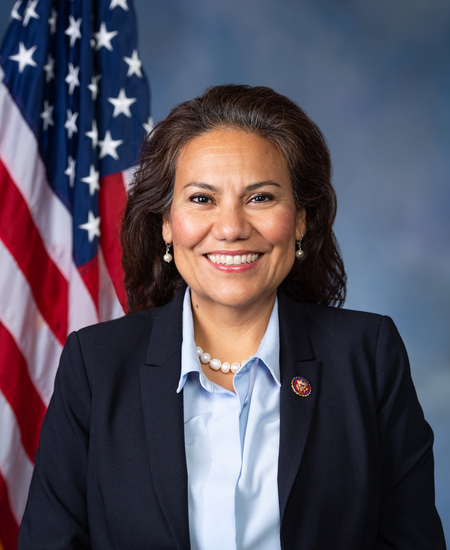
Rep. Veronica Escobar
Sponsored bills
Maddy summaryThis bill establishes federal worker heat protection standards to prevent heat-related illness and injury. It requires employers to provide a workplace free from heat stress hazards, including access to cool water, scheduled rest breaks, shaded cooling areas, and training on heat illness symptoms. The Secretary of Labor must create these standards within one year, incorporating evidence-based practices like engineering controls (e.g., ventilation), administrative measures (e.g., adjusted schedules), and employer-paid personal protective equipment. The law directly affects all employers in high-heat work environments - such as construction, agriculture, and manufacturing - and strengthens whistleblower protections for workers reporting safety violations.
Maddy summary# Summary of "Dignity for Immigrants while Guarding our Nation to Ignite and Deliver the American Dream Act" This comprehensive immigration bill proposes multiple pathways to legal status and permanent residency for undocumented immigrants while creating new employment and workforce development programs. ## Key Provisions: 1. **Dignity Program (Subtitle III)**: - Creates a 7-year program for eligible undocumented immigrants requiring $7,000 in restitution payments to an H-1B fund - Provides deferred action on removal, work authorization, and travel privileges - Requires participants to maintain employment/education, pay taxes, and comply with all laws - Upon completion, participants receive "Dignity Status" valid for 7 years with renewal options 2. **Workforce Development (Division C)**: - Directs restitution payments to fund apprenticeships and work-based learning programs - Establishes industry partnerships to support small- and medium-sized businesses - Focuses on "in-demand industry sectors" with targeted training programs - Requires 12 months of post-employment support services for participants 3. **Family Reunification (Section 3111-3115)**: - Expands discretionary authority for family-based relief - Creates new "family purpose" nonimmigrant visa category (90-day limit) - Modernizes military naturalization for service members - Includes protections for children affected by visa backlogs 4. **Backlog Reduction (Section 3201-3203)**: - Creates premium processing for long-pending cases ($20,000 fee) - Increases per-country caps from 7% to 15% - Protects children from "aging out" of family-based visas 5. **Student and Worker Visas (Section 3301-3305)**: - Modernizes student visa categories with "dual intent" provisions - Recognizes doctoral STEM graduates as "extraordinary ability" - Streamlines visa processing through a new Immigration Agency Coordinator The bill aims to balance immigration reform with workforce development, creating a pathway to legal status while directing funds toward American workers through apprenticeships and training programs in high-demand fields.
Maddy summaryHR 4358, the Anti-Rigging Act of 2025, limits how often states can redraw congressional districts after a census. It prohibits states from redistricting again until after the next census - unless a court orders it to comply with the Constitution or the Voting Rights Act. This directly affects states that conduct congressional redistricting, preventing frequent changes to U.S. House districts between decennial censuses. The bill explicitly states it does not impact how states conduct elections for state or local offices. It applies to redistricting following the 2020 census and future cycles.
Maddy summaryHR 4351 amends the Family and Medical Leave Act (FMLA) to shorten the employment duration required for spouses of active-duty military members to qualify for leave. It reduces the qualifying time from 12 months to 90 calendar days with the employer. This change directly affects spouses of service members on covered active duty, making it easier for them to access FMLA leave for their partner’s military service. The bill achieves this by revising the FMLA’s definition of "eligible employee" to include this new 90-day requirement for military spouses.
Maddy summaryThe Expanding Access to Mental Health Services in Schools Act of 2025 creates a federal grant program to help high-need schools hire and retain mental health professionals like counselors, psychologists, and social workers. It targets schools in the top 15% of need (based on student poverty or counts) that lack required staff ratios, such as one counselor per 250 students. Grants fund recruitment incentives (e.g., student loan repayment), retention programs, and evidence-based mental health services, with recipients required to contribute 25% of costs from non-federal funds. Schools must report annually on staff numbers, student-to-staff ratios, and retention rates to track progress toward improved mental health access.
Maddy summaryHR 4257, the End Domestic Terrorism Act, creates a new federal crime for killing three or more people in a single incident using machineguns or specific types of semi-automatic rifles (called "covered semiautomatic weapons") at designated locations like schools, places of worship, medical facilities, or retail stores. It defines "covered semiautomatic weapons" to include rifles with features like detachable magazines, pistol grips, or folding stocks, as well as AK/AR-style firearms. The law requires prosecutors to file charges under this provision for qualifying incidents, and mandates annual reports to Congress detailing each case, including victim counts, weapons used, and demographic data of those charged. It also requires public reporting of response costs and victim assistance following such incidents.
Maddy summaryHRES 550 is a non-binding House resolution recognizing June 2025 as LGBTQIA+ Pride Month. It formally encourages all U.S. citizens to celebrate Pride Month to learn about LGBTQIA+ history, including the Stonewall Inn and Compton's Cafeteria uprisings. The resolution affirms that LGBTQIA+ rights are human rights and emphasizes the ongoing struggle for equality. It has no legal effect but serves as a symbolic statement of support for the LGBTQIA+ community and its history.
Maddy summaryHR 4230, the Appropriations Compliance and Training Act, requires federal employees in high-level roles - including those at GS-11 or higher, political appointees, and Senior Executive Service positions - to complete annual training on federal appropriations law. The training must cover key topics like the Antideficiency Act, the Purpose Statute, proper fund usage, and penalties for violations, and must be approved by the Office of Management and Budget. Noncompliance results in loss of financial decision-making authority and IT access until training is completed, with agencies required to report compliance statistics annually and publish them publicly. This bill directly affects over 100,000 federal employees in covered positions by mandating standardized training to ensure proper handling of government funds.
Maddy summaryThe CONNECT for Health Act of 2025 expands Medicare telehealth coverage by removing geographic restrictions that limited where patients could receive care, expanding the types of health care providers who can offer telehealth services, and eliminating the requirement for an in-person visit before receiving telemental health services. The bill includes specific provisions to support telehealth use for Native American health facilities, rural health clinics, and Federally Qualified Health Centers. It requires the Centers for Medicare & Medicaid Services to collect and publish data on telehealth usage and impacts, and to develop resources to improve accessibility for people with disabilities and limited English proficiency. Program integrity measures are added to monitor telehealth billing practices and prevent fraud while maintaining coverage for telehealth services during public health emergencies.