

Justice for Victims of Sanctuary Cities Act of 2021 This bill provides a private right of action against state and local jurisdictions with certain policies that limit cooperation with federal immigration enforcement efforts, and contains additional provisions related to such jurisdictions. Currently, such cooperation is generally not required. An individual (or certain relatives of such an individual) who is the victim of any felony for which an alien has been arrested, convicted, or sentenced to a prison term of at least one year may sue a state or local jurisdiction if the jurisdiction failed to comply with (1) certain Department of Homeland Security (DHS) requests related to arresting and detaining aliens, and (2) a DHS request to detain the alien in question or provide a notification about the release of the alien. A jurisdiction that accepts certain federal grants may not assert immunity in such a civil action. A jurisdiction (or employee of a jurisdiction) that complies with certain DHS detainer requests shall be deemed to be acting as an agent of DHS. A complying jurisdiction or employee of the jurisdiction shall not be liable in any lawsuit relating to compliance with such requests. In a lawsuit against an employee of the jurisdiction, the United States shall be substituted in as the defendant, and remedies shall be limited to provisions for bringing tort claims against the federal government.
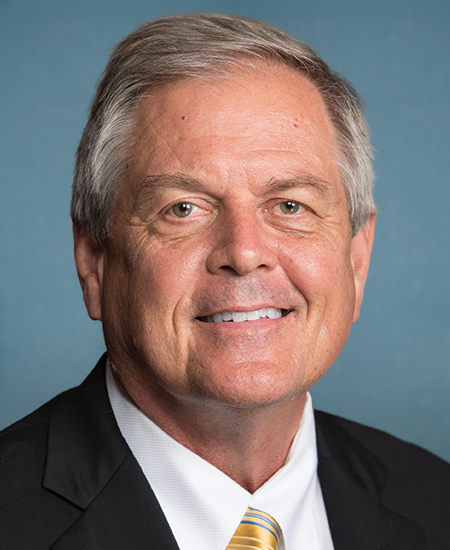
Rep. Ralph Norman
Sponsored bills
Dismemberment Abortion Ban Act of 2021 This bill restricts the performance of dismemberment abortions. It defines the term dismemberment abortion . Specifically, the bill prohibits a physician from knowingly performing a dismemberment abortion. It provides an exception for a dismemberment abortion that is necessary to save the life of a mother whose life is endangered by a physical disorder, illness, or condition. The bill establishes criminal penalties—a fine, a prison term of up to two years, or both—for a physician who performs a prohibited dismemberment abortion. It also authorizes civil remedies for a woman or parent of a minor who undergoes a dismemberment abortion. A woman who undergoes a dismemberment abortion may not be prosecuted or held civilly liable.
Protecting Individuals with Down Syndrome Act This bill creates new federal crimes related to the performance of an abortion on an unborn child who has Down syndrome. It subjects a violator to criminal penalties—a fine, a prison term of up to five years, or both. It also authorizes civil remedies, including damages and injunctive relief. A woman who undergoes such an abortion may not be prosecuted or held civilly liable.
Protecting the Dignity of Unborn Children Act of 2021 This bill establishes a new criminal offense for recklessly disposing of or abandoning fetal remains in a landfill or in any navigable waters of the United States. The term fetal remains means any part (except a cremated part) of a deceased human fetus following an abortion. A violator is subject to a fine, up to three years in prison, or both.
Pregnant Women Health and Safety Act of 2021 This bill establishes requirements for physicians who perform abortions and abortion clinics. Specifically, the bill requires a physician who performs an abortion (1) to have admitting privileges at a nearby hospital; and (2) at the time of the abortion, to notify the patient of the hospital location where the patient can receive follow-up care if complications arise. A physician who fails to comply is subject to criminal penalties—a fine, a prison term of up to two years, or both. A woman who undergoes an abortion may not be prosecuted. The bill also requires an abortion clinic, in order to receive federal funds or assistance, to (1) be licensed by the state in which it is located, and (2) be in compliance with federal standards for ambulatory surgical centers.
Chinese Communist Party Visa Disclosure Act of 2021 or the CCP Visa Disclosure Act of 2021 This bill requires an applicant for an F, J, or M (student or exchange visitor) visa to disclose in the application certain information about whether the applicant has received or will receive funds from the Chinese government, the Chinese Communist Party (CCP), or an entity controlled by either. If an individual receives such funds after receiving such a visa, the individual must inform the Department of Homeland Security and the Department of State. Any visa issued to an alien who violates these disclosure requirements may be revoked.
This joint resolution proposes a constitutional amendment limiting Representatives to three terms and Senators to two terms. Terms beginning before the ratification of this amendment do not count towards these term limits.
This joint resolution proposes a constitutional amendment prohibiting total outlays for a fiscal year from exceeding total receipts for that fiscal year unless Congress authorizes the excess by a three-fifths roll call vote of each chamber. The prohibition excludes outlays for repayment of debt principal and receipts derived from borrowing. The amendment requires roll call votes of (1) three-fifths of each chamber of Congress to increase the public debt limit, and (2) a majority of each chamber for legislation increasing revenue. It also requires the President to submit a balanced budget to Congress annually. Congress is authorized to waive these requirements when a declaration of war is in effect or if the United States is engaged in a military conflict which causes an imminent and serious military threat to national security.
This joint resolution proposes an amendment to the Constitution to require that the Supreme Court consist of nine Justices.
This resolution honors Officers Brian Sicknick and Howard Liebengood of the U.S. Capitol Police, and it commends the bravery and service demonstrated by officers of the U.S. Capitol Police, the Metropolitan Police Department of the District of Columbia, and the other law enforcement agencies and protective entities that assisted in responding to the January 6, 2021, attack on the U.S. Capitol.