

Enhanced Iran Sanctions Act of 2025 This bill imposes sanctions on certain foreign persons (individuals and entities) that are involved in Iran's petroleum sector as well as certain associated persons. The bill also requires or authorizes actions to facilitate the enforcement of sanctions on Iran. Specifically, the bill requires the President to impose visa- and property-blocking sanctions on any foreign person that, after the bill's enactment, knowingly engages in any transaction related to the processing, export, or sale of oil, condensates, gas, liquefied natural gas, or other petrochemical products in whole or in part from Iran. The President must also impose sanctions on certain foreign persons associated with a sanctioned individual or entity. For example, the President must sanction the subsidiaries and corporate officers of a sanctioned business. The bill provides certain exceptions to these sanctions, including specifying that sanctions do not apply to the importation of goods or to conducting or facilitating transactions for humanitarian assistance. The Department of State must establish an interagency working group that shall seek to establish a multilateral contact group to coordinate international efforts to enforce sanctions on Iran. The bill expands the State Department rewards program to authorize a reward payment to any individual who furnishes information leading to the identification of a person (1) subject to sanctions under this bill, or (2) that has attempted or is attempting to evade sanctions under this bill.
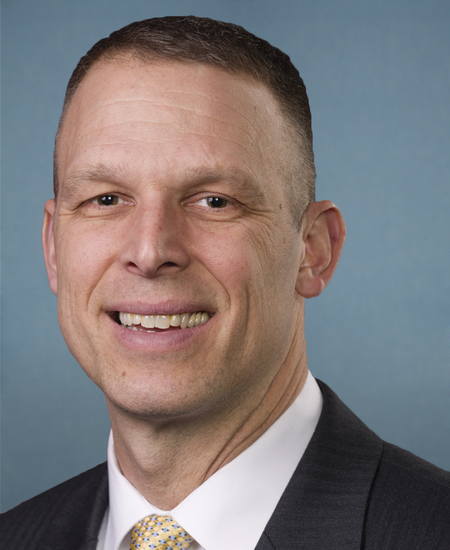
Rep. Scott Perry
Sponsored bills
Maddy summaryThis bill, titled the Interstate Milk Freedom Act of 2026, would prevent federal agencies from blocking the sale of unpasteurized milk and milk products across state lines. It allows such products to be shipped interstate if they are packaged for direct human consumption, produced in a state that permits their sale, and intended for another state that also allows their distribution. The legislation defines specific terms like "cowshare" to include ownership interests in dairy animals and clarifies what constitutes pasteurization. Importantly, the bill does not override state laws and only restricts federal interference when the product meets the stated conditions.
Maddy summaryThis bill, titled the Protect Liberty and End Warrantless Surveillance Act of 2026, reforms the Foreign Intelligence Surveillance Act and adds protections for data brokers to limit how law enforcement and intelligence agencies can access personal information. The legislation prohibits warrantless queries of communications belonging to U.S. persons, requires court orders before accessing certain data from third-party providers, and mandates greater transparency in surveillance directives. It also expands the role of independent advocates in surveillance court proceedings and restricts the use of illegally obtained data from data brokers in legal proceedings.
Maddy summaryThis bill, titled the No Federal Tax Dollars for Illegal Aliens Health Insurance Act of 2026, amends the Affordable Care Act to restrict the use of federal taxpayer funds for health insurance coverage. It directly affects states that receive funding under the ACA and individuals seeking health insurance coverage through federal programs. The key provision prohibits states from using pass-through funding to pay for health insurance or related benefits for individuals who are not U.S. citizens, nationals, or lawfully present aliens. Additionally, the bill requires the Secretary of Health and Human Services to rescind any existing waivers that would have allowed such funding for unauthorized individuals had the new restrictions been in place at the time of approval.
Maddy summaryThis bill, known as the No Free Rides Act of 2026, would prohibit federal public transportation funding recipients from offering universal free fare policies that allow all riders to use transit services without paying. The law would still permit targeted fare policies that provide free or reduced-cost rides for specific groups such as seniors, low-income riders, students, or employees with employer-paid agreements. Additionally, the Secretary of Transportation could grant waivers if a transit agency can demonstrate a dedicated non-federal revenue source to support universal free fare programs. The measure directly affects public transportation agencies that receive federal assistance under Title 49 of the United States Code.
Maddy summaryThis bill, titled the One Nation, One Visa Policy Act, would require all Chinese nationals to have a valid visa before being allowed entry into the United States. It directly affects Chinese citizens and passport holders by prohibiting their visa-free admission and directing the Department of Homeland Security to stop using funds for any Chinese participation in existing visa waiver programs. The legislation explicitly includes Hong Kong and Macau under the definition of the People's Republic of China for the purposes of this restriction. The bill would remove the ability of Chinese nationals to enter the country without a visa under current waiver arrangements.
Maddy summaryThis bill prevents property owners from paying income tax on the profit they make when the government takes their land or buildings through eminent domain (such as for public projects) or when they sell due to immediate threat of taking. It creates a new tax exclusion in the Internal Revenue Code, meaning the government's payment for the property isn't counted as taxable income. Property owners can choose to waive this exclusion and pay tax on the gain if they prefer. The bill directly affects homeowners and businesses facing government acquisitions using eminent domain powers.
Maddy summaryHR 7678, the Gun Owner Registration Information Protection Act, prohibits federal funding for state or local databases that track lawfully owned firearms or their owners. The bill allows federal funding for databases recording lost or stolen firearms but bans it for databases listing legal gun ownership. This means states cannot use federal money to create or maintain systems that compile information about legally owned guns. The bill directly affects state and local governments that rely on federal funds for firearm ownership databases.
Maddy summaryThis bill is not a real legislative proposal but a widely circulated hoax. It falsely claims to prohibit federal funding for states that "prohibit dog ownership" while misrepresenting Sharia law as a threat to pet ownership - a claim with no basis in reality, as Sharia law does not regulate pet ownership and no U.S. jurisdiction prohibits dog ownership. The bill contains factual inaccuracies (e.g., falsely equating Sharia law with being "against the pursuit of happiness") and would be unconstitutional due to religious discrimination. It was never introduced in Congress and appears to be a satirical or misleading online post.
Maddy summaryHR 7582, the CAR Act, changes how certain automobiles are taxed by removing them from the "collectibles" category for capital gains tax purposes. This means owners selling classic or collector vehicles will pay standard capital gains tax rates (typically lower than the 28% rate for collectibles) instead of the higher collectibles tax rate. The change applies to taxable years beginning after December 31, 2025, directly affecting individuals who sell qualifying collector automobiles. The bill modifies Section 1(h)(5)(A) of the Internal Revenue Code to exclude automobiles from the definition of collectibles.