

Maddy summaryThis resolution (HRES 1363) is a ceremonial tribute honoring Patrick Gottsch, founder of Rural Media Group, Inc. (which operates RFD-TV, The Cowboy Channel, and related media platforms). It recognizes his work founding the first 24-hour rural-focused television network in 2000, which reached over 40 million homes globally and promoted agricultural, equine, and rural lifestyle programming. The resolution commemorates his legacy following his passing on May 18, 2024, and his contributions to rural American media. As a commemorative resolution, it does not create policy changes or affect any individuals or groups.
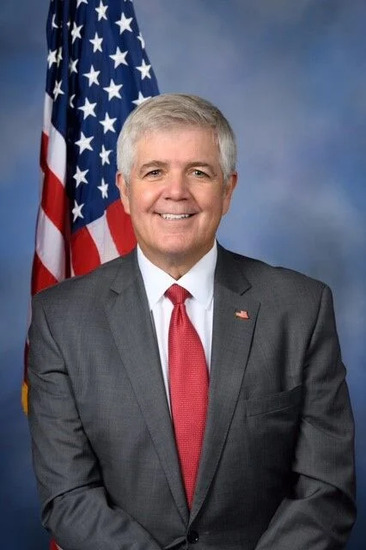
Rep. Cliff Bentz
Sponsored bills
Maddy summaryHJRES 170 is a resolution seeking congressional disapproval of a federal rule that would have required new housing projects financed by the Department of Housing and Urban Development (HUD) or the Department of Agriculture (USDA) to meet specific energy efficiency standards. The rule, published in April 2024, aimed to set these standards for new construction in federally subsidized housing. If passed, this resolution would block the rule under the Congressional Review Act, making it legally void. It directly affects developers and builders of HUD- and USDA-financed housing by removing the requirement to comply with these energy standards.
Maddy summaryHR 8693, the "No American Land for Communist China Act," prohibits U.S. citizens or entities from purchasing real estate adjacent to specific federal lands if owned by the Chinese government or businesses with 25%+ Chinese government ownership. It directly affects Chinese government entities and Chinese-owned businesses operating in the U.S., restricting their ability to buy land near protected federal areas. The bill requires the President to take necessary actions to block such purchases, covering lands managed by Interior, Defense, Agriculture (Forest Service), or designated Indian country. This is a policy restriction, not a funding measure, targeting land transactions near sensitive federal properties.
Maddy summaryHJRES 150 is a joint resolution seeking congressional disapproval of an Environmental Protection Agency (EPA) rule that established updated national emission standards for hazardous air pollutants from coal and oil-fired power plants. The resolution targets the EPA's specific rule published on May 7, 2024, which required these facilities to review residual risks and technologies to reduce emissions. If enacted, the resolution would nullify the rule, preventing the new standards from taking effect and keeping current regulations in place for power plants. This procedural bill uses the Congressional Review Act (Chapter 8 of Title 5, U.S. Code) to block the EPA rule without altering existing environmental laws.
Maddy summaryHJRES 159 is a joint resolution seeking congressional disapproval of a U.S. Fish and Wildlife Service rule that would have updated regulations for protecting endangered and threatened wildlife and plants. If enacted, it would block the rule from taking effect, meaning current regulations would remain in place without the proposed changes. The rule in question was published in the Federal Register on April 5, 2024 (89 Fed. Reg. 23919).
Maddy summaryHR 895, the Combating Organized Retail Crime Act of 2023, expands federal law to better prosecute organized retail theft by amending sections 2314 and 2315 of Title 18. It clarifies that crimes involving stolen goods valued at $5,000 or more over 12 months - including retail theft - can be prosecuted under existing federal statutes, and broadens definitions to include goods taken via "any facility of interstate or foreign commerce." The bill also creates a new Organized Retail Crime Coordination Center within Homeland Security, requiring it to coordinate federal, state, and local law enforcement efforts, share threat information with retailers, and produce annual public reports on trends. This directly affects law enforcement agencies, retailers, and criminal justice systems by standardizing prosecution thresholds and enhancing interagency collaboration.
Maddy summaryThe GAO Database Modernization Act of 2024 requires federal agencies to report to the Comptroller General whenever they cancel, change, or make a rule ineffective. This applies to all agencies that issue rules, mandating they provide the rule's title, Federal Register citation, submission date, and details of changes made. The requirement is temporary, ending six years after the bill's enactment. The bill updates existing reporting rules to improve transparency about how agency rules evolve over time.
Maddy summaryThis bill amends a 2021 law to specify the location for the National Medal of Honor Monument on federal land in Washington, D.C. It requires the monument to be placed within the National Mall's "Reserve" area and attached to, or no more than 1,000 feet from, the Lincoln Memorial. The change directly affects the National Medal of Honor Museum Foundation, which is authorized to build the monument under existing law. This policy adjustment finalizes the physical placement of the monument to honor Medal of Honor recipients, aligning it with the Lincoln Memorial's historical significance.
Maddy summaryHRES 1175 is a non-binding resolution expressing the House's view that hydropower is essential to U.S. energy security and grid resilience. It states hydropower should be a key part of an "all-of-the-above" energy strategy, noting its role in providing reliable electricity, supporting water management, and reducing reliance on foreign energy sources. The resolution calls on the Secretary of Energy to develop a plan for expanding domestic hydropower to strengthen national security and economic competitiveness. It specifically highlights hydropower's current contribution (6.2% of U.S. electricity generation) and its importance for grid stability during emergencies. The resolution does not create new laws or regulations but aims to influence future energy policy discussions.
Maddy summaryHJRES 134 is a joint resolution seeking congressional disapproval of a Department of Labor rule titled "Improving Protections for Workers in Temporary Agricultural Employment." The bill targets the specific rule published in the Federal Register (89 Fed. Reg. 33898, April 29, 2024) that aimed to strengthen worker protections for temporary agricultural employees. If passed, this resolution would block the rule from taking effect, preventing the Department of Labor's new regulations from being implemented. The measure directly affects the rule's implementation, not the workers or employers it was designed to protect.