

Maddy summaryHR 6201, the Iranian Sanctions Enforcement Act of 2023, creates the Iran Sanctions Enforcement Fund to cover costs related to seizing and forfeiting property from Iran or its designated proxies (like Hezbollah or the Revolutionary Guard Corps) that violate U.S. sanctions. The fund, initially $150 million, pays for investigative costs, property management, informant rewards, and equipment for federal, state, and local agencies involved in enforcement. It also establishes an Export Enforcement Coordination Center within Homeland Security to improve interagency cooperation on enforcing export controls targeting Iran. The bill requires annual reports on fund usage and mandates repayment of the initial $150 million by 2034, unless waived for national security reasons.
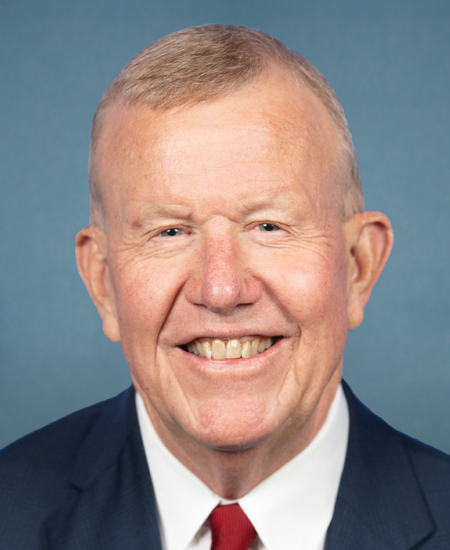
Rep. Mike Ezell
Sponsored bills
Maddy summaryHRES 795 is a non-binding resolution expressing the House's support for the annual proclamation of "National Cybersecurity Awareness Month" in October. It encourages the public and organizations to recognize cybersecurity importance and support efforts by the Department of Homeland Security, CISA, and the National Cybersecurity Alliance. The resolution highlights existing campaign goals like using strong passwords, enabling multi-factor authentication, updating software, and reporting phishing attempts. It does not create new laws or requirements but formally endorses the ongoing October observance that began in 2004.
Maddy summaryHRES 771 is a non-binding resolution expressing the U.S. House of Representatives' support for Israel following Hamas' October 7, 2023, attack. It condemns Hamas' actions, affirms Israel's right to self-defense, and calls for the immediate release of hostages. The resolution also urges enforcement of existing laws restricting aid to terrorists and sanctions against Iran for supporting Hamas. It does not create new policies or allocate funds, as it is a symbolic statement of congressional support.
Maddy summaryHRES 768 is a symbolic House Resolution expressing congressional support for Israel following Hamas' October 7, 2023 attacks. It condemns Hamas' actions, reaffirms Israel's right to self-defense, and calls for the immediate release of hostages. The resolution references the U.S. commitment to Israel's security through existing military aid programs, including the 2016 U.S.-Israel Memorandum of Understanding, and emphasizes enforcement of laws like the Taylor Force Act to prevent U.S. aid from reaching terrorist groups. As a symbolic resolution, it does not create new policy but serves as a statement of congressional support for Israel.
Maddy summaryThis bill authorizes a one-time $40,000 payment to former Air America employees who served at least five years during 1950-1976, or to their survivors (widows/widowers, dependents, or children). Additional $8,000 payments are provided for each full year of service beyond five years. The total funding is capped at $60 million, with claims due within two years of regulations being finalized. It does not create ongoing benefits or change Air America’s legal status, and payments are issued as a single lump sum.
Drone Research and Innovation for Law Enforcement Act of 2023 This bill directs the Federal Aviation Administration (FAA) to study, and create an approval process for, nonlethal de-escalation unmanned aircraft (i.e., drones). Under the bill, nonlethal de-escalation unmanned aircraft means an unmanned aircraft that is equipped with one or more nonlethal weapons or devices and is used by law enforcement personnel in scenarios (1) that present significant risk to human life, and (2) in which the suspected criminal is in a position to potentially escalate the situation and expose human life to a high level of risk. Specifically, the FAA must initiate a pilot research program to study the potential use of nonlethal de-escalation unmanned aircraft by law enforcement agencies. As part of the study, the FAA must enter into interagency agreements with various federal, state, and local agencies. The FAA must submit a report on the results of the research program to Congress. The report must include a plan outlining a proposed FAA application process for law enforcement to seek permission to operate nonlethal de-escalation unmanned aircraft. Within 90 days of submitting the report, the FAA must initiate rulemaking to create a process through which the FAA may provide approval to operate these unmanned aircraft.
Maddy summaryThis bill ensures Coast Guard personnel continue receiving pay during budget gaps specific to the Coast Guard. It mandates automatic funding for military members (including reserves), qualified civilian employees, and contract workers providing essential support during a "Coast Guard-specific funding lapse" - defined as when no Coast Guard funding bill passes before the fiscal year begins. The bill covers pay and benefits for these groups until a formal funding bill is enacted or a budget resolution without Coast Guard funding passes. It does not apply to general government shutdowns but targets only Coast Guard operations. The measure aims to prevent disruptions to critical Coast Guard missions during funding delays.
Maddy summaryThis bill ensures continued pay for certain U.S. Customs and Border Protection (CBP) and Immigration and Customs Enforcement (ICE) employees during a government funding gap in fiscal year 2024. It specifically covers CBP agents at Southwest, Northern, and maritime border ports of entry, and ICE officers conducting immigration enforcement (including detainment/removal) and investigations into criminal operations like drug trafficking and human smuggling. The funding, drawn from general Treasury funds, would apply if a budget lapse begins on October 1, 2023, and would last until January 1, 2024, or until new funding is enacted. It directly affects these frontline enforcement personnel by guaranteeing their salaries during a potential government shutdown.
Maddy summaryHJRES 11 proposes a constitutional amendment that would limit Members of Congress to serving a maximum of three terms in the House of Representatives and two terms in the Senate. If passed and ratified, it would prevent any member who has already served the maximum terms from running for re-election, including time spent filling vacancies (for more than one year in the House or three years in the Senate). This amendment directly affects current and future members of Congress by changing eligibility rules for re-election. The proposal is currently a joint resolution in the House, requiring ratification by three-fourths of state legislatures to become part of the Constitution.
Maddy summaryHRES 739 is a House resolution disapproving of a September 11, 2023, sanctions waiver that would release $6 billion in Iranian assets held in South Korea. The resolution states this waiver weakens U.S. policy by allowing Iran access to funds that could support its nuclear program and terrorism, and criticizes the delayed notification to Congress. It specifically condemns the administration's nonenforcement of mandatory sanctions and the release of assets without proper congressional review. The resolution demands the administration submit any Iran nuclear agreement to Congress before further sanctions relief. This is a procedural disapproval, not a law altering sanctions.