

Maddy summaryThis bill prohibits U.S. federal funds from being provided to international financial institutions (like the World Bank) if those funds could finance foreign shrimp farming, processing, or shrimp exports. It directly affects international financial institutions receiving U.S. funding, requiring them to avoid supporting foreign shrimp operations. The bill also mandates an annual report from the Government Accountability Office (GAO) to Congress on whether U.S. representatives at these institutions are following this restriction. The key mechanism is conditioning U.S. financial support on the institutions' adherence to this prohibition.
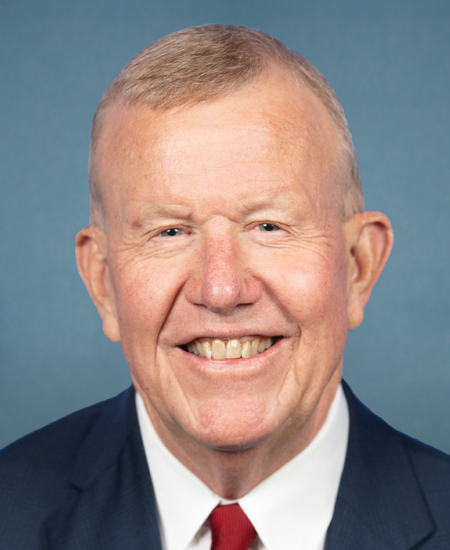
Rep. Mike Ezell
Sponsored bills
Maddy summaryHR 7645, the Clothes Dryer Reliability Act, modifies how the U.S. Department of Energy sets and enforces energy efficiency standards for clothes dryers. The bill requires the Department to determine that any new or existing standard is technologically feasible, won't increase costs for consumers (including purchase, maintenance, and replacement), and will result in significant energy savings before it can be imposed or enforced. This directly affects the Department of Energy's authority and manufacturers of clothes dryers by adding these specific conditions to the standard-setting process. The law does not create new standards but restricts the Department from implementing standards that fail to meet these three criteria.
Maddy summaryThis bill directs the Attorney General, working with the Health and Human Services Secretary, to issue final regulations within one year of enactment. These regulations would establish a "special registration" process for healthcare providers using telemedicine to prescribe controlled substances under existing law. The bill itself does not create new policy but mandates federal agencies to complete a required regulatory step already outlined in the Controlled Substances Act. It affects telemedicine providers seeking to legally prescribe controlled medications remotely.
Maddy summaryThis bill protects licensed amateur radio operators' ability to install antennas for emergency communications by preventing homeowners' associations and private land use restrictions from blocking such installations. It requires communities to allow antennas that don’t impair emergency use, with exceptions only for safety, structural requirements, or minimal visual impact (e.g., screened enclosures). Small antennas (under 1 meter diameter), flagpoles (under 43 feet), and wire/vertical antennas don’t require prior approval, and communities must approve applications within 45 days. The law directly affects over 770,000 licensed amateur operators who rely on these antennas for life-saving emergency communications during disasters.
Maddy summaryHR 7770, the Rosie the Riveter Commemorative Coin Act, authorizes the U.S. Mint to produce and sell three commemorative coins honoring women who worked on the U.S. home front during World War II. It specifies $5 gold coins (max 50,000), $1 silver coins (max 400,000), and half-dollar coins (max 750,000), all to be issued between January 1, 2025, and December 31, 2025. Each coin sale includes a surcharge ($35 for gold, $10 for silver, $5 for half-dollar), with all surcharge funds directed to the Rosie the Riveter Trust for maintaining the Rosie the Riveter WWII Home Front National Historical Park and educational programs. The coins will feature designs reflecting the legacy of diverse women workers and must meet specific weight, diameter, and composition standards.
Maddy summaryThe FISH Wellness Act requires fishing vessel operators and crews to receive safety training addressing mental health, substance use disorders, and fatigue risks. It increases annual funding for health services from $3 million to $6 million (for 2024-2025) to support programs addressing behavioral and physical health risks in the commercial fishing industry. Grants will be awarded competitively by the Department of Health and Human Services, with criteria developed alongside the Coast Guard. The bill updates vessel safety standards to integrate health training into operational requirements.
Maddy summaryHR 7566, the CARTEL Act of 2024, requires U.S. Customs and Border Protection (CBP) to publish monthly public reports on border statistics, including encounters with individuals in the terrorist screening database (both attempts and apprehensions) and those affiliated with transnational criminal organizations. The bill mandates specific data points like total encounters, drug seizures, gang affiliations, and whether apprehended individuals were released or removed. Additionally, it requires the Secretary of Homeland Security to submit an annual report to Congress assessing foreign terrorist organizations and transnational criminal organizations attempting to enter the U.S. through border regions. This bill directly affects CBP (as the reporting entity) and provides the public and Congress with detailed, monthly border enforcement data.
Maddy summaryHRES 1057 is a non-binding House resolution introduced on March 5, 2024, that formally denounces public calls for a cease-fire in Gaza. It specifically demands an end to U.S. funding for Hamas through the UNRWA aid agency, condemns efforts to establish an independent State of Palestine, and calls for halting all U.S. assistance to Palestinian entities until investigations into alleged terrorism funding are completed. The resolution does not change laws or policies but serves as a symbolic statement expressing congressional opposition to cease-fire advocacy and certain aid programs. It directly addresses public discourse and policy debates, not specific individuals or organizations.
Maddy summaryThe BRIDGE Production Act of 2023 requires the U.S. Department of the Interior to hold at least four offshore oil and gas lease sales in the Gulf of Mexico between 2024 and 2025, with each sale offering a minimum of 80 million acres. It mandates these sales follow specific timelines (March/August 2024 and 2025) and use the same terms as a 2021 lease sale, applying an existing environmental review to streamline approvals. The bill also limits legal challenges by stating courts cannot block issued leases or delay drilling permits for projects on those leases, though they may require the Department to correct compliance issues. This directly affects oil and gas companies bidding on Gulf of Mexico leases and the Bureau of Ocean Energy Management, which administers the sales.
Maddy summaryThe Farm to Fly Act of 2023 amends USDA programs to include sustainable aviation fuel (SAF) as a qualifying product for financial assistance, directly affecting farmers, biorefineries, and agricultural producers. It defines SAF as liquid fuel meeting strict environmental standards - requiring at least a 50% reduction in lifecycle greenhouse gas emissions compared to jet fuel and excluding sources like palm oil or petroleum. The bill mandates the Secretary of Agriculture to lead a cross-agency initiative focused on advancing SAF development, leveraging agricultural resources, and fostering public-private partnerships to expand the domestic SAF market. This aims to support rural economic growth, strengthen U.S. energy security, and align with national clean energy goals in aviation.