

PPP Extension Act of 2021 This bill extends the Paycheck Protection Program, established to support small businesses in response to COVID-19 (i.e., coronavirus disease 2019), through June 30, 2021. Currently, the program is set to expire on March 31, 2021. For the final 30 days of the program (i.e., from June 1 until June 30), the Small Business Administration may only process applications submitted prior to June 1, and it may not accept any new loan applications. The bill excludes the budgetary effects of this bill from PAYGO scorecards under the Statutory Pay-As-You-Go Act of 2010 and from Senate PAYGO scorecards.
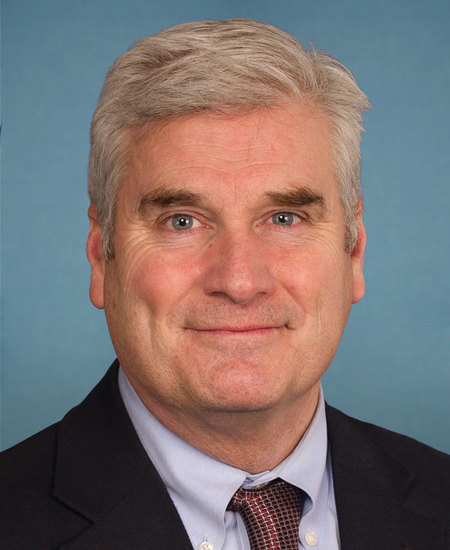
Rep. Tom Emmer
Sponsored bills
Willie O'Ree Congressional Gold Medal Act This bill provides for the award of a Congressional Gold Medal to Willie O'Ree or, if unavailable, to a member of his family, in recognition of his contributions and commitment to hockey, inclusion, and recreational opportunity.
This bill directs the Department of State to include additional information in its annual reports concerning Taiwan's participation at the World Health Organization's World Health Assembly (WHA) as an observer. The report shall describe changes and improvements to the State Department's plan to support Taiwan's observer status at the WHA, following any meetings at which Taiwan did not participate under such status. (China has opposed Taiwan's participation in the WHA.)
Motorcyclist Advisory Council Reauthorization Act This bill provides statutory authority for the establishment of the Motorcyclist Advisory Council whose duties are to advise the Department of Transportation on transportation issues of concern to motorcyclists, including (1) barrier design; (2) road design, construction, and maintenance practices; and (3) the architecture and implementation of intelligent transportation system technologies.
Veteran Suicide Prevention Act This bill requires the Department of Veterans Affairs (VA) to complete a review of the deaths of all covered veterans who died by suicide during the five-year period preceding the enactment of this bill. Covered veterans are those who received VA hospital care or medical services during the five-year period preceding the death of the veteran. The VA shall report on the results of the review and make such report publicly available.
VA Billing Accountability Act This bill authorizes the Department of Veterans Affairs (VA) to waive the requirement that a veteran make co-payments for medications, hospital care, nursing home care, and medical services in certain situations. Specifically, a veteran may have such co-payments waived if (1) an error committed by the VA or a non-VA facility delayed co-payment notification to the veteran, and (2) the veteran received such notification later than 180 days (18 months in the case of a non-VA facility) after the date on which the veteran received the care or services. In requiring a veteran to make a co-payment for care or services provided at a VA or a non-VA medical facility, the VA shall notify the veteran not later than 180 days (18 months in the case of a non-VA facility) after the date on which the veteran received the care or services. If the VA does not provide notification by such date, it may not collect the payment, including through a third-party entity, unless the veteran is provided with (1) information about applying for a waiver and establishing a payment plan with the VA, and (2) an opportunity to make a waiver or establish a payment plan. Finally, the bill requires the VA to review and improve its co-payment billing internal controls and notification procedures.
Mutual Fund Litigation Reform Act This bill specifies burden-of-proof and complaint requirements with respect to certain actions for breach of fiduciary duty against an investment adviser. Specifically, complaints must state certain facts with particularity, and a security holder has the burden of proving a breach of fiduciary duty by clear and convincing evidence.
Heartbeat Protection Act of 2021 This bill makes it a crime for a physician to knowingly perform an abortion (1) without determining whether the fetus has a detectable heartbeat, (2) without informing the mother of the results, or (3) after determining that a fetus has a detectable heartbeat. It provides an exception for an abortion that is necessary to save the life of a mother whose life is endangered by a physical (but not psychological or emotional) disorder, illness, or condition. A physician who performs a prohibited abortion is subject to criminal penalties—a fine, up to five years in prison, or both. A woman who undergoes a prohibited abortion may not be prosecuted for violating or conspiring to violate the provisions of this bill.
Senior abuse Training and Offense Prevention Act or the STOP Act This bill directs the Department of Justice to award competitive grants to state or local governments, Indian tribes, or other entities to support law enforcement personnel, corrections personnel, and other first responders in elder justice matters.
Abby Honold Act This bill directs the Office on Violence Against Women within the Department of Justice to make competitive grants to law enforcement agencies and victim services organizations to implement evidence-based, trauma-informed approaches in responding to and investigating domestic violence, dating violence, sexual assault, or stalking.