Adoption Tax Credit Refundability Act of 2021 This bill makes the tax credit for adoption expenses refundable.
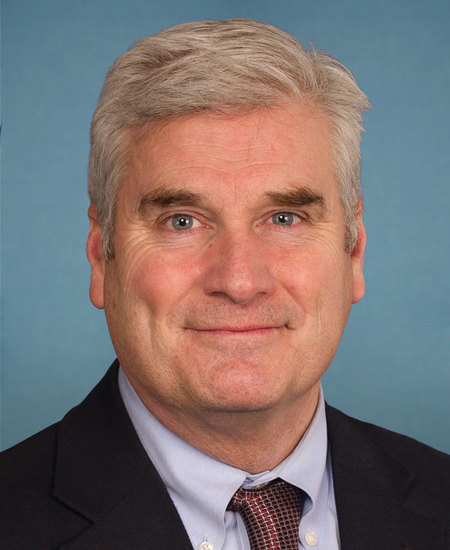
Rep. Tom Emmer
Sponsored bills
Investing in American Workers Act This bill allows a business-related tax credit for employers who increase worker training expenditures. The credit is equal to 20% of the excess of (1) the qualified training expenditures for the year, over (2) the average of the adjusted qualified training expenditures for the three previous years. If the employer had no qualified training expenditures in any one of the three previous years, the credit is equal to 10% of the adjusted qualified training expenditures for the year. The credit applies to expenditures for the training of non-highly compensated employees (annual compensation does not exceed $82,000). The training must result in the attainment of a recognized postsecondary credential and be provided through an apprenticeship program; a program of training services that is included on a list of eligible training providers that states are required to maintain under the Workforce Innovation and Opportunity Act; a program that is conducted by an area career and technical education school, a community college, or a labor organization; or a program that is sponsored and administered by an employer, industry trade association, industry or sector partnership, or labor organization. Certain small businesses and tax-exempt organizations may apply the credit against payroll taxes, subject to specified limits and requirements. Eligible small businesses may also apply the credit against the alternative minimum tax.
This resolution thanks the teachers of the United States and promotes the teaching profession by encouraging students, parents, school administrators, and public officials to recognize National Teacher Appreciation Week.
Creating Opportunities Now for Necessary and Effective Care Technologies (CONNECT) for Health Act of 2021 or the CONNECT for Health Act of 2021 This bill expands coverage of telehealth services under Medicare. Among other provisions, the bill allows the Centers for Medicare & Medicaid Services (CMS) to waive certain restrictions, such as restrictions on the types of technology that may be used; permanently removes geographic restrictions on originating sites (i.e., the location of the beneficiary) and allows the home of the beneficiary to serve as the originating site for all services; permanently allows federally qualified health centers and rural health clinics to serve as the distant site (i.e., the location of the health care practitioner); and allows the CMS to generally waive coverage restrictions during any public health emergency. Additionally, the CMS must report on the effects of expanded telehealth services during the COVID-19 public health emergency, including with respect to the utilization, quality, and outcomes of services. The Center for Medicare and Medicaid Innovation may also test alternative payment models relating to expanded telehealth services.

Mark Takai Atomic Veterans Healthcare Parity Act This bill includes veterans who participated in the cleanup of Enewetak Atoll in the Marshall Islands between January 1, 1977, and December 31, 1980, as radiation-exposed veterans for purposes of the Department of Veterans Affairs presumption of service-connection for specified cancers. Under a presumption of service-connection, specific conditions diagnosed in certain veterans are presumed to have been caused by the circumstances of their military service. Health care benefits and disability compensation may then be awarded.
This resolution expresses support for National Sexual Assault Awareness and Prevention Month.
Renewable Fuel Infrastructure Investment and Market Expansion Act of 2021 This bill establishes programs and requirements to expand access to renewable fuel. Specifically, the U.S. Department of Agriculture must establish a program to award grants for the deployment of renewable fuel infrastructure as specified by this bill. In addition, the Environmental Protection Agency (EPA) must finalize a 2021 proposed rule titled E 15 Fuel Dispenser Labeling and Compatibility With Underground Storage Tanks . When finalizing the rule, the EPA must eliminate the labeling requirements for fuel pumps that dispense E 15 fuel (i.e., gasoline that contains 15% ethanol).
Mainstreaming Addiction Treatment Act of 2021 This bill removes the requirement that a health care practitioner apply for a separate waiver through the Drug Enforcement Administration (DEA) to dispense certain narcotic drugs (e.g., buprenorphine) for maintenance or detoxification treatment (i.e., substance use disorder treatment). Further, a community health aide or community health practitioner may dispense certain narcotic drugs for maintenance or detoxification treatment without registering with the DEA if the drug is prescribed by a health care practitioner through telemedicine. It preempts state laws related to licensure for this activity. The bill also directs the Substance Abuse and Mental Health Services Administration to conduct a national campaign to educate health care practitioners and encourage them to integrate substance use disorder treatment into their practices.
LEOSA Reform Act This bill broadens the authority for certain law enforcement officers to carry concealed firearms across state lines. Specifically, the bill allows qualified active and retired law enforcement officers to carry concealed firearms and ammunition (including magazines) in school zones; in national parks; on state, local, or private property that is open to the public; and in certain federal facilities that are open to the public. Further, the bill permits states to reduce the frequency with which retired law enforcement officers must meet certain qualification standards.
Pain-Capable Unborn Child Protection Act This bill establishes a new criminal offense for performing or attempting to perform an abortion if the probable post-fertilization age of the fetus is 20 weeks or more. A violator is subject to criminal penalties—a fine, a prison term of up to five years, or both. The bill provides exceptions for an abortion (1) that is necessary to save the life of the pregnant woman, or (2) when the pregnancy is the result of rape or incest. A physician who performs or attempts to perform an abortion under an exception must comply with specified requirements. A woman who undergoes a prohibited abortion may not be prosecuted for violating or conspiring to violate the provisions of this bill.