

Maddy summaryThe Feed Our Families Act of 2025 ensures SNAP (Supplemental Nutrition Assistance Program) benefits continue for 90 days during the first government funding lapse in a fiscal year. It appropriates emergency funds from the Treasury to cover SNAP operations for the initial 90 days of a lapse in discretionary appropriations for the program. These funds are held in reserve and can only be used to maintain SNAP program services during that period. The bill directly affects millions of low-income households relying on SNAP benefits by preventing immediate disruptions during early government shutdowns.
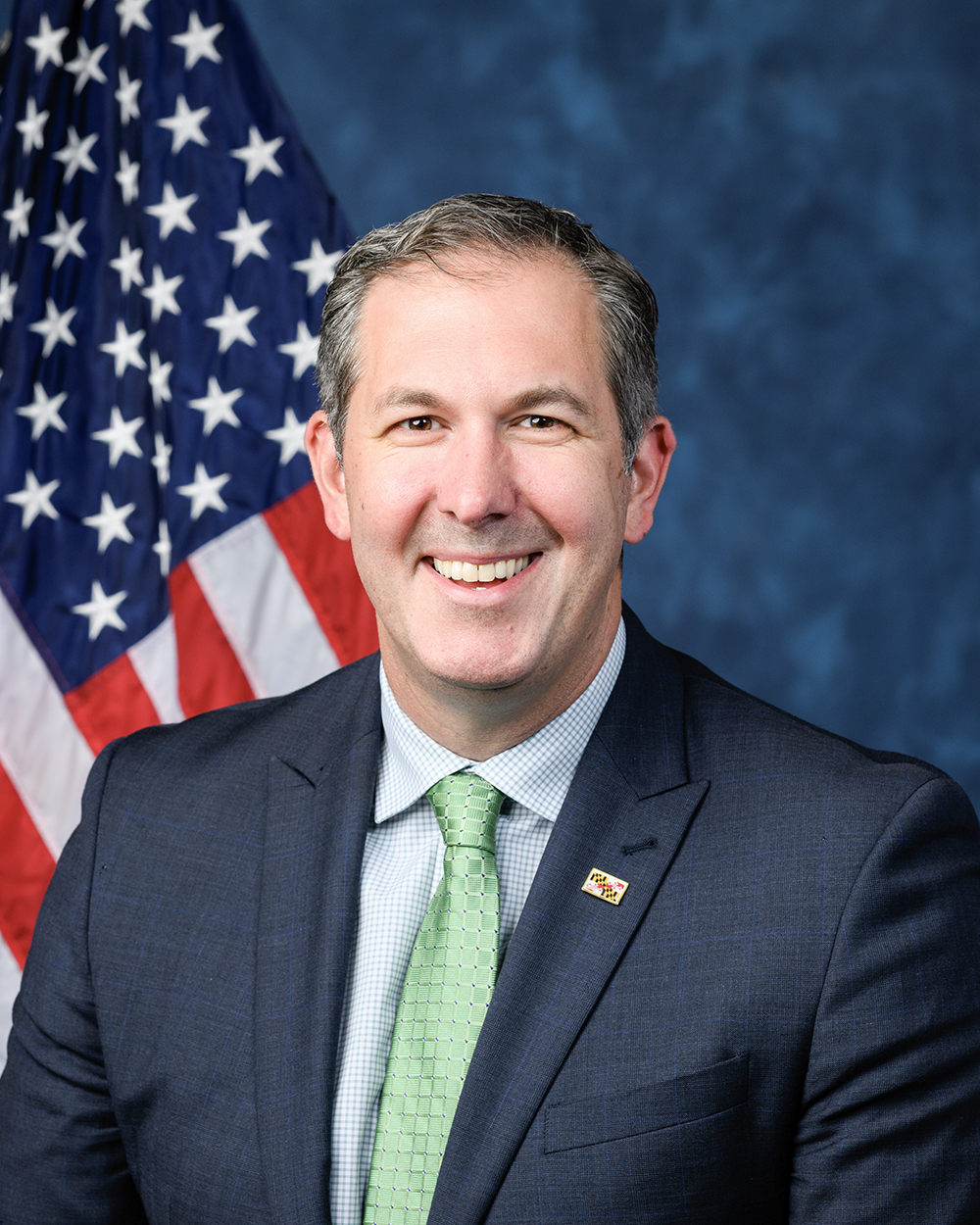
Rep. Johnny Olszewski, Jr.
Sponsored bills
Maddy summaryHR 1939, the U.S. Engagement in Sudanese Peace Act, requires the U.S. government to develop a comprehensive strategy supporting peace in Sudan, including sanctions on individuals responsible for atrocities and restrictions on arms sales to entities supporting the Rapid Support Forces (RSF) and Sudanese Armed Forces (SAF). The bill mandates reports on international crimes, violations of humanitarian aid access, and U.S. weapons used in Sudan, while directing the U.S. to advocate for unimpeded humanitarian access and support for Sudanese women and youth in peace processes. It establishes a Special Envoy for Sudan with a 5-year term and requires the President to impose sanctions on foreign persons who commit or enable genocide, war crimes, or crimes against humanity in Sudan. The legislation prohibits the sale of major defense equipment to countries supporting the RSF or SAF, with limited waiver authority, directly affecting U.S. foreign policy implementation and humanitarian efforts in Sudan.
Maddy summaryHR 1918, the Farewell to Foam Act of 2025, prohibits the sale of most foam food containers, packaging peanuts, and foam coolers starting January 1, 2028. It directly affects restaurants, grocery stores, food vendors, manufacturers, and retailers who sell these items, excluding medical coolers used for drugs or medical products. The bill imposes escalating civil penalties for violations: $250 for the second offense, $500 for the third, and $1,000 for fourth or subsequent violations, with reduced penalties for small businesses under specific revenue thresholds. Enforcement is led by the EPA Administrator, with states allowed to enforce under federal guidelines.
Maddy summaryHR 1851 increases the minimum required fighter aircraft inventory for the Air Force and its reserve components to 1,900 total and 1,200 for the reserve by October 2030, up from current levels (Section 2). The bill allows temporary reductions below these totals for recapitalization, but only for up to two years and with a floor of 1,800 aircraft, requiring congressional notification (Section 2). It mandates quarterly reports to Congress detailing new aircraft acquisitions, assignments, retirements, and recapitalization plans for both active and Air National Guard units (Section 3). The bill specifically protects 25 existing Air National Guard fighter squadrons from fleet reductions until 2030 and requires new aircraft to be assigned to service-retained units at a 3:1 ratio with legacy aircraft retirements (Sections 5, 6).
Maddy summaryThis bill strengthens the Voting Rights Act of 1965 by clarifying how to prove voting discrimination and expanding requirements for preclearance of voting changes. It establishes new standards for determining when voting practices dilute minority voting strength or deny/abridge voting rights, requiring plaintiffs to show specific conditions for vote dilution claims and including factors like historical discrimination and racial polarization in court analyses. The bill modifies the criteria for determining which states and political subdivisions must seek preclearance for voting changes, and adds new transparency requirements for jurisdictions to publicly disclose changes to voting qualifications, polling locations, and election districts. It directly affects states and local governments that implement voting policies, particularly those with a history of voting rights violations or that make changes to voting qualifications, procedures, or district boundaries. The bill aims to prevent discriminatory voting practices by providing clearer standards for courts and requiring greater transparency in voting rule changes.
Maddy summaryThe Richard L. Trumka Protecting the Right to Organize Act of 2025 strengthens workers' organizing rights by making it an unfair labor practice for employers to threaten permanent replacement of striking workers, discriminate against workers who support unions, or require employees to attend employer campaigns unrelated to their job duties. It expands the definition of "employee" to make it harder for companies to classify workers as independent contractors and requires employers to post notices about workers' rights in conspicuous locations. The bill establishes a new electronic voting system for union elections, creates a 90-day bargaining period before mediation can be requested, and increases penalties for violations of labor laws. These changes are intended to make it easier for workers to form unions and negotiate better wages and working conditions.
Maddy summaryHR 1835 (MERIT Act) provides reinstatement or compensation to federal employees who were terminated during a specific mass layoff period (January 20, 2025, through the bill’s enactment date). Affected probationary employees - newly hired workers on a trial period or not yet permanent - can choose to return to a similar position with matching benefits or receive a lump-sum payment covering the pay difference between their terminated role and any new federal job they held during the layoff period. Agencies must notify affected employees within 30 days and offer reinstatement or payment within 90 days, with employees required to accept or decline within 30 days to avoid losing eligibility. The bill defines "mass termination" as 15+ separations in a 30-day period by a single agency.
Maddy summaryHR 1788, the Fair Grocery Pricing Act, prohibits food producers from using data analytics services (coordinators) to facilitate tacit price coordination among competitors. It directly affects food manufacturers and the data companies that provide pricing coordination services, making it unlawful for producers to contract with such services or for coordinators to enable price-fixing agreements. The bill empowers the Federal Trade Commission and Department of Justice to enforce these rules under existing antitrust laws and allows consumers to sue for triple damages plus legal fees if harmed by violations. It also invalidates pre-dispute arbitration agreements for these cases, ensuring affected consumers can pursue legal action.
Safe Schools Improvement Act This bill requires states to direct their local educational agencies (LEAs) to establish policies that prevent and prohibit bullying and harassment of elementary and secondary school students. In particular, these policies must prohibit bullying and harassment based on race, color, national origin, disability, religion, or sex. Sex includes sexual orientation, gender identity, and sex characteristics (including intersex traits). Further, LEAs must provide (1) students, parents, and educational professionals with annual notice of the conduct prohibited in their disciplinary policies; (2) students and parents with grievance procedures that target such conduct; and (3) the public with annual data on the incidence and frequency of that conduct at the school and LEA level. The Department of Education must conduct and report on an independent biennial evaluation of programs and policies to combat bullying and harassment in elementary and secondary schools. The National Center for Education Statistics must collect state data to determine the incidence and frequency of the conduct prohibited by LEA disciplinary policies.
Maddy summaryHRES 171 is a non-binding resolution introduced in the U.S. House of Representatives that reaffirms the constitutional limit established by the Twenty-second Amendment, which prohibits any person from being elected president more than twice. The resolution specifically states that this amendment applies to two terms in aggregate and prohibits former President Donald Trump from seeking another presidential term. It cites multiple public statements by Trump from 2018 to 2025 where he expressed interest in serving beyond two terms or questioned the amendment's limits. The resolution serves as a symbolic statement of congressional support for the existing constitutional term limit, with no legal effect on actual eligibility. It does not create new law or alter the Twenty-second Amendment.