

Maddy summaryHR 3512, the Tackling Predatory Litigation Funding Act, imposes a new annual tax on funds received by third-party investors who finance lawsuits through litigation financing agreements. It directly affects investors (including foreign entities) who provide funding to plaintiffs or law firms in exchange for a share of settlement or judgment proceeds, excluding small agreements under $10,000 or standard loans. The tax equals the top individual income tax rate plus 3.8 percentage points, with 50% withheld from settlement payments by parties involved in the lawsuit. The law also clarifies that such funds cannot offset losses and excludes certain typical legal fee reimbursements from taxation. The provisions take effect for taxable years beginning after December 31, 2025.
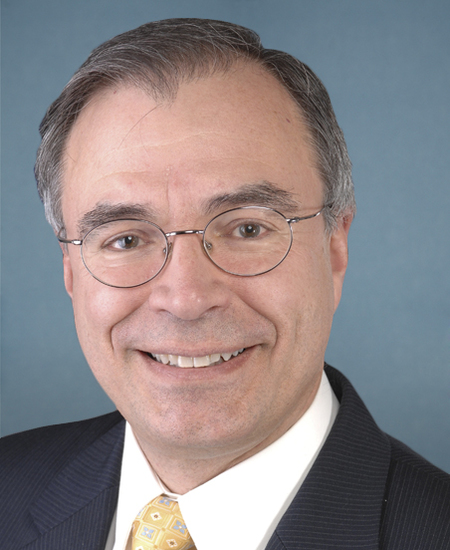
Rep. Andy Harris
Sponsored bills
Maddy summaryHR 513, the Offshore Lands Authorities Act of 2025, reverses multiple existing presidential protections that blocked oil and gas leasing on offshore federal lands. It nullifies 8 specific presidential withdrawals (including areas in the Arctic, Atlantic, Gulf of Mexico, and Pacific) and restricts future presidential actions by limiting withdrawals to 150,000 acres per action, capping them at 20 years, and requiring Congressional approval for cumulative withdrawals exceeding 500,000 acres. The bill mandates that before any withdrawal, the Secretary must complete four assessments covering mineral resources, economic/energy value, revenue impacts, and national security. It also establishes a fast-track process for Congress to disapprove withdrawals within 20 days, with limited debate (10 hours) on the resolution.
Maddy summaryThis bill phases out enhanced federal funding for Medicaid in states that expanded coverage under the Affordable Care Act. It gradually reduces the federal share of Medicaid costs for states that expanded coverage, decreasing the percentage each year from 2027 through 2034 before returning to standard funding levels after 2035. The change directly affects low-income residents in expansion states who rely on Medicaid, as states will pay more for their coverage over time. Non-expansion states (those that haven't expanded Medicaid) are exempt from these reductions, and expansion states can choose to limit coverage to individuals at or below 100% of the federal poverty line to maintain the higher federal funding rate.
Maddy summaryHR 3277, the Ensuring Lasting Smiles Act, requires group health plans and health insurance issuers to cover medically necessary outpatient and inpatient treatments for congenital anomalies or birth defects primarily affecting the eyes, ears, teeth, mouth, or jaw. This includes reconstructive procedures, dental/orthodontic support during treatment, and follow-up care, but excludes purely cosmetic surgery not tied to a medical diagnosis. Cost-sharing (like copays) for these services must not be stricter than for other medical benefits. The law takes effect for plan years beginning January 1, 2026, and mandates insurers to provide notice about this coverage to beneficiaries.
More Opportunities for Moms to Succeed Act or the MOMS Act This bill establishes requirements to enable the collection of certain child support during pregnancy, establishes grants for supportive services for women that promote alternatives to abortions, and requires the Department of Health and Human Services (HHS) to establish a website with pregnancy resources other than those about abortions. Specifically, the bill requires states to apply child support obligations to the time period during pregnancy under the Child Support Enforcement program. (The program enables states to receive federal matching funds for expenses related to child support enforcement activities and related services.) Such child support applies at the request of the mother and may be applied retroactively. Also, HHS must award grants to nonprofits to provide pregnant and postpartum women, and women parenting young children, with services or information on topics including health care (excluding abortions), child care, and employment assistance. It also requires HHS to provide grants to health care providers in rural or medically underserved areas, as well as tribal areas, to purchase equipment enabling telehealth visits for prenatal and postnatal care (e.g., monitoring devices). Additionally, the bill requires HHS to establish a public website to inform pregnant and postpartum women, and women parenting young children, of nearby services and resources on topics including health care, material or legal support, and alternatives to abortion. States must, as a condition of receiving certain federal funds, provide lists of nonprofit child placement agencies for potential inclusion on the site.
Maddy summaryHR 3228, the Constitutional Hearing Protection Act, reclassifies firearm silencers as firearms under federal tax law and eliminates their separate registration under the National Firearms Act. It requires the Attorney General to destroy all existing federal silencer registration records within one year and preempts state laws that impose taxes, registration, or recordkeeping requirements on silencers. The bill defines "firearm silencer" and specifies that manufacturers must mark silencers on a "keystone part" with a serial number. This directly affects silencer owners, manufacturers, and state governments by standardizing federal regulation and removing state-level restrictions.
Maddy summaryHR 3044, the "No Vaccine Mandates in Higher Education Act," prohibits federal funding from being provided to colleges and universities that require students or staff to receive a COVID-19 vaccine for enrollment, employment, or access to services. This directly affects institutions of higher education receiving federal funds, such as those participating in student aid programs. The bill's key mechanism is withholding federal funds from any institution enforcing such vaccine mandates, as defined under the Higher Education Act of 1965. The law focuses solely on vaccine requirements, not other health or safety policies.
Maddy summaryThis bill amends federal laws governing short-barreled shotguns (SBS), which are shotguns with barrels under 18 inches or overall length under 26 inches. It removes state-level taxes, registration, or recordkeeping requirements for SBS owned legally under federal rules, preempts conflicting state laws, and requires the federal government to destroy existing SBS registration records within one year. The bill directly affects lawful owners of SBS who previously registered under the National Firearms Act, simplifying their compliance with federal standards. Key changes include updating definitions to better align with sporting use and eliminating state-level barriers for legally owned SBS.
Maddy summaryHR 2326, the Dietary Guidelines Reform Act of 2025, requires the U.S. Department of Agriculture (USDA) and Health and Human Services (HHS) to update the Dietary Guidelines for Americans at least every 10 years, instead of the previous 5-year cycle. The bill mandates guidelines be based on "significant scientific agreement" through evidence-based reviews, include input from an Independent Advisory Board (with specific member requirements and conflict-of-interest disclosures), and exclude topics like taxation or social policies. It also requires the Secretaries to notify Congress 90 days before updates and assign evidence strength ratings to each guideline. These changes directly affect the federal agencies responsible for creating the guidelines and the public who rely on them for health guidance.
Maddy summaryThe Safeguarding Charity Act clarifies that tax exemptions for charitable organizations under the Internal Revenue Code (such as 501(c) status) do not count as "federal financial assistance" for regulatory purposes. This means tax-exempt charities and nonprofits will no longer be subject to federal rules or requirements typically applied to organizations receiving direct federal funding. The bill amends U.S. Code to explicitly exclude tax benefits from the definition of "federal financial assistance" unless a law specifically states otherwise. It does not change tax status or funding for these organizations but prevents misclassification under existing regulations. The law applies to all organizations with tax-exempt status under sections 501(c) or 401(a) of the Internal Revenue Code.